Don't Sell Yourself Short On Insurance
Ensure your insurance is fully comprehensive and up to date because as a rural contractor you don’t know what’s around the corner.
 increase font size
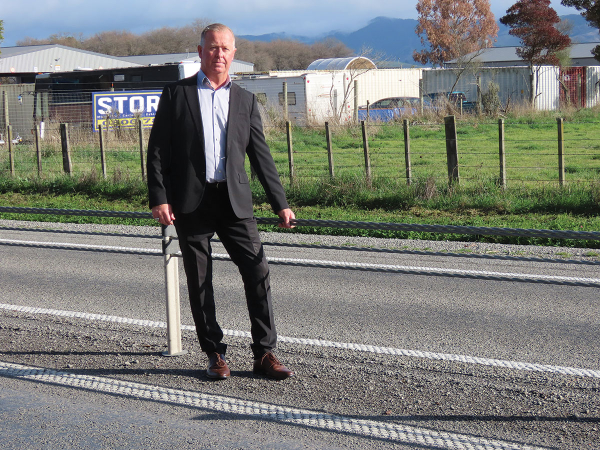 Rural Contractors NZ chief executive Andrew Olsen.
While the Government has moved quickly to make commercial hauliers' lot easier during the current fuel crisis, they appear to be stuck in the creep box when it comes to the agricultural industry.
During their recent national conference, Rural Contractors New Zealand (RCNZ) discussed progress on reform of Vehicle Dimension and Mass (VDAM) legislation that regulates dimensions, weight limits and indeed, times when tractors and machinery can be moved.
The concerns of rural contractors and out of date VDAM regulations have been on the table since 2016, but despite raising this issue with current Ministers almost two years ago, there has been no reform of any substance.
RCNZ's concerns centre around the fact that tractors and machinery currently in use are a far cry from the machines of just a decade ago, having got larger and heavier, but developments in tyre technology and braking systems means they are safer, can stop quicker and have a lighter footprint, so don't create any greater damage to roads and bridges.
They make a comparison with regulations in the Australian, US and key European markets, where the very same machines are allowed to operate lawfully.
The current regulations mean that around 750 machines are currently struggling to obtain, or indeed cannot obtain a permit, meaning cultivation and harvesting is interrupted, with the likelihood that if travel is undertaken without the correct permit, fines can exceed $10,000.
It seems regulatory authorities don't realise that modern tractors and harvesters are called upon to carry out a wide range of tasks as the growing and harvesting seasons change. Indeed, a tractor equipped with a rear-mounted implement at the start of a job may be reconfigured for a further task, to use front and rear implements in combination.
Likewise, a self-propelled forage harvester might be fitted with a 3-metre wide grass header in the spring, but switch to a 12-row maize header later in the season. In both scenarios, dynamic and axle loadings change dramatically in a way that is not recognised by the VDAM regulations.
Rural Contractors NZ chief executive Andrew Olsen says some members have faced fines for moving agricultural vehicles deemed too heavy for roads, under rules more than a decade old.
"Our members' tractors and other machines have got heavier but the transport regulations are such that they can be overweight before they leave the showroom, let alone with implements on board," says Olsen.
"Having the flexibility to permit these machines should be within the capability of the transport minister and NZTA. Rural contracting businesses want to comply and be lawful and I'm sure any farmers with big machinery feel the same," he says.
RCNZ says it is realistic about VDAM rule changes, knowing it won't happen overnight, but urgent attention is certainly required to the permitting process. The organisation is calling for government officials to meet with a delegation from the sector to field test machines that can't and in the short term a permitting system that can work around the out-of-date VDAM rules.
Rural Contractors NZ is also calling for modernisation of the permitting process to recognise the widespread use of smart devices throughout the agricultural sector.
Chief executive Andrew Olsen says currently permits can often be up to 20 pages, making them difficult to understand and interpret.
"Surely an electronically-issued permit, clearly laying out operating parameters and any restrictions, would make a great deal more sense for all parties involved and should be on the Government's radar to boost productivity and innovation across the rural sector?"
Ensure your insurance is fully comprehensive and up to date because as a rural contractor you don’t know what’s around the corner.

Rural contractors are getting guidance on how to deal with recent rising fuel prices.
Rural contractors want the Government to include a national standard for air plans as part of its Resource Management Act reforms.
Rural Contractors NZ have launched a campaign today against the risks of fatigue in their industry.
Concern about fatigue impacts during a busy season prompted Rural Contractors New Zealand to launch a campaign about the risks. Chief executive Andrew Olsen explains.


When Northland leather worker Vernon Suckling started making horse saddles 50 years ago, quad bikes and side-by-side vehicles were unheard of.
Alliance Group has confirmed that eligible farmer-shareholders who supply and continue to back the business will receive up to $20 million later this year, following the strategic investment partnership with Dawn Meats.
With a general election under five weeks away, Rural News is asking major political parties about their policies and positions on key issues facing the primary sector. We will run their responses to each question over the next four weeks. The ACT Party and the Greens didn't respond in time.
The red meat sector is in great heart.
Dr Scott Champion, Foundation for Arable Research chief executive, says that everyone in the supply chain had a role to play in driving the sector's long-term success.
Entries opened on Monday, 5 October 2026 for the 2027 New Zealand Dairy Industry Awards (NZDIA), which organisers describe as the nation's biggest celebration of excellence in the dairy sector.