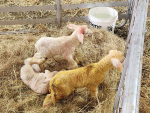
Beef + Lamb NZ's Lambing Kit Checklist for a Tough Season
With lambing underway in many regions, Beef + Lamb New Zealand is encouraging farmers to put together a wellequipped lambing kit to help minimise lamb losses, particularly in bad weather.
 increase font size

The chairperson of the National Animal Ethics Advisory Committee (NAEAC) says while animals will continue to be needed for research, testing and teaching, she expects the number to gradually decline.
Dr Virginia Williams says while the numbers of animals used for these purposes are down by 25% for the year ended 2013, she says more relevant is the figures relating to the rolling three-year average.
In 2013 the number of animals used for testing, research and teaching was 224,048, the rolling three-year average 284,000.
“We are always aiming to reduce the number of animals and replace them wherever possible. While there is quite a substantial fall this year, we look more at the three-year rolling average because you get projects that go on for three years and only get reported at the end of that period. So it’s likely that next year the numbers will go up, though it would be nice to think that they wouldn’t.”
Globally New Zealand is a minor player in animal testing, Williams says. And our research focus is mainly on production animals whereas in the UK it’s more on rodents. In New Zealand in 2013, cattle made up 51.4% of the farm animals used, sheep 20.6%. This reflects the focus in New Zealand on veterinary research, animal husbandry and testing the efficacy of products used to maintain the health of other animals.
“One of NAEAC’s aims is to promote what we call the three ‘R’s’: ‘refinement’ (reducing pain and distress); ‘reduction’ (reducing the number of animals to the minimum possible to get a statistical result, but not so small that no result is obtained); and ‘replacement’ – worldwide there are places where animals can be replaced.
“It’s expensive to use animals. Note that it is one thing to find replacements, and another to have that validated as a testing programme so that the regulatory authorities will accept it.”
Dr Williams says a challenge for her organisation is getting the public to understand the issues – and it’s not all bad news. Often there is a ‘shock horror’ reaction when the number of animals used for testing goes up, but New Zealand has strict controls governing their use.
“Any use of animals has to be approved by an animal ethics committee of three independent people: a veterinarian nominated by the NZVA, a nominee of the SPCA and a lay person nominated by a territorial authority. They have to approve, by looking at the cost to the animal versus the potential benefit. So obviously the higher the cost to the animal the greater the supposed benefit from the research. We have a good system to oversee that and it’s well regarded around the world.”
Williams says the public don’t understand animal welfare issues because few people in cities have any contact with a farm, though they may have a companion animal.
With lambing underway in many regions, Beef + Lamb New Zealand is encouraging farmers to put together a wellequipped lambing kit to help minimise lamb losses, particularly in bad weather.

Chinese beef trade quotas and a looming suspension of Brazilian beef imports into the European Union are expected to reshape global beef trade flows over the remainder of 2026, with implications for New Zealand exporters, according to Rabobank's Q3 Global Beef Quarterly report.
Will a stronger, more coordinated voice help rebuild confidence and improve returns in the wool sector?
The vineyards at Pyramid Farm in Marlborough’s Avon Valley have never been run of the mill, with plantings that follow the natural contours of the land, 250 metres above sea level.
Sheep and cattle numbers continue to decline, and this year's drought hasn't helped, according to Beef + Lamb New Zealand (B+LNZ).

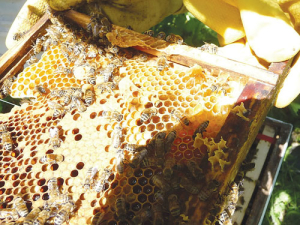
New Plymouth-based Manuka honey exporter Egmont Honey has completed its acquisition of Taihape beekeeping business Tweeddale's Honey, with settlement finalised on Friday, 18 September.

Westpac NZ is calling on farmers and growers to start preparing now for the possibility of a dry summer, as likely El Niño conditions raise the risk of drought across parts of the country.
Fonterra Co-operative Group has confirmed the independently assessed candidates standing for election to its board in 2026.
Fonterra has revised its Farmgate Milk Price forecast for the 2026/27 season, lifting the midpoint and narrowing the range on the back of improving global dairy commodity prices.
New Zealand's citrus growers were challenged to build their future on the value embedded in their fruit rather than the volume they produce, at Citrus New Zealand's annual gathering in Gisborne on 17 September.
Leading John Deere technicians and apprentices from New Zealand and Australians were recognised at the recent sixth annual JD Technician of the Year Awards, held in Brisbane.




