Mary Bowron Named Best Sheep and Beef Vet of the Year
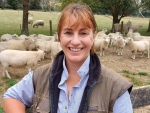
B+LNZ's Wormwise veterinarian Mary Bowron has won the Best Sheep and Beef Vet of the Year Award in recognition of her outstanding contribution to New Zealand’s sheep and beef sector.
 increase font size
 Beef + Lamb New Zealand’s Informing New Zealand Beef programme aims to boost the sector’s profits by $460m.
This is the first in a series of articles from Beef + Lamb New Zealand's Informing New Zealand Beef programme. The seven-year INZB partnership, supported by Beef + Lamb New Zealand and the Ministry for Primary Industries' Sustainable Food and Fibre Futures fund, aims to boost the sector's profits by $460m.
Focused on increasing the use of high-quality genetics in the beef industry, the four main components of the programme are developing New Zealand-specific breeding indexes, supporting the development of an across breed genetic evaluation and development of data infrastructure, running a beef progeny test and linking in data from commercial herds.
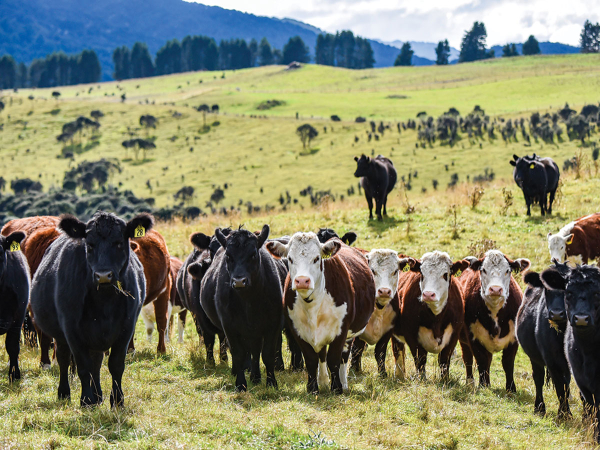
In a productive breeding herd, fatbottomed cows make the rocking farm go round. To get the most out of mating, we want to present the bulls with husky heifers and queensized cows. But how exactly does cow body condition score (BCS) affect breeding success?
Analysis of the B+LNZ Genetics Beef Progeny Test has found a linear relationship between cow BCS and conception rate. In other words - the chunkier the cow, the higher the chance she will conceive to a given mating (which in this case was a carefully timed artificial insemination). For every step up on the BCS scale, the rate of artificial insemination success increased by 5 percentage points.
However, conception rate isn’t the full story. Cows usually get more than one opportunity to conceive during a mating season. So, when the researchers look at the 49-day pregnancy rate (2+ oestrus cycles) there are diminishing returns for cows with higher BCS. The biggest gains are from getting the low conditioned cows closer to a BCS of 7 prior to mating.
Since cows’ curves don’t come for free, we also need to consider what it takes to put an extra BCS unit on a cow. It is easier to put condition on a lighter cow. At BCS 4 it takes 15kg of extra live weight to gain a BCS score (to get to BCS 5). This will take 83kg of dry matter intake over and above maintenance and production. But as we travel up the BCS scale this equation changes. The difference between BCS 7 and BCS 8 is 35kg of extra live weight for a tiny gain in the 49-day pregnancy rate.
So, when it comes to divvying up the pasture pie, it makes sense to focus on fattening up the Skinny Minnies rather than trying to put extra love handles on already well-conditioned cows.
B+LNZ's Wormwise veterinarian Mary Bowron has won the Best Sheep and Beef Vet of the Year Award in recognition of her outstanding contribution to New Zealand’s sheep and beef sector.
With lambing underway in many regions, Beef + Lamb New Zealand is encouraging farmers to put together a wellequipped lambing kit to help minimise lamb losses, particularly in bad weather.
It's only just hit the market, but a new forage rape bred for dryland farms has already won the approval of lambs and young cattle both north and south.
New Zealand's Emissions Trading Scheme (NZ ETS) encourages afforestation while not achieving climate goals, says a new report released by the Parliamentary Commissioner for the Environment, Simon Upton.
Are you ready for El Nino? That’s the question asked by Beef+Lamb NZ’s Ian Tarbotton who leads B+LNZ’s farm extension service.


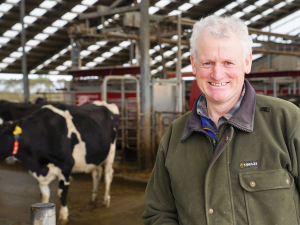
In Dacre, near Invercargill in New Zealand’s South Island, Bruce Dinnington is running a dairy operation unlike any other.

A free online platform aggregating governance vacancies across rural and regional New Zealand has been launched.
Environment Minister Nicola Grigg has announced details of a new rural plastics recycling scheme.
Agricultural drone operators say that a government decision to allow lower-risk drone work without certification won’t lower standards but drive innovation and efficiency.
OPINION: Warning bells are ringing in the arable sector.
Farmgate lamb prices are down by 8%, beef cattle by 4.5% and farm expenditure up by 4.2%.