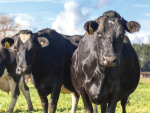
BCS Targets: Why Body Condition Score Matters at Calving
Body Condition Score (BCS) is a critical element in managing the health and reproduction of the dairy herd.




 increase font size
 Research shows that lambing percentages increase by 6–10% for every extra unit of body condition score at mating.
Body condition scoring ewes at least six weeks out from mating can make a significant difference to conception rates and scanning percentages.
Research has shown that lambing percentages increase by 6–10% for every extra unit of body condition score at mating. The flushing effect may provide an additional 5–10%.
Ideally, ewes should be going to the ram at a body condition score (BCS) of between 3 and 4 and it is the percentage of the ewe flock with a BCS of below 3 at mating and lambing that is the single most important factor influencing the profitability of an ewe flock.
The biggest percentage jump in scanning percentage will come from reducing the number of poor condition ewes at mating, it is these poor condition ewes that will bring down the overall performance of the flock.
Pre-mating management
By preferentially feeding ewes that have a BCS below three (they may require supplementary feed) in the lead up to mating, their body condition and lambing percentage can be improved.
It is also recommended that a faecal egg count is carried out on these low condition score ewes as they may require a drench.
Ewes need 1.0-1.3 kg DM/head/day of average to good quality feed just to hold body condition during mating and early pregnancy.
Ideally, the ewe mob should be rotated rapidly on to pasture that is 5–6 cm height. Grazing below 3cm or 1500 kg DM/ha will result in loss of body condition and lower lambing rates.
Body condition scoring ewes has been found to be a driver of profitability in top performing sheep flocks. The three best times to BCS are pre-mating, scanning and weaning.
Body Condition Score (BCS) is a critical element in managing the health and reproduction of the dairy herd.
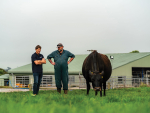
The transition period is the make-or-break window for your entire season. If this period is poorly managed, you don't just see a few downer cows, you see a downward spiral that affects the cow's health, production and reproduction long into the season.
The dry conditions being experienced along much of the east coast of both Islands build a strong case for body condition scoring ewes at this season’s weaning.
This is the third in a series of articles from Beef + Lamb New Zealand's Informing New Zealand Beef programme. The seven-year INZB partnership, supported by Beef+Lamb New Zealand and the Ministry for Primary Industries' Sustainable Food and Fibre Futures fund, aims to boost the sector's profits by $460m.
This is the first in a series of articles from Beef + Lamb New Zealand's Informing New Zealand Beef programme. The seven-year INZB partnership, supported by Beef + Lamb New Zealand and the Ministry for Primary Industries' Sustainable Food and Fibre Futures fund, aims to boost the sector's profits by $460m.


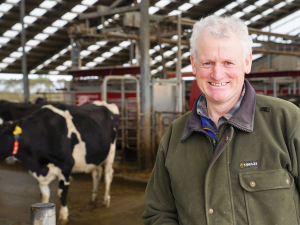
In Dacre, near Invercargill in New Zealand’s South Island, Bruce Dinnington is running a dairy operation unlike any other.

A free online platform aggregating governance vacancies across rural and regional New Zealand has been launched.
Environment Minister Nicola Grigg has announced details of a new rural plastics recycling scheme.
Agricultural drone operators say that a government decision to allow lower-risk drone work without certification won’t lower standards but drive innovation and efficiency.
OPINION: Warning bells are ringing in the arable sector.
Farmgate lamb prices are down by 8%, beef cattle by 4.5% and farm expenditure up by 4.2%.


OPINION: The same mainstream media muppets that brought you Jacindamania in 2017 have been flat out pimping for the Opportunities…
OPINION: Your old mate reckons the atrocious way farmers in the UK are treated by their lords and masters in…




