Farmers breed for worm resistance
A farmer collective breeding for parasite resistant genetics claim they are leading the pack as drench resistance becomes more prevalent and drench failure is reported NZ-wide.
 increase font size
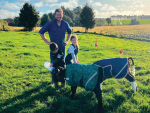
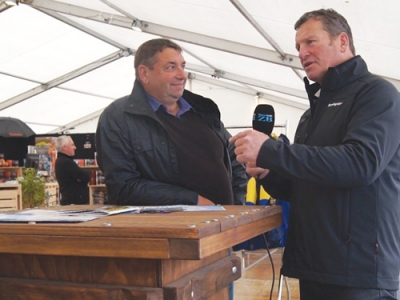 Eliot Cooper (left) discusses the capsule trial with Richard Loe.
Central North Island farmer Eliot Cooper had no difficulty telling which of his stock were included in a trial of Alpheus anti-parasitic capsules.
So says the product supplier.
"Heading into the third month of the trial, condition wise, it was visually quite evident," Cooper says.
"We were running them down the race and before you scanned the EID ear tag you could say 'this one's obviously a capsule animal, and sure enough, it was. It was pretty obvious."
The four-month trial started in March 2015 using 136 R1 dairy heifer replacements all grazed in Manawatu. Seventy-two of them were given the Alpheus capsules plus a primer dose, and 64 were given a triple oral drench every 28 days, dosed according to weight. All animals were weighed every 28 days.
On average, the capsule group were 14.3kg heavier than the group receiving the oral drench at the end of the study.
"You could see the difference in the majority of them," Cooper says. "Not just the weight. Visually, they were in a lot better condition. You could see that their body condition was a lot better than the others.
"But for me, the big attraction is the convenience. It's a pretty simple product to use; it's not a biggie to apply. And at that time of the year you're leading into lots of other issues so the last thing you want to be doing is dealing with livestock.
"You can get these weaners in, give them a capsule, and basically they're fine for well over three months. That got us right through March, April, May and into June.
"That is what I see as a real strength. And what's coming out of it, certainly in the weight gains, more than pays for the capsule.
"Plus they took faecal samples on the way through to look for parasite eggs and there was no sign of any worm activity anywhere in the ones in the trial.
"The autumn is always bad for worms, and if you're not on top of your game it isn't long before you pay the price – crook animals with worm burdens.
"If you've got a capsule that you know is going to last for 125 days, it gives peace of mind.
"And you take that through to winter; it makes wintering them easier as well. You get yourself into winter with good body condition and it means they will winter better."
Cooper says the capsules can give farmers a financial gain through the time saved and in increased productivity of healthier, heavier stock.
"If you do the numbers – the time you spend getting stock in to drench them, the cost of the drench, one of them would have to be a pour on, and you'd have to be regularly doing oral drenches as well – there's a good argument that it pays for itself.
"'When you work through it like that, it's not an expensive product."
A farmer collective breeding for parasite resistant genetics claim they are leading the pack as drench resistance becomes more prevalent and drench failure is reported NZ-wide.

Parasites in sheep will become more of a problem for New Zealand farmers as temperatures rise with climate change, says AgResearch principal scientist John McEwan.
A New Zealand company reckons it has come up with a product for preventative treatment of parasites in R1 cattle.
Abigail Chase is a self-confessed “parasite geek” with the PhD anthelmintic treatment to match.
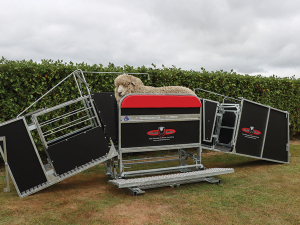
Oamaru-based livestock handling specialist Te Pari has bought Combi Clamp, the New Zealand manufacturer of Combi Clamp manual sheep handlers.

Agriculture Minister Todd McClay has admitted that a scheme bringing workers from Pacific nations to work on orchards has become too hard to navigate but says changes are coming.
A new app designed in New Zealand aims to help sheep, beef and deer farmers capture, analyse and use body condition score data more effectively.
Canterbury farmer Andy Macfarlane has been appointed to the board of AgriZeroNZ, the public-private partnership designed to accelerate the development and deployment of emissions reduction tools for New Zealand farmers.
For over 50 years Mel Ewers has been supporting the apple sector navigate through compliance and quality assurance issues.
The apple sector is enjoying a bumper harvest season.