Pain relief for lame cows a game changer
The traditional method to approach lameness involves corrective trimming of the affected area.
 increase font size
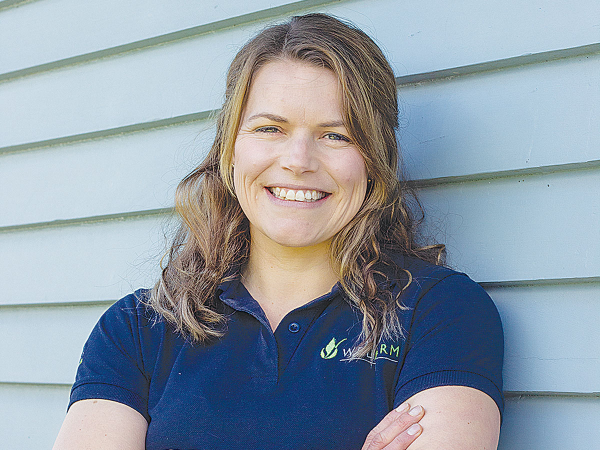 WelFarm general manager Samantha Tennent and her team have developed a new website covering the basics of dairy herd health and welfare.
While advancements in technology has put information at our fingertips, filtering and finding the right information can be challenging.
Samantha Tennent recalls this exact problem when she was studying. That's why Tennent, who's general manager at WelFarm, and her team have developed a new website covering the basics of dairy herd health and welfare.
"I didn't come off a farm and I was trying to get my head around mastitis, but I remember I couldn't even find the basic definition for a somatic cell count which left me feeling stupid," she explains. "Since then, whenever I've been involved with extending messaging, I try to include the basics."
Tennent says the new WelFarm website keeps information brief, to the point and provides links to other web pages for further information.
"We didn't want to recreate what is already available; there are some great sources of information but sometimes they get lost in the seas," she adds. "We were keen to consolidate and provide a simple hub for herd health and welfare to help farmers find what they need."
Tennent says this will continue to evolve, and they plan to use the website to share timely information to help farmers with their seasonal herd planning.
"Now is a great example, it's the ideal time to be performing a locomotion score on your herd," she explains. "Identify animals that are starting to show signs of lameness, determine if they need treatment and get on top of it before they impact of the business with reduced production and impaired reproductive performance."
The WelFarm team are also building their social media strategy to support farmers with timely messages. This month they are talking about the second half of mating.
"Bringing the whole herd in to apply a fresh heat detection aid can help refresh for tired eyes and bulls need to be rotated 24-48 hourly to allow them time to recharge. We want to give farmers simple, timely reminders to help make things easier."
The WelFarm programme is delivered through vet clinics and provides a framework for farmers and vets to proactively monitor and manage herd health. Benchmarking provides context to the numbers and allows farmers to identify opportunities and prevent problems to save time and effort in the long run.
Taranaki sharemilker Trish Rankin has been using the programme with their local vet team at Taranaki Veterinary Centre. She values the feedback, explaining they either get a 'tick' saysing they're doing a great job or some feedback on what needs to be improved. "Farmer and animal well-being is a key key outcome of WelFarm."
The traditional method to approach lameness involves corrective trimming of the affected area.
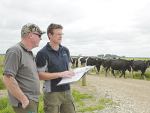
A solution to help farmers complete the animal wellbeing part of their on-farm assessments will be available from this month thanks to a new relationship between WelFarm and Fonterra.
Antibiotic use is under increased pressure because any time we use antibiotics there is an increased risk of bacteria developing resistance.
A negative energy balance (NEB) is when the energy demands for lactation, maintenance and activity are not met by dietary intake and the cow is forced to mobilise its fat and muscle to provide energy to meet the deficit.
The pain scale medical professionals use with people isn’t applicable to animals. They can’t tell us whether they’re experiencing a 5 or a 9 out of 10. But that doesn’t mean they are not impacted by pain.


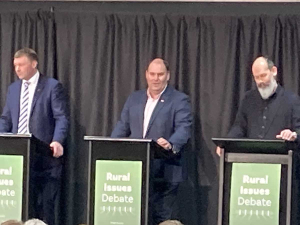
National’s much-touted free trade deal with India featured in the Rural Issues Debate at Mystery Creek, Hamilton on Wednesday night.

New Zealand's 2026-27 freshwater fishing season has opened, with anglers encouraged to head to rivers and lakes over the coming days as conditions look favourable across much of the country.
Central Otago District Council (CODC) has voted against a plan to spread treated sewage sludge from Cromwell and Alexandra on farmland near Lauder, a decision Federated Farmers says reflects strong opposition from rural residents.
Pāmu has released its FY26 Integrated Annual Report, reporting a Net Operating Profit of $113 million, more than double the $49 million recorded in FY25.
Meat Industry Association data, released alongside the Red Meat Sector conference in Wellington, shows export value climbing across the US, China, UK and Canada.
Applications are set to open for the 2027 Zanda McDonald Award, a trans-Tasman award recognised for identifying and fast-tracking talented young leaders in agriculture and agribusiness.