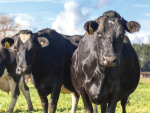
BCS Targets: Why Body Condition Score Matters at Calving
Body Condition Score (BCS) is a critical element in managing the health and reproduction of the dairy herd.




 increase font size
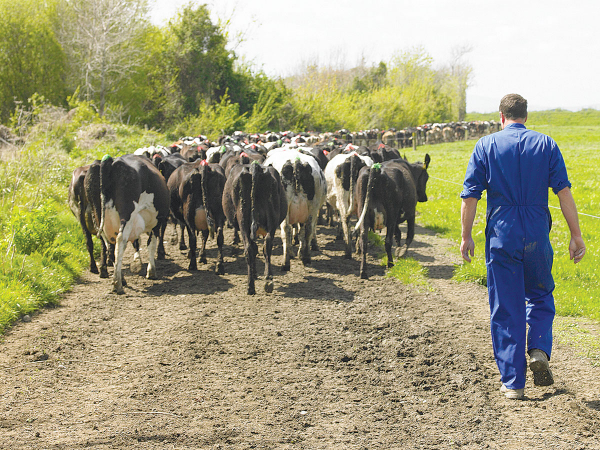 Cows need to stop losing condition and be in a state of positive energy balance before mating starts.
A negative energy balance (NEB) is when the energy demands for lactation, maintenance and activity are not met by dietary intake and the cow is forced to mobilise its fat and muscle to provide energy to meet the deficit.
All cows enter into a state of NEB for six to eight weeks after they have calved and some condition loss is inevitable.
It’s important to minimise the body condition score (BCS) loss to a maximum of 1.0 otherwise it will significantly impact health, production and reproduction of the cow. And if too many cows within the herd lose large amounts of condition there can be substantial collective impacts.
Cows need to stop losing condition and be in a state of positive energy balance before mating starts. So how can you minimise condition losses and support the herd before mating starts?
Use the transition period
In the window from three weeks pre until about three weeks postcalving identify any at-risk animals and manage them accordingly:
Allocate feed according to BCS. Cows at or above target BCS should be fed 90% of their daily energy requirements for two to three weeks before calving. And cows that are below target BCS should be fed 100% of their daily energy requirements.
After calving the aim is to reduce their BCS loss and the biggest driver in this period is the nutritional management as a springer and the management of how energy is spent relative to intake. Typically, it takes around 10-20 days post-calving for a cow’s appetite to return to optimal – this is the period of steepest condition loss.
Cows that are below BCS are at direct risk of infectious disease, such as metritis and mastitis, and cows that are above are more at risk of metaboloic diseases, such as milk fever and ketosis which weaken the immune system also putting them at risk of metritis and mastitis.
Use strategies like once-a-day (OAD) milking for several weeks or if milking twice daily identify thin cows and separate them from the main herd and/or preferentially feed them.
Greater losses than 1.0 BCS indicate poor feeding from six weeks postcalving, ill health or a cow that was greater than BCS 5.5 at calving.
Get ready for mating
After the post-calving BCS loss, cows should begin to gain BCS which is affected by their genetics and nutrition. Early calving cows should be gaining BCS before planned start of mating but research does show cows that are producing high levels of milk production gain less BCS than lower yielding cows during milking.
Managing pasture quality and strategic use of supplements in the premate/ mating period is crucial to ensure energy intakes are at or exceeding maintenance and milk energy demands.
 |
|---|
|
Samantha Tennent |
If cow BCS and pasture residuals are on target adding supplements to the diet will not improve reproduction. But if supplements are needed, ensure they are good-quality and free from spoilage.
The decision on supplement type should be based on the cost/benefit of the predicted milksolids response as research suggests there is no reproductive benefit of feeding high-starch supplements, such as grains, compared with high-fibre feeds, for example PKE or pasture silage.
But the majority of outcomes are relative to BCS at calving and productivity losses can be mitigated by achieving targets, BCS 5.0 for mixed age cows and 5.5 for first and second calvers. So whether or not the cows hit them this season there is a great opportunity to improve for next season.
Samantha Tennent is general manager of WelFarm Ltd and Mat O’Sullivan, Veterinary Centre Oamaru
Body Condition Score (BCS) is a critical element in managing the health and reproduction of the dairy herd.
Body condition scoring ewes at least six weeks out from mating can make a significant difference to conception rates and scanning percentages.
Hit the ground running this mating with these foundations for success.
The traditional method to approach lameness involves corrective trimming of the affected area.
While the recent payout announcement is not the news dairy farmers were hoping for, it’s an opportunity to review on farm performance with a specific focus on protecting your farm’s profitability.



Federated Farmers has welcomed new rural policies released by ACT, saying they align closely with its own election priorities.

Rural Contractors NZ says proposed changes to land transport rules for agricultural vehicles are a welcome response by the Government to out of date regulations which have seen members hit with huge fines.
Alliance is calling for final applications for its 2027 Graduate Programme, with applications closing on Sunday 25 October.
Decades piloting planes has ensured vet and farmer David Hayes is focused on safety. So, after a serious accident while welding on farm, he is sharing his experience so others can learn from it.
Canterbury milk processor, Synlait Milk has confirmed Leon Fung as its chief executive officer.
OPINION: Making it easier to collect rainwater and use it to grow crops and livestock is a no brainer.




OPINION: It seems Canterbury processor Synlait is still in the doldrums.
OPINION: Get offside with New Zealand First leader Winston Peters at your own peril.




