
Push Feed Forward: Spring Nitrogen Tips for a Dry Summer
If you're thinking about investing in ways to push feed forward, this is the year to do it.
 increase font size
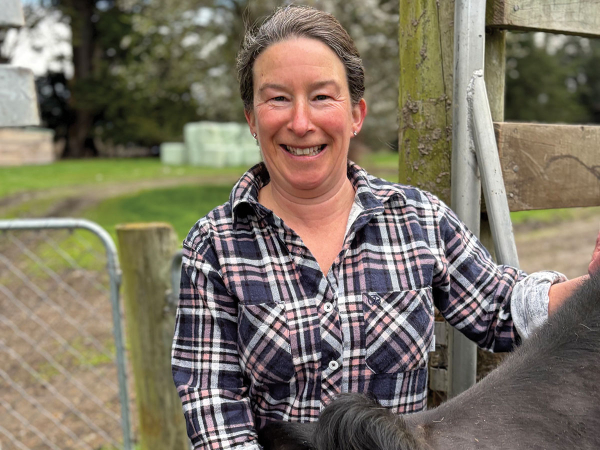 Veterinarian and Zoetis veterinary advisor livestock, Victoria Chapman
Drench Options are become increasingly limited for sheep farmers, highlighting the importance of proactive parasite management planning within the wider farm system to stretch the longevity of drench as a tool.
Veterinarian and Zoetis veterinary advisor livestock, Victoria Chapman, says it’s more important than ever that farmers look after effective drenches, so they last into the future.
“We don’t know when the next drench will come and if it does, it won’t be a silver bullet. We need to be thinking now about managing parasites for drench longevity and better production,” she says.
“When we focus on parasite management, reducing reliance on drench and feeding stock better, it often results in improved production. This has been well demonstrated on farms that have hit a wall with drench resistance, particularly to triples, and have had to change their ways in order to keep farming sustainably.”
Feeding is a crucial element and good worm management goes hand-in-hand with better feeding, especially for youngstock, which are the parasite factories on farm.
There are three key factors to consider in parasite management planning heading into a new season: advance planning of the paddocks that lambs will be weaned on to, feeding and monitoring.
Plan in advance the paddocks on your farm that lambs will be weaned on to. You do not want to be weaning lambs on to highly contaminated pasture. “A fat, single bearing mixed age ewe would have a lower faecal egg count than a skinny multiple bearing ewe, for example. So, with that example in mind, is there something you can do prior to weaning to prepare paddocks, like putting cattle through or early weaned ewes to mop up the worm burden where ewes and lambs that might be higher contaminators, have been?” Another option is for lambs to be weaned straight on to finishing crops, such as clover. The key point is to minimise exposure of lambs to larvae by providing them with clean pasture, as lambs will not grow optimally if they are ingesting thousands of larvae a day.
Present the youngest, most susceptible animals with the best feed you have. You don’t want lambs having to look for feed, and do not wait to shift them. “Shift too early, rather than too late. They are picky and will eat the best feed, don’t force them to graze down where the larvae are.”
From weaning, you also want to turn your focus to fattening ewes for a good tupping the following year. “What are your options? With the talk of drought and El Nino do you maybe get rid of the poorer ewes?”
Monitor before you drench. Bear in mind that a Faecal Egg Count (FEC) only gives you a small snapshot of the female worm population producing eggs. The lifecycle takes three weeks inside the animal from the time the lamb picks up the L3 larvae off the pasture until it is producing its own eggs. “We need to be mindful that what they have just ingested will not be visible in a FEC. Regular monitoring is important, but it is never the only tool to use before considering whether to drench.”
Along with monitoring, stockmanship plays a significant role. Farmers need to take into consideration the history of where animals have been grazing, climate (cold and dry means less development of larvae, while warm and wet can result in more worms), how much feed animals have been eating, the age of the animals and the stocking rate.
Having knowledge around the contamination level of pasture is crucial and that’s where a tool like the new DAGI app can help to identify highly contaminated pastures or safe paddocks, when planning grazing rotations.
“It’s about using data but also using stockmanship. A FEC is no replacement for good animal husbandry and stockmanship.”
Monitoring is important to help increase drench intervals, taking the pressure off the drench. If you plan to increase drenching intervals, you must monitor.
A FEC 14 days after drenching will help assess the effectiveness of your drenching process. “The drenching process includes everything from the correct dose rate to ensuring the drench goes down their throat. If the egg count is not zero, getting some advice from your vet would be a really good place to start,” Chapman says.
“Farmers often ask, which drench should I use? The answer is, an effective one that works on your property.”
The only way to be sure a drench is effective is to carry out a drench check, or a full drench reduction test. Using an ineffective drench not only compounds the drench resistance issue, it is a waste of money.
Drench has its place and is an important tool to reduce worms on farm, but drenching alone is not a parasite management strategy.
By having a comprehensive parasite management plan, including drench, farmers give themselves the best chance to keep drench in the toolbox for as long as possible, Chapman concludes.
If you're thinking about investing in ways to push feed forward, this is the year to do it.

Kiwifruit growers are watchful but remain optimistic as concerns around the potential effects of the El Niño weather pattern this season.
Most dairy regions around the country have had a pretty good season so far says Tracy Brown.
B+LNZ's Wormwise veterinarian Mary Bowron has won the Best Sheep and Beef Vet of the Year Award in recognition of her outstanding contribution to New Zealand’s sheep and beef sector.
Are you ready for El Nino? That’s the question asked by Beef+Lamb NZ’s Ian Tarbotton who leads B+LNZ’s farm extension service.


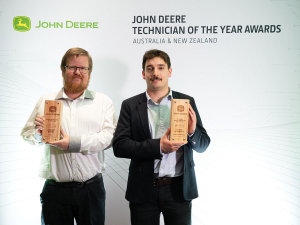
Leading John Deere technicians and apprentices from New Zealand and Australians were recognised at the recent sixth annual JD Technician of the Year Awards, held in Brisbane.
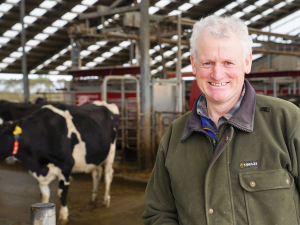
In Dacre, near Invercargill in New Zealand’s South Island, Bruce Dinnington is running a dairy operation unlike any other.
A free online platform aggregating governance vacancies across rural and regional New Zealand has been launched.
Environment Minister Nicola Grigg has announced details of a new rural plastics recycling scheme.
Agricultural drone operators say that a government decision to allow lower-risk drone work without certification won’t lower standards but drive innovation and efficiency.
OPINION: Warning bells are ringing in the arable sector.



