Vet education needs an overhaul - report
How veterinarians are educated needs to be overhauled, or there will be a sustainability crisis.
 increase font size
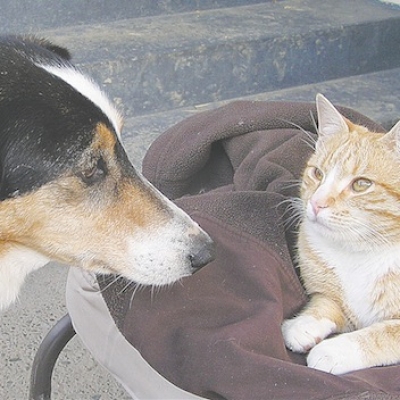 A healthy Chloe and friend back at home.
I KNEW something was wrong when Chloe was in her kennel on a lovely day: usually she’s with me or eyeing the cat; and she was sick twice that afternoon.
Poison, bones and any sort of injury could be immediately ruled out, so I expected to see her bright and perky the next morning, but the Chloe who greeted me was lethargic and when she took no notice of the cat I knew things weren’t good.
I set up a heated pet pad in the corner of my office, which is at one end of the kitchen. From there I was able to monitor her every move. She slept.
There was no raised temperature or unnatural discharge, apart from the odd spot of blood which was natural as she was coming off heat. Her stool and urine appeared normal for the circumstances. She was drinking a little water but had no appetite, so I slowly and gently syringed small amounts of colostrum, with an added tonic and appetite stimulant, into her mouth several times a day. This kept up fluids and the colour in her mouth was good. I expected her to improve, but she didn’t.
Days passed. It is a wonder she had any hair left with all the stroking she received, and she was permanently sodden from my tears. All I could think was cancer. I’d lost two dogs in the past to it, and the down hill spiral can be sudden.
You’re probably asking: “Why didn’t you take her to the vet?” Chloe is a very special dog, not only in working ability but in her kind and gentle nature, and I have a unique bond with her. If she was going to die it was to be at home with me, not in a vet clinic, possibly on the operating table and among strangers. I couldn’t go through that again, especially not with her.
For four days I kept a vigil at her side until I could bare it no longer. A hole was dug and the gun dusted. We walked outside. I sat on the steps and choked “Chloe give me a sign, anything, and I won’t do it”. She put her head on my knee to have it stroked - the first time since she had been ill. No bullet was fired.
I rang my dear friend Liz Hancock who is a vet; I felt comfortable sobbing Chloe’s symptoms to her over the phone rather than to a male vet I hardly knew. She said it was worth taking a fresh urine sample for testing, doing blood tests and x-rays. Maybe it was something that could be cured. Sometimes there can be an internal infection without a temperature, she told me.
I took Chloe to my local vet clinic and with huge reluctance left her behind. I kissed her nose and walked away crying, praying it wasn’t the last time I’d see her alive. The blood tests indicated an infection, probably in her uterus, but they didn’t want to operate until she was a bit stronger. Hopefully the drip and antibiotics would help. Five days later they operated.
Apparently there was a nasty infection and all her female bits needed removing. She stayed at the vet clinic for a further five days before finally getting the all clear to come home. It truly was one of the happiest days of my life.
My heartfelt thanks to Liz for her wise advice and to Malcolm and the team at Hunterville Vet Club. They all saved darling Chloe’s life.
• Anna Holland is teaching people dog training. For more information www.annaholland.co.nz or Ph 06-212 4848 or This email address is being protected from spambots. You need JavaScript enabled to view it.
How veterinarians are educated needs to be overhauled, or there will be a sustainability crisis.

A welcome relief – that’s how the New Zealand Veterinary Association (NZVA) is describing the decision to include veterinarians on the new Government Green List.
OPINION: The Government is finally waking up to the fact that more health workers are urgently needed in the country.
A worsening vet shortage has triggered a petition calling for the Government to set aside two MIQ spaces every week for authorised arrivals.
Qualified overseas vets are giving up on plans to work in New Zealand because they cannot secure MIQ spots.


Now in its fourth year, the 2026 Fencing Industry Awards, formed part of the proceedings of the FCANZ Conference, held in Nelson during August.
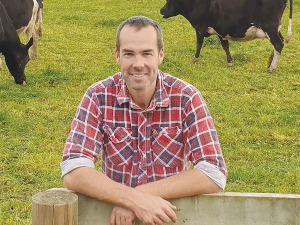
DairyNZ deputy chair Cameron Henderson has been re-appointed unopposed for another term.
OPINION: The stats speak for themselves.
Farms across the upper North Island are trialling different pasture mixes as part of a research programme that aims to build greater resilience into farming systems.
Election years are always a concerning time for farmers, according to DairyNZ chair Tracy Brown.
The Ballance Farm Environment Awards are coming to the West Coast of the South Island.