Fonterra FY26 Results: $9.69 Milk Price, $3.4bn Profit
Fonterra has unveiled its annual results for the 2026 financial year, posting $27 billion in revenue and close to $20 billion returned to New Zealand farmer owners and unit holders.
 increase font size
 Jarden's head of derivatives Mike McIntyre.
Farmgate milk price forecasts continue to fluctuate despite a rise in the last Global Dairy Trade (GDT) auction.
Predictions issued by banks range from $7.70/kgMS to $8.30/kgMS. Fonterra also has a wide ranging forecast - $7.25 to $8.75/kgMS for the 2021-22 season.
The co-op will provide an update when it announces its 2020-21 annual results this week.
For banking agri economists, forecasting the milk price is also tricky, as reflected by two updates earlier this month.
BNZ lifted its milk price forecast by 50c to $8.30 while Rabobank dropped its forecast by 20c to $7.80.
Jarden's head of derivatives Mike McIntyre told Rural News that there were two schools of thought on demand shifting away from Chinese buyers and how it would impact prices in the coming months.
McIntyre says the bearish view is that Chinese customers have built stockpiles and won't be buying big as they have done in the past.
"There's a view that this will structurally weaken dairy prices," he says.
The more bullish view is that while Chinese buyers have stepped away, demand from other regions like the Middle East and South East Asia is picking up.
"The bullish view is that this extra demand will keep prices up," McIntyre adds.
He says it's too early to say how prices will fare but an $8 payout is still on the cards.
"We've still got a long way to go and the next four to five GDT events will give us a better idea."
BNZ senior economist Doug Steel says the dynamics and balance of risks appear to be changing with robust demand bumping up against subdued supply.
"It is as much that GDT prices have stopped falling as it is that they have bounced a bit," says Steel.
"Rather than any precise estimate of what Fonterra's 2021-22 milk price might turn out to be, we think it should be read as the balance of risk is moving to something above $8 rather than below it. Of course, something below $8 can't be ruled out."
But RaboResearch senior analyst Emma Higgins believes the strength of Chinese import demand will be pivotal.
"All eyes are on China - our key export market - as a source of risk to the downside," she says.
"Supply is outpacing demand in China, with domestic production growth combined with growing inventories, and these factors point to the potential for a period of destocking later this year and into 2022."
Higgins says global markets may be able to absorb lost sales from China through 2021, but pressure will be felt in 2022. Initially in Oceania, but eventually rippling through global dairy markets.
"Despite the lift in prices at the recent GDT auction, we see a strong possibility that the near-term peak in global dairy commodity prices is likely behind us,' she says.
Forecast Milk Price Range
Fonterra has unveiled its annual results for the 2026 financial year, posting $27 billion in revenue and close to $20 billion returned to New Zealand farmer owners and unit holders.
Fonterra Co-operative Group has confirmed the independently assessed candidates standing for election to its board in 2026.
Fonterra has revised its Farmgate Milk Price forecast for the 2026/27 season, lifting the midpoint and narrowing the range on the back of improving global dairy commodity prices.
Outgoing Fonterra Co-operative Council chair John Stevenson says that it has been a privilege to represent the co-op's farmer shareholders.
OPINION: It seems Canterbury processor Synlait is still in the doldrums.


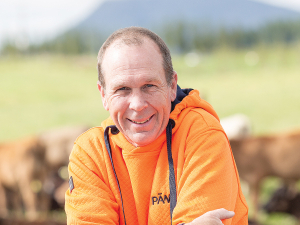
Pāmu has released its FY26 Integrated Annual Report, reporting a Net Operating Profit of $113 million, more than double the $49 million recorded in FY25.

Meat Industry Association data, released alongside the Red Meat Sector conference in Wellington, shows export value climbing across the US, China, UK and Canada.
Applications are set to open for the 2027 Zanda McDonald Award, a trans-Tasman award recognised for identifying and fast-tracking talented young leaders in agriculture and agribusiness.
The Royal New Zealand College of General Practitioners (the College) and Hauora Taiwhenua Rural Health Network are calling for investment in a proposed new training pathway for rural GPs, warning that many rural practices are struggling to recruit while a large share of the existing workforce nears retirement.
Federated Farmers has called on Central Otago District Council (CODC) to drop or vote down a plan to truck sludge from Alexandra and Cromwell to farmland near Lauder, warning it would compound an "outrageous" situation created by a separate council's decision weeks earlier.
Synlait has swung to second-half profit as operations stabilise, but the dairy processor still posted a $75.4m annual loss.