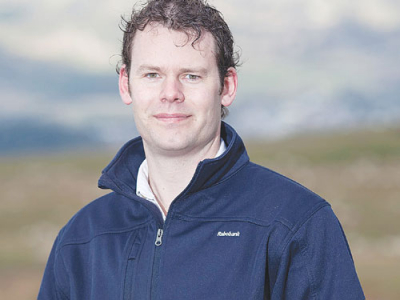
The term ‘value added’ is too often used as a vague generic, and farmers need to consider specific strategies for adding value, says Rabobank analyst Blake Holgate.
Speaking at the recent Red Meat Sector conference in Dunedin, Holgate noted that most lamb was still exported frozen, returning $6906/tonne instead of chilled at $11,897/t.
“By and large we’re still treating sheep meat as a commodity market, so the lower value frozen export market still makes up about 80% of what we export, while the higher value chilled market, that’s worth nearly twice as much per tonne, is only 20%.
“We’ve done a number of things over the years to try to improve the value of our product, to add value -- whether its packaging, processing technology or the ability just to export chilled meat. But by and large we’re still exporting to a commodity market.”
However, Holgate now sees a greater willingness to research exactly what consumers want and how it can be supplied. “We’re starting down that path and we need to continue and increase that approach.”
Holgate, an animal proteins and sustainability analyst for RaboResearch Food and Agribusiness, said his conference presentation was in the context of a report he was preparing for release, initially to Rabobank clients, next month.
Presenting four specific methods of adding value to a lamb carcase, Holgate urged farmers to understand the issues and get involved in influencing the industry. The four methods were:
• Improving lamb quality by methods including genetics and management
• Further processing and carcase utilisation
• Changing the production system to, say, organic or free-range
• Marketing and branding, while ensuring the product matched the attributes being promoted.
Holgate said it is important to match the marketing to the specific market.
The value that could be added via each of the four methods would vary depending on the target market. A UK foodservice customer may value a high quality consistent product with limited further processing, while a US wholefoods consumer may look for a conveniently portioned piece of lamb with strong ‘credence’ attributes.
Holgate gave the example of a now four-year-old survey which showed India and China consumers valued food safety while UK consumers rated animal welfare as more important. Presumably UK consumers were assuming meat in the supermarket would be safe. However, they considered foreign origin a negative, probably due to ‘buy local’ campaigns – an attitude which he thought had probably strengthened since then.
“I’m not sure there’s the same level of ‘buy local’ from the food service industry, say from restaurants. So that may be the channel we target more. It’s important to understand these dynamics that are happening at a consumer level so you can target your distribution as well.”
Holgate says that while his presentation touched only slightly on the threat of competition from manufactured protein, it was a “huge” theme of the conference. The industry is well aware of the potential challenge.
Holgate warned that promoters of alternative proteins are already effectively getting out their messaging that no animals are being killed, as well as environmental and sustainability issues.
“They’re already doing it, telling that story. We need to start building up our own story and doing our own messaging to combat that.
“That’s a motivation pushing us into the value-added space, to enable us to distinguish our meat, particularly lamb products, from manufactured meat product. Again, it’s doing all that stuff to give consumers a point of difference and a clear choice between the two.
“The challenge will be creating a point of difference because there are a lot of other lamb producers around the world already leveraging lots of attributes that we probably think are unique to us.”
Holgate said much of the feedback he got from farmers was questioning why they had to do so much about high environmental and animal welfare standards, traceability and accreditation, when competitors around the world supplying the same consumers do not.
“The answer is that we’re targeting different consumers. Though we’re supplying the same market they are going down the low-cost route in a race to the bottom. We want to target and supply the premium high-value consumers. We need to deliver all those various attributes they’re asking for.”
However, Holgate says it’s important that value-added activities do not replace cost minimisation and the attainment of production efficiencies through technology and economies of scale. Also, adding value might not necessarily mean high value products, but could also be as simple as aligning the timing of supply of lamb with customer demand.