Agri-Women's Development Trust creating future 'farm CFOs'
Graduates of a newly-updated Agri-Women’s Development Trust (AWDT) course are taking more value than ever from the programme, with some even walking away calling themselves the “farm CFO”.
 increase font size
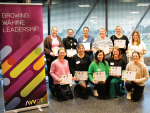
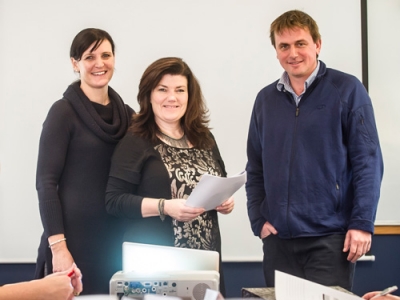 AWDT executive director Lindy Nelson (centre), Justine Kidd and Sam Orsborn facilitating part of AWDT’s Understanding Your Farming Business Programme.
The success of a national programme to develop the business skills and confidence of women on sheep and beef farms has led to its extension in 2016.
The programme empowers women to view themselves and their farming roles differently, while building their technical and communication skills. The RMPP coordinates industry and Government efforts to increase profitability and productivity in the red meat sector.
The programme 'Understanding Your Farming Business', developed and delivered by the Agri-Women's Development Trust, will be back in 2016 to enable 220 women in 14 regions to participate, with each Red Meat Profit Partnership (RMPP) funded programme limited to 16 women.
Next year the programme will be extended from three to four months to include new material on leadership development and provide opportunities to involve farming partners. Other enhancements include involving more Māori farming women.
This year 157 women farming partners from 10 centres from Invercargill to Kerikeri completed the programme. They were now creating significant practice changes within their farming businesses using new business skills and confidence according to AWDT executive director Lindy Nelson.
"The result of these changes will be seen in the bottom line of farming businesses in years to come. All participants said the programme has increased their confidence and knowledge and helped them see themselves as critical farming partners. Previously, many had described themselves as 'just a mum or just an extra pair of hands'.
"During the programme the women developed a greater understanding of how their businesses worked and that their opinions and skills added value, both strategically and operationally. They became more actively involved in strategic decisions, business planning and overseeing business performance.
"Operationally, the women also became more active within the farm's advisory team of the banker, accountant and farm advisor, as well as helping run the business out on the farm and in the office."
Three-quarters of the participants previously had no formal farm business plan. After the programme 94% reported making changes to the way they plan. All had grown in confidence in comprehending the annual accounts and asking for clarification if needed.
Nelson says that before the programme 68% of participants had little or no involvement in budgeting. After the programme 83% wanted to do the budget with their farming partner, or lead the budgeting role. Two-thirds identified a lack of training as the main barrier to budgeting.
"52% had previously not used any business or farm key performance indicators. After the programme 70% had planned to introduce them. Almost all gained understanding of and/or confidence in their risk assessment factors and how they can influence them," she said.
"We're finding that men in the sector are valuing newly-confident business partners at both strategic and operational levels. This is critical to the success of any farming partnership. They are also less resistant to farming business practice changes introduced by their partner."
Initial comparisons of the programme had shown that it met some of the learning outcomes of the Diploma in AgriBusiness Management, potentially allowing participants to apply for recognition of this.
"Our goal is for at least 10% of New Zealand sheep and beef farming women to complete the programme by 2020."
Confirmed regions for 2016 are Blenheim, Cheviot, Wanaka, Gore, Wairarapa, Tararua, Hawkes Bay, Rotorua, National Park, Gisborne, Hunterville and Taranaki. Two more programmes will be delivered for Māori women.
To express interest in the programme and for more information email This email address is being protected from spambots. You need JavaScript enabled to view it.
Graduates of a newly-updated Agri-Women’s Development Trust (AWDT) course are taking more value than ever from the programme, with some even walking away calling themselves the “farm CFO”.

OPINION: When we talk about the future of farming, we often focus on the tools - automation, sensors, satellite data, digital models. But we rarely talk about the people shaping that future. And more importantly, who might be missing from the room.
Meet the Need, New Zealand’s farmer-led food charity, has named Nick Fisher as its new chair.
A new programme designed to attract young talent into New Zealand’s food and fibre sector, accelerate career paths and sector change is rolling out for young women in tertiary study or training.
To be a good leader, you have to first know your 'why', says Ravensdown shareholder and Agri-Women's Development Trust (AWDT) Escalator programme graduate Donna Cram.
Most dairy regions around the country have had a pretty good season so far says Tracy Brown.
Rural leader Mark Hooper has been appointed as an independent director to the NZPork board, bringing extensive farming, governance and advocacy experience to the role.
Opportunity says its land value tax (LVT) is unlikely to force farmers into a position where asset sales or increased debt are required.
Milk powder prices are keeping farmgate prices up, helping processors offset the dip in milk fat prices.
Climate, nature and animal wellbeing make up Fonterra's refreshed sustainability roadmap released last week.
The Government is introducing a new nationwide rural recycling scheme that will significantly increase the recovery of farm plastics from March next year, Minister for the Environment Nicola Grigg announced today.