Fonterra FY26 Results: $9.69 Milk Price, $3.4bn Profit
Fonterra has unveiled its annual results for the 2026 financial year, posting $27 billion in revenue and close to $20 billion returned to New Zealand farmer owners and unit holders.
 increase font size
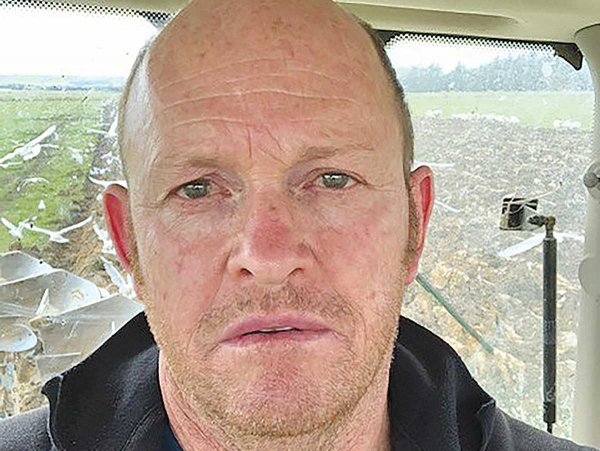 Lumsden farmer Tony Paterson is having another go at next month’s Fonterra annual meeting to revamp the troubled Shareholders Council.
A group of Fonterra shareholders are having another go at next month’s annual meeting to force a revamp of the troubled Shareholders Council.
Three resolutions have been filed by Lumsden farmer Tony Paterson: restricting the council to perform its constitutional duties, reducing the council’s annual budget by $1m, and introducing a new 0.0015c/kgMS farmer levy to fund the council.
To pass, the resolutions need 50.1% support from voting shareholders.
Last year, Paterson moved a resolution to start an independent review of the council, but the motion received only 44% support.
Paterson told Rural News that this time he’s confident of getting over the 50.1% threshold at the annual meeting in Masterton on November 5.
“I have been in talks with a number of shareholders throughout the country and am feeling very confident.”
He has also secured the backing of a group of Waikato farmers, who also moved a similar motion last year and garnered 26% support.
The Fonterra Shareholders Council is a 25-member elected body, tasked with keeping a tab on Fonterra’s financial performance.
Following heavy financial losses in 2018 and 2019, Fonterra shareholders have vented their frustration with the council for “sleeping at the wheel”.
Last year, the council announced a review of its functions; an interim report was released in June and the final report due this week. The council is opposing Paterson’s resolutions.
Council chairman James Barron told Rural News that the Paterson resolution was attempting to pre-empt the steering group’s final report.
Barron says the final report will consider views by all Fonterra farmers.
He says the steering group has signaled possible changes to council’s roles and functions.
Barron says the council also opposes a levy-based funding model that will require it to hold reserves to cover poor seasons.
“The ccouncil has no ability or desire to retain farmers’ funds in this manner,” he says.
But Paterson believes shareholders are “deeply disappointed” with the outcome of the review so far.
“It is a lost opportunity to return our representative body to the effective, respected organisation it has been in the past.
“Overwhelmingly, farmer feedback is that the Shareholders Council hasn’t performed.
“It is ludicrous that the review steering committee’s response to this is to suggest giving the council even greater responsibility.”
Paterson says there has been a lot of “noise” about the council being a cornerstone shareholder and holding the board to account.
But he says Fonterra’s constitution doesn’t state that.
“Over time, the council has anointed itself with those titles and expanded its scope, to the detriment of its overall performance.”
Paterson’s resolution proposes to slash $1m from the council’s budget: reducing number of committees and meetings and passing councilor development programmes, conferences and other shareholder engagement costs onto Fonterra’s management.
Waikato farmer Trevor Simpson says his group fully supports Paterson’s resolutions. His group submitted similar motions on the council at last year’s meeting.
“In hindsight we may have split the votes last year. Tony has done a better job putting together the resolutions this year and we fully back him.”
Fonterra has unveiled its annual results for the 2026 financial year, posting $27 billion in revenue and close to $20 billion returned to New Zealand farmer owners and unit holders.
Fonterra Co-operative Group has confirmed the independently assessed candidates standing for election to its board in 2026.
Fonterra has revised its Farmgate Milk Price forecast for the 2026/27 season, lifting the midpoint and narrowing the range on the back of improving global dairy commodity prices.
Outgoing Fonterra Co-operative Council chair John Stevenson says that it has been a privilege to represent the co-op's farmer shareholders.
OPINION: It seems Canterbury processor Synlait is still in the doldrums.


The Royal New Zealand College of General Practitioners (the College) and Hauora Taiwhenua Rural Health Network are calling for investment in a proposed new training pathway for rural GPs, warning that many rural practices are struggling to recruit while a large share of the existing workforce nears retirement.
Federated Farmers has called on Central Otago District Council (CODC) to drop or vote down a plan to truck sludge from Alexandra and Cromwell to farmland near Lauder, warning it would compound an "outrageous" situation created by a separate council's decision weeks earlier.
Synlait has swung to second-half profit as operations stabilise, but the dairy processor still posted a $75.4m annual loss.
LIC shareholders have elected a new North Island representative to the co-operative's Board, along with five representatives to its Shareholder Reference Group (SRG), following the company's Annual Meeting held in Invercargill.
Farmers across parts of Southland and South Otago are continuing to deal with difficult conditions after a prolonged run of wet weather, with pressure building around feed supply, stock management, pasture damage, farm infrastructure and everyday workloads.
Federated Farmers says it welcomes Labour's commitment to reviewing the Sharemilking Agreements Act, calling on other major parties to do the same.