NZKGI Responds to Migrant Worker Exploitation Reports
Where any worker in the kiwifruit industry is mistreated, we expect the authorities to take action.
 increase font size
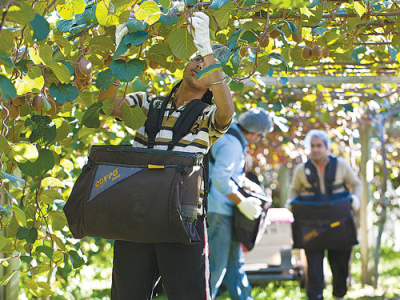 Bay of Plenty’s kiwifruit sector has 1200 vacancies for pickers and packers.
Kiwifruit is in a “perfect storm” this year with a larger harvest and fewer backpacker and international student seasonal workers, says New Zealand Kiwifruit Growers Inc (NZKGI) chief executive Nikki Johnson.
Now at the peak kiwifruit harvest season, Bay of Plenty has about 1200 vacancies for pickers and packers.
Last week, half of this season’s total crop was yet to be harvested. At least 20% more trays will be picked and packed this season than the 120 million trays last year.
The Ministry of Social Development (MSD) has declared a labour shortage which runs until June 8. This allows overseas visitors – provided they already hold visitor visas -- to apply to vary the visa conditions to work in kiwifruit in Bay of Plenty.
“Attracting NZers to participate in the harvest is our first priority and over 60% of our seasonal workforce comes from NZ,” says Johnson.
“However, during the peak of harvest, other sources of workers, e.g. from the Recognised Seasonal Employer (RSE) scheme and backpackers, are required. The industry is in an exciting growth phase and to achieve this we must have sustainable seasonal labour.”
John son says the industry will have a “robust discussion” with the Government on getting more workers under the RSE scheme and other avenues to meet demand during the harvest.
NZKGI, analysing future labour demands, forecasts the industry will by 2030 contribute 135% more to Bay of Plenty’s GDP ($2.04 billion) and offer 14,329 new jobs. It now contributes $867 million to the region’s GDP and in 2015-16 employed 10,762 FTE workers.
MSD regional commissioner Mike Bryant says the causes of the region’s labour shortage include fewer international students, a bounce-back from the PSA virus impacting crop volumes and varieties, and a low unemployment rate.
“About one third of this year’s crop has been picked and packed but the industry’s entering the main packing period and more people are needed,” he says.
The SunGold variety (44% of the total crop) requires picking in a shorter timeframe and so greater reliance on fruit pickers at this time.
Between January and April this year, MSD placed 1000 people in work. Its ‘Work the Seasons’ job scheme and seasonal work vacancies are posted in the region’s WINZ local service centres. Bryant says MSD is discussing with industry leaders how to attract workers by improving employment practices.
MSD says the labour shortage declaration will be monitored and amended if conditions change.
Where any worker in the kiwifruit industry is mistreated, we expect the authorities to take action.

Kiwifruit growers are watchful but remain optimistic as concerns around the potential effects of the El Niño weather pattern this season.
More signs of a booming kiwifruit sector.
After delivering a strong financial year, rural trader PGG Wrightson says the coming months will depend on customer confidence and weather.
New Zealand growers have always adapted to changing conditions, but one challenge is steadily gaining ground across the horticulture sector: resistance.


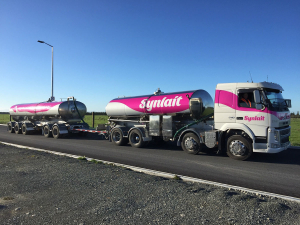
Synlait has swung to second-half profit as operations stabilise, but the dairy processor still posted a $75.4m annual loss.

LIC shareholders have elected a new North Island representative to the co-operative's Board, along with five representatives to its Shareholder Reference Group (SRG), following the company's Annual Meeting held in Invercargill.
Farmers across parts of Southland and South Otago are continuing to deal with difficult conditions after a prolonged run of wet weather, with pressure building around feed supply, stock management, pasture damage, farm infrastructure and everyday workloads.
Federated Farmers says it welcomes Labour's commitment to reviewing the Sharemilking Agreements Act, calling on other major parties to do the same.
For Canterbury dairy farmers Sian Meijer and Rick Wobben, wearable technology has become one of their most valuable on-farm tools - helping manage 1850 cows across an expansive, high-performing dairy operation while improving efficiency, mating outcomes and day-to-day decision making.
Fonterra has unveiled its annual results for the 2026 financial year, posting $27 billion in revenue and close to $20 billion returned to New Zealand farmer owners and unit holders.