Esther Guy-Meakin Appointed Chief Executive of the NZ Meat Board
Esther Guy-Meakin has been announced as the new chief executive of the New Zealand Meat Board (NZMB).
 increase font size
 MIA chair John Loughlin says China is one of the most demanding export markets in the world.
Meat Industry Association chair John Loughlin says China is one of the most demanding export markets in the world.
This is particularly so in the present Covid-19 environment and Loughlin says NZ companies need to be aware of the strict Chinese health requirements, or risk being excluded from that market.
China is very concerned about the possibility of Covid coming into the country on imported products and he says there is a belief the virus can survive on packaging materials stored in cool environments. Loughlin says NZ meat companies have to be aware of China’s high import standards – especially in regard to Covid.
“The Chinese are a net importer of food and it has to strike a balance about keeping Covid out and keeping its people safe,” Loughlin told Rural News. “There is no indication that they will ban individual countries from sending product to China because of Covid-related matters. But, at the same time, they have removed access on a temporary basis for individual meat processing sites that have had problems.”
He says, in extreme cases, if the Chinese have felt all is not right with a company, they have banned imports from that company.
Suspensions can take a long time to reverse and in some cases a year. “Their approach is that they need to be satisfied on the controls at the individual processing plants and companies.”
Loughlin says there are also instances when the bans have been lifted within a matter of days.
The companies most at risk are smaller, singlesite operations and Rural News is aware that no stone is left unturned by these companies to meet the strict Chinese standards, which can change depending on the Covid- 19 situation.
Loughlin says China is particularly demanding and there is an expectation within the Chinese Party system and government that it will keep people safe, hence the very high standard of import requirements.
“China came late to the world of global trade and didn’t have a set of import rules, so it looked around the world and took the most demanding standards from each country and pulled those into a package,” he explains. “They took something from one country and another thing from another country and so on – so that’s why Chinese standards are so high.”
Loughlin says in China there is a big expectation on government officials that imported goods will meet the higher standards and will keep their people safe.
He says China and NZ have taken similar approaches to dealing with Covid by trying to stamp out the virus and that bodes well for us.
Loughlin believes NZ is very capable of meeting the Chinese standards but warns companies can never relax their vigilance on this issue.
Esther Guy-Meakin has been announced as the new chief executive of the New Zealand Meat Board (NZMB).

As expected, the US has launched a safeguard investigation into lamb imports, a move that could impact New Zealand sheepmeat returns.
New Zealand's red meat sector says it welcomes the Government's focus on trade ahead of the general election in November.
New Zealand red meat exports are booming but a pending decision in the White House, Washington D.C., could dent sheepmeat earnings.
Prime Minister Christopher Luxon says the red meat sector is doing an excellent job promoting our pasture-fed system around the globe.

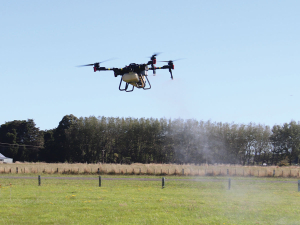
OPINION: David Seymour and James Meager's plan to make it easier for farmers and orchardists to operate drones can best be described a 'courageous' move.

New Zealand wool is reaching new heights as air filtration companies move away from synthetic products to biodegradable alternatives.
Opuha Dam's ability to protect South Canterbury communities from major flooding has taken a significant step forward, with Opuha Water Limited (OWL) successfully commissioning a new outlet valve capable of releasing record volumes of water from the dam ahead of a weather event.
There's been widespread support from the primary sector for the Government's announcement on changes to freshwater farm plans that come under the Natural Environment Bill, which is now set to replace the existing RMA.
A partnership between state-owned enterprise Pāmu (Landcorp Farming Limited) and charity Meet the Need is putting more than quality New Zealand beef into food bank parcels this year.
The Opportunity Party has faced criticism during the election campaign that its policies are too urban-focused and offer little for rural communities.