NZKGI Responds to Migrant Worker Exploitation Reports
Where any worker in the kiwifruit industry is mistreated, we expect the authorities to take action.
 increase font size
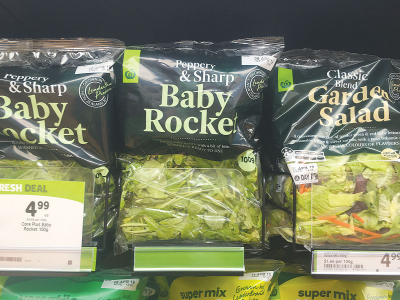 Salad is big business.
Salad is having its day in the market, says LeaderBrand.
Chief executive Richard Burke estimates that it makes up 30-40% of LeaderBrand’s business, all of it customer driven.
He says the salad category has been growing annually at 5-10% over the last 20 years and puts this down to NZ consumers wanting fresh product.
“Convenience now is becoming important, so the prepared salads are in one bag with dressing and that captures the consumer’s requirements,” Burke told Hort News. “The category has grown in value and to me it’s due to a mix of technology and of people’s desire to eat fresh.”
He says the other part of the equation is having year-round supply and a consistent price. That is why Burke says LeaderBrand has invested in producing its crops in different regions.
“Whilst consumers might like their products really cheap one week, they get frustrated when it’s really expensive the next week, so our ability to now grow our products in multi locations gives us the ability to have some consistency and values and volumes going through the market,” he explains.
Burke says that LeaderBrand, under the direction of owner Murray McPhail, has always had a strong customer focus and almost an obsession with excellence. This shows in both the field and in the factory where order and cleanliness are strictly observed.
At the management level, Burke says the success of the business is built on satisfying the core needs of the customer.
“You can talk about the food safety, traceability and grower story and all that, but you need products on the shelf that look really good and that people take away and cook easily,” he adds.
“If you don’t have that as your core focus you are never going to have a product that works. What we have to do is supply food that people want to eat.”
Where any worker in the kiwifruit industry is mistreated, we expect the authorities to take action.

Kiwifruit growers are watchful but remain optimistic as concerns around the potential effects of the El Niño weather pattern this season.
James Blair, an agronomist for AS Wilcox and the Pukekohe regional champion, has won the 2026 Young Grower national title.
Claimed to be the first autonomous robot for New Zealand vegetables growers, the first Kilter AX-1 unit has arrived in the country.
After delivering a strong financial year, rural trader PGG Wrightson says the coming months will depend on customer confidence and weather.

Halter has launched Mav, an AI farming assistant that lets dairy farmers ask questions about their herd and pasture and get answers drawn from the data the company’s collars already collect.

OPINION: At first glance it appears that Father Christmas has delivered the rural sector good tidings, with most pundits predicting the return of the centre-right coalition.
For 15 years, Glenda Rees has travelled from Gore to Awarua, often several times a week, to keep watch over one of the country’s rarest birds.
With some farmers opposing a government-industry partnership set up to develop methane reducing products, one NZ company claims that it already has a product on the market.
During the nesting season, from September to December, industrious starlings can quickly build nests in the darker areas behind tractor and vehicle, usually close to hot engines, typically resulting in localised damage or in some cases complete write-offs.
The meat processing industry is much more collegial than it was in the past and is now more focused on common goals.