M.I.A.
OPINION: The previous government spent too much during the Covid-19 pandemic, despite warnings from officials, according to a briefing released by the Treasury.
 increase font size
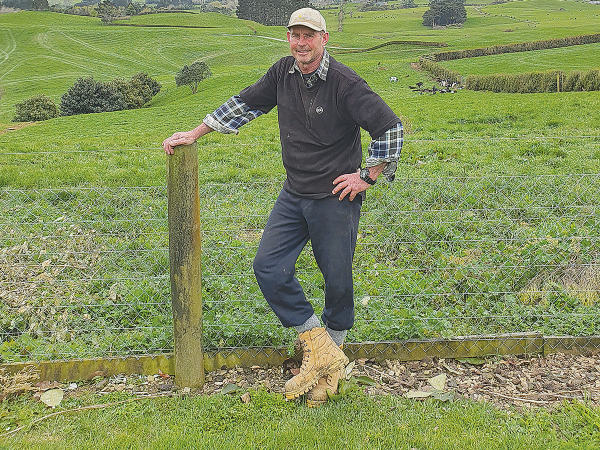 South Auckland dairy farmer Brian Gallagher says the system allowing him and his staff to cross the border from the Auckland region into the Waikato is working well.
South Auckland dairy farmer Brian Gallagher says the system that allows him and his staff to cross the border from the Auckland region into the Waikato is working, is easy and seamless.
Gallagher's farms at Patumahoe, about 10 minutes north of Pukekohe, where he runs 400 cows on a 125 hectare milking platform with annual production of about 180,000 kg/MS.
He needs to cross from the Auckland region into Waikato to get to his run-off blocks at Glen Murray and Mangatawhiri, where he grazes 300 heifers. For Gallagher, the crossing points are at Mangatawhiri and at the golf course at Onewhero, near Pukekawa.
Normally, he crosses the border once a week to check on the heifers and says the process during Auckland's level 4 lockdown has been easy.
"My good wife did the technology to get the exemption papers and we got these literally overnight. We have also got the Covid traces app on farm," he says.
Only Gallagher and his immediate family live on the farm - the rest of the staff live locally and commute daily to the farm. His system is unusual in that separate teams do the morning and afternoon milkings and are contract milkers. He was operating this system before the arrival of Covid but admits that now it works well in keeping staff safe because there are two distinct bubbles.
"All staff carry the MIQ exemptions in their vehicles because they may need to cross the border. For example, if anyone is coming out of Waiuku at 5am gets stopped, they have a copy of our exemption letter in their vehiclue, which says exactly where they are allowed to go," Gallaghe told Rural News.
"We have one staff member who milks at the weekend and she has to go through the border check to come to work. When the barcode on her exemption letter is scanned it clearly states that she can only come to our place and she also has to produce ID."
Gallagher says the system in operation now is seamless and easy comparred to the one last year, which was based at Bombay. He says he's encountered no problems at all and at worst there have just been three or four vehicles in front of him at the checkpoints so waiting time has been minimal.
In terms of the lockdown, he says it's had little impact on his farming operations. Gallagher says his bulk deliveries come from Mt Maunganui and the people who deliver these are vaccinated, have the necessary exemptions and codes and are tested for Covid as required.
"So, we've had no problem getting in feed and other supplies. We are pretty lucky as one of our supply merchants is based in Patumahoe and he can drop things off at the gate."
The advent of Covid-19 has changed the way Gallagher and other farmers operate. His own family is fully vaccinated, as are most of his staff. He says the emphasis now is on keeping family and staff safe and well.
"We have always been good at this. But going through winter, we told our staff if they had any indication that they were slightly unwell, we didn't want to see them on farm and recommeded they get a Covid test," he told Rural News. "We have made it very clear to our staff, if they don't feel safe coming to work on farm for their own reasons, don't come."
Gallagher admits he's missed not being able to visit the local coffee shop during lockdown, but says on the brighter side, having a job in agriculture is a pretty good spot to be in.
OPINION: The previous government spent too much during the Covid-19 pandemic, despite warnings from officials, according to a briefing released by the Treasury.
OPINION: Labour leader Chris 'Chippy' Hipkins is carrying on the world-class gaslighting of the nation that he and his cohorts started after their disastrous Covid response; now trying to undermine the Covid inquiry to protect his own backside.
OPINION: Did former PM Jacinda Ardern get fawning reviews for her book?
OPINION: Welcome to the second annual NZ Dairy Expo at Matamata – an event created to bring together the best of the New Zealand dairy industry in a focused, grassroots environment where dairy farmers and rural professionals can meet, talk, compare products, and make smart decisions for their farms.
It's a bloody tough year for sheep farmers, but the worst may be over, and the future looks optimistic.



Testing confirms H5 bird flu in a single northern giant petrel, found dead on a remote Cape Palliser beach in the Wairarapa, says Dr Mary van Andel, the Ministry for Primary Industries' (MPI) Chief Veterinary Officer.

"What's for dinner?" may sound like a simple question, but for many Kiwi parents, answering it has become a job in itself.
Fifty Eight years ago, on the 16th of August 1968, August Claas, the founder of the harvesting company and father of Helmut Claas, personally presented a Claas Senator combine harvester to Scottish farmer John Steven.
New Zealand consumers are paying more for beef mince than ever before, with the average retail price now sitting above $24 per kilogram, according to Rabobank.
State farmer Pamu has delivered its strongest operating result on record.
Four years since it was first detected in New Zealand, researchers and growers now know much more about management of maize pest fall armyworm (FAW).