Open Country opens butter plant
When American retail giant Cosco came to audit Open Country Dairy’s new butter plant at the Waharoa site and give the green light to supply their American stores, they allowed themselves a week for the exercise.
 increase font size

THE ANZ Bank’s head of agri and commercial, Graham Turley, says farmers appear to be concentrating on profitability, which will help mitigate some of the Reserve Bank’s concern about the high level of debt in the dairy sector.
Reserve Bank deputy governor Grant Spencer says high debt in the dairy sector is a risk to New Zealand’s financial stability, as is the high level of external indebtedness.
He says that while the dairy sector is currently enjoying record prices, its high level of indebtedness makes it vulnerable to a fall in commodity prices or an increase in interest rates. In recent years dairy farmers have taken a more cautious approach to investment and this will need to continue to help mitigate any risk, he says.
MPI made a similar point in June when it noted that about half of the $30 billion debt in the sector was held by just 10% of farmers.
Turley says in the last couple of years dairy farmers have become more focused on and better at financial management. Until recently, few farmers would have been able to produce spread sheets with data on cashflows, financials, milk solids per cow and hectares and other data. But the financial skills of progressive farmers have increased significantly, he says.
“Certainly, we can expect to see continued volatility in commodity prices, but every review of the rural sector shows improvements in farm business management and efficiency,” he told Rural News. “Reinvestment by farmers is driving farm profitability, rather than solely commodity prices. Last year, for example, the dairy industry invested $1.2 billion in driving farm productivity.”
Turley says the ANZ Privately Owned Business Barometer survey shows an emerging focus on profitability is driving the decision-making of leaders in all sectors of agribusiness.
“This signals a move from farming for capital gain, based on land acquisition, to decision-making focused more on investment. This new model is more concerned with cash flow and sustainable growth, and careful consideration of return on investment. More farmers in all agri sectors are now talking about profit performance, where before they talked about hectares, stock numbers and production numbers.”
According to Turley, debt is a reflection of confidence by the farming sector in the opportunities available to New Zealand primary exporters and recognition of the need to invest and expand to take advantage of those opportunities.
“The recent Greener Pastures report by ANZ found that New Zealand has the potential to capture $1.3 trillion more in agricultural exports between now and 2050. However, it is a conditional opportunity. Constraints on capital, skills, R&D and extension services, land access, supply chain costs and market access will need to be overcome.”
Turley says if farmers don’t invest in this capability, New Zealand will become less competitive against other primary producing nations who will challenge our position in the decades ahead.
When American retail giant Cosco came to audit Open Country Dairy’s new butter plant at the Waharoa site and give the green light to supply their American stores, they allowed themselves a week for the exercise.

Fonterra chair Peter McBride says the divestment of Mainland Group is their last significant asset sale and signals the end of structural changes.
Virtual fencing and herding systems supplier, Halter is welcoming a decision by the Victorian Government to allow farmers in the state to use the technology.
DairyNZ’s latest Econ Tracker update shows most farms will still finish the season in a positive position, although the gap has narrowed compared with early season expectations.
Canterbury farmer Michelle Pye has been elected to Fonterra’s board for a three-year term.
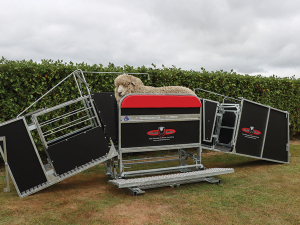
Oamaru-based livestock handling specialist Te Pari has bought Combi Clamp, the New Zealand manufacturer of Combi Clamp manual sheep handlers.
Agriculture Minister Todd McClay has admitted that a scheme bringing workers from Pacific nations to work on orchards has become too hard to navigate but says changes are coming.
A new app designed in New Zealand aims to help sheep, beef and deer farmers capture, analyse and use body condition score data more effectively.
Canterbury farmer Andy Macfarlane has been appointed to the board of AgriZeroNZ, the public-private partnership designed to accelerate the development and deployment of emissions reduction tools for New Zealand farmers.
For over 50 years Mel Ewers has been supporting the apple sector navigate through compliance and quality assurance issues.
The apple sector is enjoying a bumper harvest season.