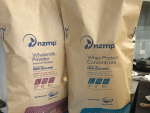
Open Country opens butter plant
When American retail giant Cosco came to audit Open Country Dairy’s new butter plant at the Waharoa site and give the green light to supply their American stores, they allowed themselves a week for the exercise.
 increase font size

The Government is currently seeking submissions on a raft of proposed changes affecting agriculture in the Emissions Trading Scheme (ETS) and the deadline is fast approaching for interested parties to have their say, Anderson Lloyd Lawyers Partner Lesley Brook says.
"The submissions process provides an important opportunity to re-examine how we account for agricultural emissions," Brook says.
"We have to get this right so that when eventual liability to surrender carbon credits for agricultural emissions is introduced, we can be confident that the apportionment of accountability is accurate and fair," she says.
"It is also important to ensure that the Government has accurate data now to influence priorities for investment in research for the reduction of emissions without compromising production."
The consultation document updating the regulations for agriculture in the New Zealand ETS reflects work by the Agriculture ETS Advisory Committee on the practical and technical aspects of bringing agriculture into the scheme.
"The changes that are being proposed now to the regulations will affect not only the accuracy and fairness of reporting as between different agricultural sectors, but also in due course which agricultural sectors will bear what liability to surrender carbon credits," Brook says.
One important principle driving the changes which the Government wants to make is to ensure that different agricultural sectors are not subsidising each other.
"According to the Consultation Document the current approach to the reporting of emissions for the beef meat industry includes about 26% of the emissions from dairy cattle. One proposed change would amend this, so that the dairy industry correctly accounts for all its emissions," Brook says.
"Under the current reporting regulations the sheep meat industry is accounting for emissions from all sheep in New Zealand, even though wool production accounts for about 30% of total sheep emissions. That is also to be corrected under one of the changes in the Consultation Document.
Another crucial issue the consultation document considers is which agricultural sectors should be included in the Scheme and which should not. Where should that line be drawn?
"The wool industry is not currently included in the Emissions Trading Scheme 'for administrative and practical reasons'. Should it be included? If so, where would the point of accountability for emissions lie? If it is not included then New Zealand's international liability in respect of emissions from these sheep will be borne by taxpayers generally rather than by the wool industry," Brook says.
The regulations require agricultural emissions to be reported by the meat and dairy processors, not by farms, at least for now. While this is administratively simpler, it also means emissions calculations are currently based solely on production levels, Brook says.
When American retail giant Cosco came to audit Open Country Dairy’s new butter plant at the Waharoa site and give the green light to supply their American stores, they allowed themselves a week for the exercise.

Fonterra chair Peter McBride says the divestment of Mainland Group is their last significant asset sale and signals the end of structural changes.
Virtual fencing and herding systems supplier, Halter is welcoming a decision by the Victorian Government to allow farmers in the state to use the technology.
DairyNZ’s latest Econ Tracker update shows most farms will still finish the season in a positive position, although the gap has narrowed compared with early season expectations.
Canterbury farmer Michelle Pye has been elected to Fonterra’s board for a three-year term.

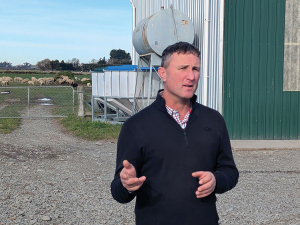
Improving health and safety is about incremental gain rather than a sudden decision, says Leeston farmer and Federated Farmers health and safety spokesman David Birkett.
OPINION: Alistair Carmichael raises some interesting questions about striking a balance between profitability in farming and preserving the character of rural communities.
Ploughing champions Mark Dillon and Malcolm Taylor earned the right to represent the country at the World Ploughing Championships in Osijek, Croatia, on 5 and 6 September, after winning their titles at the New Zealand Ploughing Championships in Middlemarch in 2025.
The man appointed to lead Gallagher's global Animal Management business through the next stage of growth believes the wearables boom is here.
Horowhenua organic dairy farmers Ange and Wayne Moxham have taken their business to a new level.
Federated Farmers' new vice president Sandra Faulkner says the issue of adverse events emergency management and infrastructure needs to be taken out of the three-year political cycle.