Damien O’Connor Criticises Budget 2026 as ‘Miserable’ for Rural New Zealand
A miserable budget that didn’t deliver much for anyone.
 increase font size
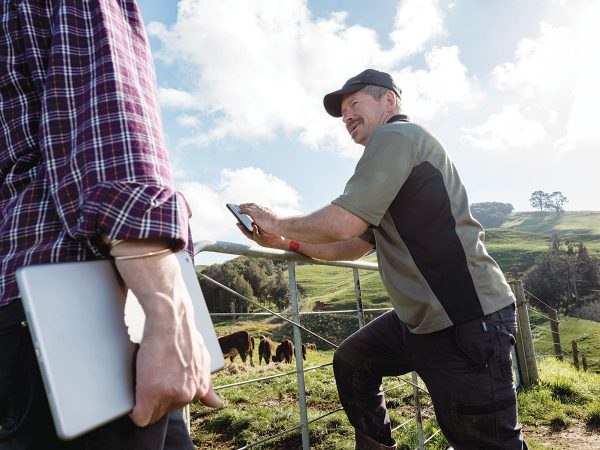 The aim of the project is help farmers and growers collate and share environmental compliance data digitally.
Agriculture Minister Damien O’Connor says if a new research project is successful, farmers and growers will be able to collate and share environmental compliance data digitally.
TANZ (Trust Alliance New Zealand) is exploring and designing a proof-of-concept digital Farm Environment Plan (dFEP) solution to move away from the current paper-based approach.
“This will enable New Zealand farmers to collate and share farm information required for environmental regulation quickly and effectively,” O’Connor claims. “A key objective for us is to deliver integrated farm planning to reduce duplication and cost for farmers and growers as they meet environmental goals. This research will help take us there.”
TANZ is a non-profit data sharing framework and recently formed a Primary Industry Consortium connecting participants and providers across the entire primary sector value chain. As a member of TANZ, Federated Farmers New Zealand will assist in outreach to farmers for this project.
The Government is backing the research through the Ministry for Primary Industries’ (MPI) Sustainable Food and Fibre Futures (SFF Futures) fund. The research aims to fast-track the delivery of a digital solution for farm environment plans, with SFF Futures contributing $493,500 to the $823,500 TANZ led project.
Within the next year, the dFEP project aims to have completed study across New Zealand to find ways to improve data sharing and streamline the process for farmers and growers. The goal is to reduce costs and improve information retention, while allowing farmers to comply with environmental regulations – such as land use, water quality and emissions management by 2025.
The project will also be working with a range of other parties such as industry partners and regulators including MPI, the Ministry for the Environment, regional councils and AgriTech NZ.
“TANZ will draw on their findings to develop a more efficient way for data interoperability that keeps farmers and growers in control of their information,” O’Connor adds.
“One of the goals of this project is education and awareness among farmers and growers so they understand the benefits of this new way of data management and permissioned data sharing.”
He says that high-value consumers overseas increasingly want to know that the products they’re purchasing are both good for them and for the environment.
“The easier we can make compliance for farmers the better outcomes there will be for our environment.”
A miserable budget that didn’t deliver much for anyone.

National's decision to ‘dribble’ information about the NZ/India to Labour contributed to the delay in it deciding to supported the FTA.
When it comes to international trade, politicians from all sides of the aisle are united, says Labour's trade spokesman Damien O'Connor.
Federated Farmers have reiterated their support for the coalition Government to abolish the present ban on the live export of animals.
As the coalition Government mulls new regulations to reinstate the export of live animals, debate is heating up between supporters and opponents.



Testing confirms H5 bird flu in a single northern giant petrel, found dead on a remote Cape Palliser beach in the Wairarapa, says Dr Mary van Andel, the Ministry for Primary Industries' (MPI) Chief Veterinary Officer.

"What's for dinner?" may sound like a simple question, but for many Kiwi parents, answering it has become a job in itself.
Fifty Eight years ago, on the 16th of August 1968, August Claas, the founder of the harvesting company and father of Helmut Claas, personally presented a Claas Senator combine harvester to Scottish farmer John Steven.
New Zealand consumers are paying more for beef mince than ever before, with the average retail price now sitting above $24 per kilogram, according to Rabobank.
State farmer Pamu has delivered its strongest operating result on record.
Four years since it was first detected in New Zealand, researchers and growers now know much more about management of maize pest fall armyworm (FAW).