Lanaco and Blueair Launch World-First NZ Wool Air Filter
New Zealand wool is reaching new heights as air filtration companies move away from synthetic products to biodegradable alternatives.
 increase font size
 Paul Alston says wool is the forgotten fibre and we need to be telling it's story.
Paul Alston believes that when comparing wool and synthetic carpets, wool wins every time.
“It is time we started dispelling the myths about wool,” he told Rural News. “Wool is a far better product. It is the forgotten fibre, and we need to be telling its story.”
Alston, as chief executive of Bremworth, is putting his company’s money where his mouth with its recent move to only produce 100% wool and natural fibre carpets.
“We didn’t believe we could be authentic about promoting the wool story if we were selling synthetic carpets and that is why we have moved to 100% natural fibres only,” he says.
Alston believes the key to telling the wool ‘story’ is reconnecting with consumers.
“It will see us heavily promoting wool’s benefits to consumers, as well as incentivising retailers,” he explains. “Science will also play an important role. We have to back up all our claims with the appropriate science and research.”
Alston says the company is already working with MPI’s Sustainable Food and Fibre Fund (SFF) in regard to things such as the superior odour, staining and fire-retardant properties of wool carpets compared with synthetics.
Alston concedes that while strong wool growers in NZ are facing tough times with record low prices, he believes that there is a good future. “The reality 60% of NZ’s strong wool goes into soft flooring, so if more people buy wool carpets – wool prices will increase.
“The industry needs a north star that it can rally behind and follow.”
Alston hopes that Bremworth’s move to 100% wool and natural fibres will be the NZ wool industry’s ‘north star’ and a catalyst for change.
He claims that the company’s move to 100% natural fibre is already creating waves in the industry – with reports of competitors following suit.
“NZ is the best at making wool carpets; we cannot compete in size and scale in synthetics. We need to concentrate on what we do best.”
Alston believes the world is ready as sustainability becomes a more and more important factor in consumer decisions.
“It takes something likes 22,000 plastic bag equivalents to carpet a house in synthetic carpet. In the US, around 5% of landfill is taken up with synthetic carpets,” he explains.
“That is not sustainable; things have to change – wool is the answer.”
New Zealand wool is reaching new heights as air filtration companies move away from synthetic products to biodegradable alternatives.
Will a stronger, more coordinated voice help rebuild confidence and improve returns in the wool sector?
OPINION: Confidence in the wool sector is rebounding as prices hit levels not seen in more than 15 years.
The recently signed free trade agreement with India is an invitation to strengthen relationships between the New Zealand and Indian strong wool industries, says Wool Impact chief executive Andy Caughey.
Strong competition and tightening supply have seen wool reach its highest prices paid at auction since 2011.


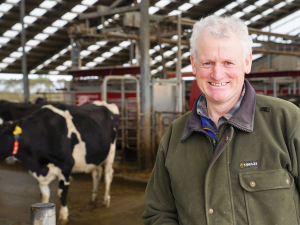
In Dacre, near Invercargill in New Zealand’s South Island, Bruce Dinnington is running a dairy operation unlike any other.

A free online platform aggregating governance vacancies across rural and regional New Zealand has been launched.
Environment Minister Nicola Grigg has announced details of a new rural plastics recycling scheme.
Agricultural drone operators say that a government decision to allow lower-risk drone work without certification won’t lower standards but drive innovation and efficiency.
OPINION: Warning bells are ringing in the arable sector.
Farmgate lamb prices are down by 8%, beef cattle by 4.5% and farm expenditure up by 4.2%.