Fonterra FY26 Results: $9.69 Milk Price, $3.4bn Profit
Fonterra has unveiled its annual results for the 2026 financial year, posting $27 billion in revenue and close to $20 billion returned to New Zealand farmer owners and unit holders.
 increase font size
 Westland chair Matt O’Regan
THE COUNTRY’S second-largest dairy company Westland has cut its payout for the coming season and it’s expected Fonterra will make a similar call this month.
Last week, Westland Milk Products reduced its predicted payout for the 2014-15 season by 40 cents/kgMS. The company blames the cut on a continuing global oversupply of dairy products and the impact of a relatively high New Zealand dollar.
Westland chairman Matt O’Regan advised shareholders, at last week’s annual meeting, that the predicted payout was now at $5-$5.40/kgMS. He said advance payments to shareholders will also be adjusted to reflect the lower dairy prices and, therefore, the lower cashflows into the business.
“This will be unwelcome news for shareholders, but not unexpected,” O’Regan says.
“At our October shareholder meetings we warned suppliers that the high level of in-market stocks held by dairy customers was producing downward pressure on prices, especially in the area of bulk milk powders where most of our business is still conducted.”
Many bank and industry commentators have been picking a fall in this season’s dairy company payouts for some time.
O’Regan says the inventory position for many of New Zealand’s dairy customers is a reflection of some overstocking earlier in the year following supply concerns due to drought, food safety and regulatory changes.
“These concerns are not significant at present and in-market inventory is slowly being consumed. But customers are generally comfortable with their inventory positions into the first quarter 2015, so we do not expect a sudden uplift in demand.”
O’Regan conceded the payout drop will be a challenge for many farmers and budgets will be tight. “The company has systems and processes in place to offer every support it can to shareholders who might struggle financially,” he says.
Back to basics
FONTERRA ANTICIPATES farmers reducing supplementary feed and cull cows as the low payout squeezes cashflow onfarm.
Co-op chairman John Wilson says he expects most farmers to revert to more traditional farming systems in response to the low payout.
“It is likely they won’t feed as many supplements, particularly bought-in supplements,” he told Rural News. “Therefore stocking rates will probably come down when there is feed pressure; so there will be a bit more culling.
“This is what they did a few years back when the payout was low; it’s the old adage: stick to the grass curve, that’s where you make your money.”
Fonterra’s board will meet next to review the milk price payout; it has cut the forecast by 70c to $5.30/kgMS.
Wilson says farmers need a clear indication of pricing, especially when cashflows are tight.
He says demand is growing pleasingly in line with predictions. “But over-supply – after high prices, good weather, low grain prices and risk heightened by geopolitical uncertainty in Europe and the Middle East – is delaying the return to the predicted rebalancing of supply/demand and therefore pricing.”
Fonterra has unveiled its annual results for the 2026 financial year, posting $27 billion in revenue and close to $20 billion returned to New Zealand farmer owners and unit holders.
Fonterra Co-operative Group has confirmed the independently assessed candidates standing for election to its board in 2026.
Fonterra has revised its Farmgate Milk Price forecast for the 2026/27 season, lifting the midpoint and narrowing the range on the back of improving global dairy commodity prices.
Outgoing Fonterra Co-operative Council chair John Stevenson says that it has been a privilege to represent the co-op's farmer shareholders.
OPINION: It seems Canterbury processor Synlait is still in the doldrums.


Federated Farmers says it welcomes Labour's commitment to reviewing the Sharemilking Agreements Act, calling on other major parties to do the same.
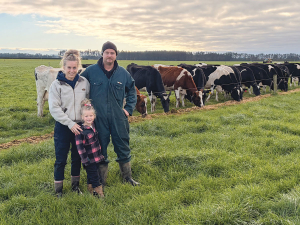
For Canterbury dairy farmers Sian Meijer and Rick Wobben, wearable technology has become one of their most valuable on-farm tools - helping manage 1850 cows across an expansive, high-performing dairy operation while improving efficiency, mating outcomes and day-to-day decision making.
Fonterra has unveiled its annual results for the 2026 financial year, posting $27 billion in revenue and close to $20 billion returned to New Zealand farmer owners and unit holders.
The first major update to the Dairy Cattle Code of Welfare in more than a decade has been released, marking what DairyNZ describes as an important step in ensuring animal welfare standards continue to evolve alongside scientific evidence and on-farm realities.
Ravensdown shareholders have elected Jane Montgomery and Kate Acland to the Ravensdown Board for three-year terms, following a closely contested director election.
Federated Farmers says new legislation replacing the Resource Management Act will cut red tape, unlock investment and help grow New Zealand's export-led economy, after the Planning Bill and Natural Environment Bill passed their third reading in Parliament yesterday.




