ACT MPs Slam Green Party's Fertiliser Ban Policy
Retiring MP and dairy farmer Mark Cameron is blasting the Green Party for proposing to ban the use of synthetic fertiliser and cutting cow numbers.
 increase font size
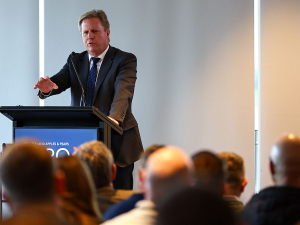
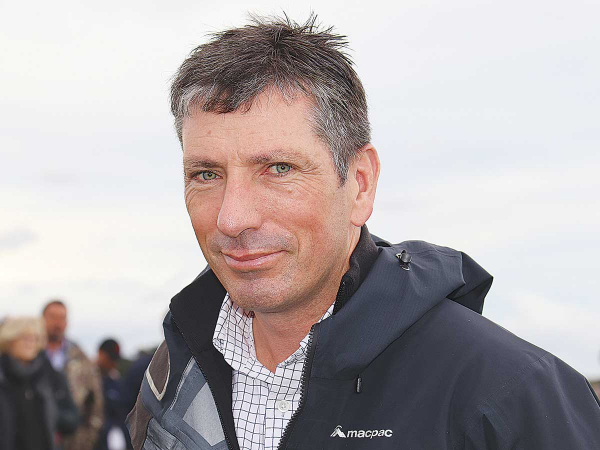 Beef+Lamb chief executive Sam McIvor says there is no disincentive in the updated climate change policy to stop the conversion of productive and sustainable pastoral agriculture to exotic plantation forestry for carbon farming.
Beef + Lamb New Zealand (B+LNZ) believes the Emissions Trading Scheme (ETS) will see huge swathes of productive farming land converted into trees for carbon farming.
It says there is no disincentive in the updated climate change policy to stop significant land use change away from productive and sustainable pastoral agriculture to exotic plantation forestry for the purpose of carbon farming. The red meat lobby claims this failure will take the focus away from actually reducing fossil fuel emissions.
B+LNZ chief executive Sam McIvor says his organisation is concerned by the lack of government action to limit the amount of carbon farming available through the ETS to offset fossil fuel emissions.
“The Government has told us there are provisions in the legislation to limit the ability of fossil fuel polluters to offset their emissions by planting exotic trees,” he says.
“However, our analysis indicates the Climate Change Response Act’s weak provisions do not provide the robust safeguards necessary.”
McIvor claims, as it currently stands, the Emissions Trading Reform Bill will not achieve its stated aim of reducing emissions, but will simply lead to increased offsetting.
“We are alarmed the Government is rushing through these reforms, which will have significant consequences for sheep and beef farmers, rural communities and future export revenue.”
He says B+LNZ is seeking changes to the legislation so that carbon farming and essentially fossil fuel emissions can be limited.
“This will provide some safeguards to protect our sheep and beef farmers and rural communities from the risk of large-scale land use change as the carbon price is allowed to rise through these changes to the ETS.
“It is vital there are safeguards in place to prevent fossil fuel emitters from having a carte blanche ability to offset all of their pollution on our landscapes, at the expense of a sector that is worth 16% of New Zealand’s exports and supports about 92,000 jobs.”
McIvor says B+LNZ is also seeking legal advice on the adequacy of existing provisions in the Climate Change Response Act.
B+LNZ’s analysis indicates that since 2019 about 70,000 hectares of productive sheep and beef land has been, or is in the process of being, converted into forestry.
“This is approximately 13 times more than the average annual amount of afforestation in New Zealand over the past five years. B+LNZ believes carbon related investment is a significant part of this.”
McIvor says as the carbon price increases, the rate of forestry conversion is likely to accelerate and spread around the country.
“This is supported by modelling by the Parliamentary Commissioner for the Environment who, last year, estimated 5.4 million hectares of land would need to be converted into forestry to meet the Government’s Zero Carbon Bill targets,” he explains.
“This about 60% of productive sheep and beef land and, as a result, the commissioner recommended halting the use of forestry to offset fossil fuel emissions.”
Retiring MP and dairy farmer Mark Cameron is blasting the Green Party for proposing to ban the use of synthetic fertiliser and cutting cow numbers.
Matt McRae, a farmer from Mokoreta in Southland who runs a sheep, beef and dairy support business alongside a sheep stud, has been elected to the Beef +Lamb NZ Board as a farmer director.
Ospri is reducing TB testing frequencies and movement control measures as the disease risk subsidies in parts of the country.
Parliamentary Commissioner for the Environment Simon Upton is calling for cross-party consensus on the country's overarching environmental goals.
OPINION: For the first time in many years, a commonsense approach is emerging to balance environmental issues with the need for the nation's primary producers to be able to operate effectively.
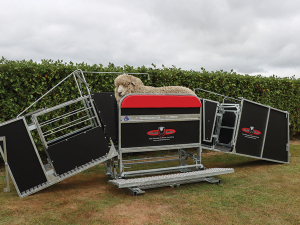
Oamaru-based livestock handling specialist Te Pari has bought Combi Clamp, the New Zealand manufacturer of Combi Clamp manual sheep handlers.
Agriculture Minister Todd McClay has admitted that a scheme bringing workers from Pacific nations to work on orchards has become too hard to navigate but says changes are coming.
A new app designed in New Zealand aims to help sheep, beef and deer farmers capture, analyse and use body condition score data more effectively.
Canterbury farmer Andy Macfarlane has been appointed to the board of AgriZeroNZ, the public-private partnership designed to accelerate the development and deployment of emissions reduction tools for New Zealand farmers.
For over 50 years Mel Ewers has been supporting the apple sector navigate through compliance and quality assurance issues.
The apple sector is enjoying a bumper harvest season.