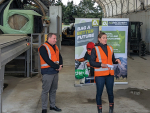
New Rural Recycling Scheme to Replace Voluntary Farm Plastics Programmes by 2027
Environment Minister Nicola Grigg has announced details of a new rural plastics recycling scheme.




 increase font size
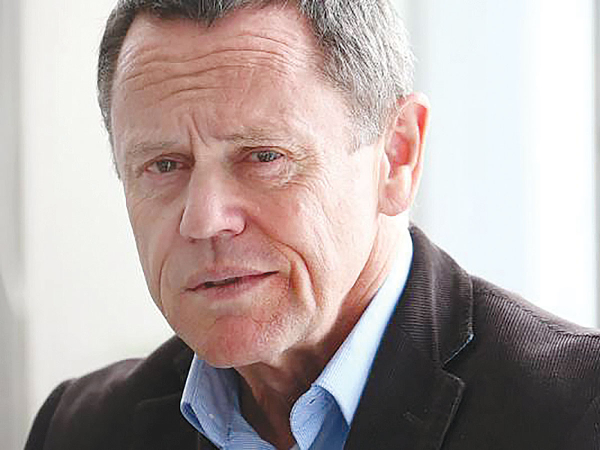 Parliamentary Commissioner for the Environment, Simon Upton.
Parliamentary Commissioner for the Environment Simon Upton is calling for cross-party consensus on the country's overarching environmental goals.
In his annual report, Upton says that over the last year, he travelled widely in regional New Zealand listening to what farmers and rural communities had to say about his report on land use change, Going with the Grain.
"A common message I received was that our lurching, stop-start approach to policy development is not just a significant barrier to making progress on environmental outcomes, but a real turn-off for many people who want to get on with improving things.
"The pervasive uncertainty hanging over the direction of policy means investing in solutions is seen as risky. With the policy landscape still up for grabs after a decade of sustained calls for action on water quality, biodiversity and climate, people are losing interest.
"Despite that, there is widespread agreement across rural New Zealand on the greatest environmental challenges we face: climate change, freshwater quality, biodiversity loss and the growing threat from pests and weeds. There is also broad understanding about the long-term interconnected nature of these challenges and the need for sustained, joined-up solutions."
Upton says that solutions to these challenges will never be available within the three years term of a government and if every government feels compelled to start from scratch, even making a start is well-nigh impossible.
"This is why broad, cross-party consensus on our overarching environmental goals and wide support for our environmental management system is so important.
"Building an enduring consensus is no easy task - but there are at least three points that I hope all politicians should be able to agree on if we are to have any chance of at least maintaining, and hopefully improving, our environment."
He says the first is an understanding that the economy is a subset of the environment, not vice versa.
"After years of raiding the environmental piggy bank for human progress, the environment is starting to send us invoices.
"The second issue on which politicians should be able to agree is the critical importance of high-quality, spatial, multi-layered environmental information to decision-making. Without such information, we simply cannot run a modern economy. Investing in improving information and its accessibility is a core responsibility of central government - as crucial to our nation as investment in defence or law enforcement.
"A third point of consensus should be an understanding that while most environmental challenges are in the hard basket they don't have to be in the too-hard basket provided we're honest about the time frames and costs that tackling them will require."
Environment Minister Nicola Grigg has announced details of a new rural plastics recycling scheme.

The Ballance Farm Environment Awards are coming to the West Coast of the South Island.
There's been widespread support from the primary sector for the Government's announcement on changes to freshwater farm plans that come under the Natural Environment Bill, which is now set to replace the existing RMA.
The chair of the country's environmental regulator, the Environmental Protection Authority (EPA), says changes are already under way to improve the performance of the agency to better meet the needs of those who interface with them.
New Zealand's Emissions Trading Scheme (NZ ETS) encourages afforestation while not achieving climate goals, says a new report released by the Parliamentary Commissioner for the Environment, Simon Upton.



Four candidates have been confirmed for two director positions on Fonterra’s board.
Returning to the family dairy farm after playing 20 years of professional rugby around the world is no easy task.
After delivering another record farmgate milk price to 100 supplying farms, independent milk processor Tatua is entering thee new financial year with a positive outlook.
Managing feed by sticking to a firm plan has helped the Southern Dairy Hub (SDH) demonstration farm survive an extremely wet winter, says the farm's acting general manager Greg Delaney.
A record farmgate milk price and strong global demand is laying the foundation for continued growth of organic dairy farming in New Zealand.
Mobile phone coverage and reliability are deteriorating in rural areas, and farming families are bearing the cost, according to a Federated Farmers survey.



OPINION: It seems Canterbury processor Synlait is still in the doldrums.
OPINION: Get offside with New Zealand First leader Winston Peters at your own peril.




