
A No-Brainer
OPINION: With fuel prices soaring, one would have expected most farmers to be reclaiming excise duty on petrol.
 increase font size
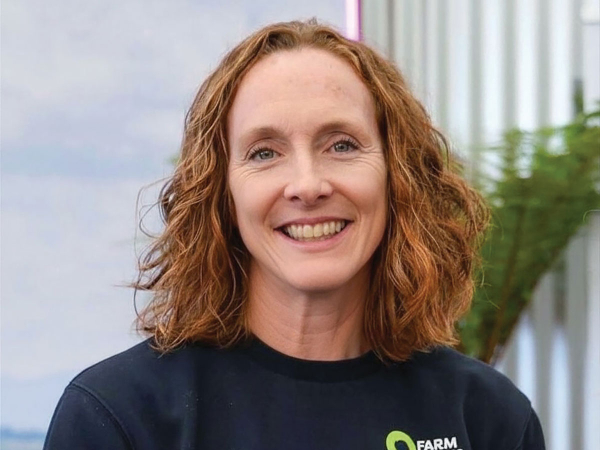 Farm Focus CEO Marie-Claire Andrews
Too many farmers put reclaiming excise duty on petrol into the "too-hard" basket, says farm accounting software provider, Farm Focus.
A little over six months ago, the company launched a partnership with PR Claims, a specialist provider that manages fuel excise duty refund claims, and says its customers have now recovered more than $500,000 in fuel refunds through their system.
Farm Focus CEO Marie-Claire Andrews said that for many farmers, refunds of excise duty on petrol used for on-farm off-road use went unclaimed simply because the process felt too complex to pursue.
And at the current rate of 78 cents a litre, it stacks up. Farmers used a lot of petrol-powered vehicles across their paddocks, she said.
"Even just in some of the smaller machinery, if you think about it, if you haven't claimed for everything you've done in terms of maintenance, chainsaws, all sorts of things, for a couple of years, there's thousands of litres probably, so it's worth getting the money back."
The Masterton-based company provides financial management software for farmers and rural businesses and has customers throughout New Zealand and in Australia.
It says one of their clients, Canterbury dairy, beef and cropping farmer Mike Smith, recovered around $12,000 from a single year's petrol use through the PR Claims partnership.
"It's all set up digitally and it's easy to use. For farmers, we don't want something to be a hassle," said Smith.
"I don't have time to struggle with things, otherwise I just won't do it. We ended up with around $12,000 back, just from one year's worth of fuel. We all pay a lot of tax in the farming industry, especially in dairy, so it's nice to get something back."
Andrews said the partnership reduced the administrative burden on busy farming businesses.
She said PR Claims managed the claim process end to end, and refund statements could be imported directly into Farm Focus, keeping records tidy without extra paperwork.
She said the half-million dollar milestone reflected how much eligible money goes unclaimed each year.
"Farmers are under constant pressure to manage costs, and this partnership is helping put real money back into rural businesses. The fact that customers have already recovered more than half a million dollars in refunds shows the scale of the opportunity."
PR Claims head of partnerships, Kevin Breen, believed that about 80% of farmers - or "more than would admit to it" - were not bothering to claim refunds of excise duty because it was a bureaucratic process.
"Nine times out of ten, the reason why people haven't claimed their excise duty refund is because they put it in the too hard basket."
He explained that while most other taxes are administered by the Inland Revenue Department (IRD), the fuel excise duty is administered by the NZ Transport Agency Waka Kotahi (NZTA).
"Not all, but most accountants don't normally deal with it because it's dealing with a different entity other than the IRD."
Breen said PR Claims also partners with other organisations, but went "one step further" with Farm Focus.
"If the clients give us access, then we can integrate and automate some systems which makes the process even smoother.
"Our normal rate is 15% and but because we partnered with Farm Focus, their customers get an additional two and a half percent off that rate, which makes us by far the cheapest company in New Zealand."
OPINION: With fuel prices soaring, one would have expected most farmers to be reclaiming excise duty on petrol.

Canterbury farmer Andy Macfarlane has been appointed to the board of AgriZeroNZ, the public-private partnership designed to accelerate the development and deployment of emissions reduction tools for New Zealand farmers.
Two rural data organisations - DairyNZ’s DairyBase and Farm Focus - have formed a new partnership that aims to remove data duplication and help provide more timely, useful benchmarking insights for farmers.
Farmer lobby group Federated Farmers has announced it is supporting a new Member’s Bill which it says could bring clarity to New Zealand farmers and save millions in legal costs.
OPINION: The Government's decision to rule out changes to Fringe Benefit Tax (FBT) that would cost every farmer thousands of dollars annually, is sensible.


The 2027 East Coast Farming Expo will continue a decade long tradition in bringing the latest innovation, intriguing speakers, industry leaders and more.

Halter has launched Mav, an AI farming assistant that lets dairy farmers ask questions about their herd and pasture and get answers drawn from the data the company’s collars already collect.
OPINION: At first glance it appears that Father Christmas has delivered the rural sector good tidings, with most pundits predicting the return of the centre-right coalition.
For 15 years, Glenda Rees has travelled from Gore to Awarua, often several times a week, to keep watch over one of the country’s rarest birds.
With some farmers opposing a government-industry partnership set up to develop methane reducing products, one NZ company claims that it already has a product on the market.
During the nesting season, from September to December, industrious starlings can quickly build nests in the darker areas behind tractor and vehicle, usually close to hot engines, typically resulting in localised damage or in some cases complete write-offs.