DairyNZ Sets Out Election Priorities for Dairy Farmers
Election years are always a concerning time for farmers, according to DairyNZ chair Tracy Brown.
 increase font size
 Beef+Lamb NZ chief economist Andrew Burtt.
Red meat farmers are in "a slightly better place" than they were a year ago, according to Beef+Lamb NZ chief economist Andrew Burtt.
Livestock prices are higher than a year ago and some input costs have decreased. However, Burtt says the reality is that the cumulative effect of previous low pries and high inflation still lingers.
Farm gate prices for cattle and sheep have increased in recent weeks but this is primarily a result of a shortage of supply domestically rather than an improvement in global prices for sheepmeat and beef.
"We usually see an increase in prices at this time of the year as there is shorter supply over winter, but this year supply has been even shorter than usual because farmers got their animals away earlier because of the drought," Burtt told Rural News.
He expects to see continued strong cattle prices, but the outlook for sheep is less certain.
"Demand from China is expected to remain subdued, but we are seeing strong demand from the UK, EU and US.
"We have seen some recent indications that Australia's supply may have peaked, and New Zealand's supply is expected to be lower. A decrease in supply could help lift prices globally, which could flow back to our farmers this coming season."
ASB senior economist Chris Tennent-Brown noted that finished lambs earlier this month averaged $6.80-$7.10/kg in the North Island. For beef, both North Island export prime and local trade were operating at $6.80-$7/kg excluding beef premiums.
"Being at sixes and sevens normally means confusion or disarray, but when it comes to sheep and beef prices, the high sixes and early sevens per kg prices continue the recent pattern of tight markets and strong prices," Tennent-Brown says.
According to ANZ economist Susan Kilsby, returns for lamb from international markets have improved a little, but the change has been incremental, and the recent increases have not been enough to make exporters more confident about the outlook.
The US market is delivering some of the best returns, Kilsby notes. European markets are in reasonable shape, particularly the UK, where prices have been trending higher.
Kilsby predicts that farm profitability will continue to be hampered by high costs, including borrowing costs, in the year ahead, although inflationary pressures are fading, and interest rates are starting to ease.
Burtt agrees that conditions are improving but cautions that recovery will be gradual.
"Farmers are in a slightly better place than they were a year ago.
"A year ago, farmers faced different challenges, including the impact of drought, expectations of El Niño, and cashflow concerns. The recent change in government has also influenced both short-term and long-term sentiment in the sector.
"Although inflation has eased to 2.8% in 2023-24, it's important to remember that this is on top of a 32% cumulative increase over the past three years.
"This same level of increase previously took 15 years to materialise. So, while conditions may be improving the recovery is gradual."
Election years are always a concerning time for farmers, according to DairyNZ chair Tracy Brown.

OPINION: It's a tough pill to swallow that bird flu (avian influenza) has finally arrived in New Zealand. This is a moment many of us have hoped would never come.
Improving health and safety is about incremental gain rather than a sudden decision, says Leeston farmer and Federated Farmers health and safety spokesman David Birkett.
State farmer Pāmu is opening its farm gates this summer in an effort to give the rural sector the opportunity to see how large-scale, multi-system farming is delivering productivity and profitability across New Zealand.
DairyNZ says Waikato farmers need certainty on Plan Change 1, but they say that certainty must be matched with practical, workable rules and a clear transition that doesn't get ahead of the new resource management system currently under review.


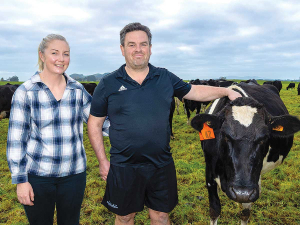
After almost two decades of sharemilking, saving and building equity, Aaron and Marcia Flay this year realised their long-held dream of settling on their first dairy farm.
Good medium to long term prospects for NZ beef, especially in the US, has heighted the focus on various initiatives to capitalise on this situation.
High country stations, mixed sheep and beef farms, Māori-owned farms, corporates and family operations are among the nine commercial farms taking part in the Livestock Innovation Farming Transformation programme, known as LIFT.
OPINION: New health and safety guidance unveiled by the Government recently provides farmers greater certainty about what is expected of them when managing risks on farm.
The National Animal Welfare Advisory Committee (NAWAC) is seeking public feedback on proposed changes to the Code of Welfare for Rodeos.
A New Zealand initiative supporting farmers to restore the health of grazing landscapes has received international backing through the Regenerative Fund for Nature, a global collaborative fund supporting regenerative agriculture and the communities that produce natural fibres for the fashion industry.