Rural Vote Debate on Q&A: Substance or Just Platitudes?
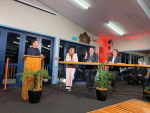
It was billed as a chance for all the political parties to woo the rural vote, but question marks hang over just how effective this was.
 increase font size
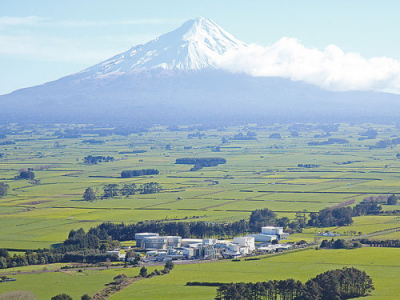 Fonterra plans to achieve zero emissions by 2050.
Farmers are supporting Fonterra’s push for net zero carbon-dioxide emissions from all plants worldwide by 2050.
Federated Farmers climate change spokesperson Andrew Hoggard says farmers will be watching with interest how the co-op achieves the “bold” target.
While farmer organisations work on promising emission-control options, much work remains.
“The science we are attempting -- to reduce the methane produced in a ruminant’s stomach -- isn’t simple stuff and there is no guarantee we will be able to achieve these options,” Hoggard says.
“Even if we do, we still face hurdles in being able to prove it at the farm level for carbon accounting.”
Reducing CO2 is not just a New Zealand issue, he says.
“Fonterra has made these commitments based on what it aims to achieve worldwide, in its global business, not just onfarm and in factories in NZ.
“Kiwis should be proud that Fonterra and our country’s dairy farmers are prepared to step up and pull their weight to tackle climate change.”
Fonterra has joined the Ministry for the Environment to map a path to a low-emissions future -- identifying actions to reduce emissions, improve energy efficiency and reduce costs.
Fonterra’s chief operating officer Robert Spurway says it’s an “exciting and ambitious partnership that will materially impact on climate emissions”.
“We are committed to helping NZ achieve its Paris Climate Agreement commitments. That’s why we’ve set new targets to reduce on-site and on-farm emissions. We’ve set a target of net zero emissions for our global operations by 2050, with a 30% reduction by 2030 from a 2015 baseline,” says Spurway.
The co-op will hit this target by making changes at manufacturing sites and adopting new technologies -- greater energy-use efficiency and useing lower-emission fuels, e.g. running tankers on bio-fuel and bringing 100 electric vehicles into its light vehicle fleet by 2019.
“We are also exploring low-emission energy supply options for our sites, such as electricity and wood biomass. We will only use coal as a last resort, with a target of no new coal boilers installed from 2030,” says Spurway.
Fonterra has also set an interim target of climate-neutral growth to 2030 for onfarm emissions in NZ, which means any growth in milk production will have its resulting carbon emissions reduced or offset.
Hoggard says farmers would like to see more government funding to reduce emissions.
“Before the election Feds challenged all political parties to spend more on research to reduce biological agricultural emissions, so if Fonterra is going to spend more on this it would be good to see the government match it,” he says.
It was billed as a chance for all the political parties to woo the rural vote, but question marks hang over just how effective this was.
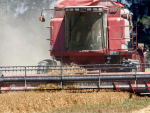
Mid Canterbury Federated Farmers arable chair, Bevan Lill, said Beef + Lamb NZ data indicated that for the last six years, the average arable return on investment was about 0.8% while inflation ran about 4% - so the average arable farm was going backwards at about 3% a year.
For the first time in a quarter of a century, Federated Farmers has something positive to say about the Labour Party’s climate change policy leading into a general election.
Rural leader Mark Hooper has been appointed as an independent director to the NZPork board, bringing extensive farming, governance and advocacy experience to the role.
OPINION: It seems Canterbury processor Synlait is still in the doldrums.


Farmgate lamb prices are down by 8%, beef cattle by 4.5% and farm expenditure up by 4.2%.
Kiwifruit growers are watchful but remain optimistic as concerns around the potential effects of the El Niño weather pattern this season.
Almond hulls sourced from Australian orchards may have the potential to help New Zealand cows reduce emissions, boost milk yield and lower input costs.
Striking a balance between meeting the needs of industry to speed up approval time for products but on the other hand ensuring that risks are properly assessed.
Surprised, humbled and quite thrilled. That’s the reaction of James Allen, one of the founding partners and now chief executive of AgFirst, on being made a life member of the Institute of Rural Professionals.