Rain in the past week may have helped farmers in Gisborne and Wairoa but the real benefits will only be felt if predicted followup rain arrives.
Until last week, records were showing an average of just 0.6mm in the Gisborne district since Christmas, while Wairoa’s district average sat just below 2.5mm in January. Temperatures have also been consistently in the high 20s and early 30s – meaning conditions are getting increasingly dry.
Federated Farmers Meat & Fibre group vice-chairperson Sandra Faulkner said last week’s showers caused some Gisborne rain gauges to reach double figures, while for others it barely dampened the dust.
“It took the pressure off some farmers, but realistically it wasn’t enough and the follow-up rain forecast for this Wednesday and Thursday is what we need,” says Faulkner, who runs a sheep and beef farm south of Gisborne at Muriwai.
“At our farm, we got 20mm, but I’ve heard the figure range from zero for some people to 60mm plus for others. It has been patchy for everyone this summer and everybody needs that followup rain.”
Faulker said the biggest problem had been the consistently high temperatures.
“There is no ‘normal’ for this time of year and you are always expecting it to be dry. But the heat this year is drying the pasture and it’s burning off for some farmers.”
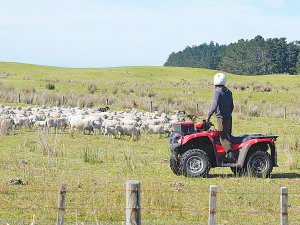
For Wairoa sheep and beef farmer Jamie Powdrell, water is the issue. He operates a total of 620ha, running 1900 ewes, 200 mixed-age cows and 40 in-calf heifers.
“We aren’t panicking yet, but our main reticulation and dams have dried up a lot more this year,” he said.
“We got around 90mm in December, but have had nothing since; we got just 5mm rain last week. I’m lucky because here we are linked to the town supply and I can tap into that if we need it; the next couple of weeks and until March will be the telling time.”
Powdrell says he has killed 1600 lambs since the end of November and hoped the crops they had would be enough to keep their remaining stock going.
“The bottom has gone now on the pasture and so hopefully the crops we have are enough; we were lucky to have grown enough feed in December for the cows.”
Crops in Gisborne and Wairoa are equally thirsty.
Prior to last week’s rain Cedenco agronomy manager David Oudes said a good amount was “undoubtedly needed”.
From his observations he believed Gisborne to be slightly drier than Wairoa and while crops were still in reasonable condition, some were started to show slight effects.
“Some plants are starting to twist up and sweetcorn in areas is showing a little bit of stress,” he said
Grapes are faring somewhat better. New Zealand Wine Growers deputy chairperson John Clarke has a vineyard inland from Gisborne at Te Karaka and says the hot dry weather did not have the same impact on grapes as on process crops.