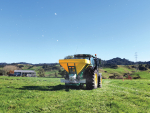
Fonterra Cuts 2026/27 Milk Price Forecast to $9.25
Fonterra has reduced its forecast 2026/27 Farmgate Milk Price.
 increase font size

Fonterra has announced a half-year net profit of $459 million, a 33% increase over the previous year.
The co-op puts this down to a robust performance by NZ Milk Products and significant lifts in sales volumes in Fonterra's Asian and Latin American brands were behind the However, these achievements were partly offset by continuing challenges affecting its Australian business.
Fonterra chief executive Theo Spierings says NZ Milk Products' strong first half reflected the drive to achieve increased volume and value – two core elements of Fonterra's business strategy.
"NZ Milk Products' performance was achieved through increased volumes, effective management of our product mix and a focused effort by the sales team to achieve higher price premiums compared to dairy commodity prices," he says.
"Despite the drought taking effect in the North Island in January, it was a different story for those in the South Island where the rainfall was higher than last summer. Fonterra's milk collections for the season to the end of January were up 6 per cent on the same period in 2012 – which in turn flowed into record production, and another new export volume record achieved in December 2012."
The commissioning last year of the new Darfield site – where the Darfield Drier 1 can process 2.2 million litres of milk at peak in one day and produce 15 metric tonnes of milk powder per hour – was one of the factors that enabled NZ Milk Products to process the higher peak milk flows and deliver a strong performance.
Spierings says the business reacted swiftly to higher price signals for cheese, casein and milk protein concentrate compared with whole milk powder and other powder prices for most of the first half of the financial year.
"By moving our discretionary manufacturing, we were able to take advantage of this pricing differential. This flexibility at an operational level was a significant contributor to NZ Milk Products' 9% rise in sales volumes to 1,474,000 MT.
"At the same time, the sales team kept its focus on adding value for customers and attaining prices for products above GlobalDairyTrade (GDT)."
Despite the average US dollar commodity price being 16% lower than the same period last year, NZ Milk Products' focus on performance was reflected in a 65% increase in Normalised EBIT to $422 million.
The Australia-New Zealand business' earnings declined, with normalised EBIT down 32%.
Spierings says while its consumer business performance in New Zealand was slightly better than last year, Australia's consumer business had to contend with a very competitive retail environment. Meanwhile, the ingredients business experienced a significant margin squeeze as the competition for milk supply in Australia intensified.
This was compounded by an adverse product mix due to lower demand in the export sales of value-added nutritional powders, and more milk being channelled into lower value milk powder sales.
With the strong first half performance, the Fonterra board has lifted the interim dividend from 12 to 16 cents, 33% cent higher than the comparable period. Sixteen cents represents 50% of Fonterra's forecast dividend for the current financial year, and the maximum available under the 40-50 per cent range in its dividend policy.
The interim dividend will be paid on April 19.
Fonterra has reduced its forecast 2026/27 Farmgate Milk Price.
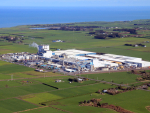
Fonterra's Whareroa site took home the prestigious Directors Award at the co-op's 'Oscars of Manufacturing', while Clandeboye led the way with multiple wins at this year's Best Site Cup.
After 25 years it is the right time to step away, says Colin Glass, the retiring chief executive of New Zealand's largest private corporate dairying company, Dairy Holdings.
Fonterra is strengthening its foodservice presence in China with the launch of a new cream for professional bakeries at Bakery China 2026 in Shanghai.
OPINION: To a chorus of crying greenies, and not a minute too soon, the Government has moved to put the courts back in their place through proposed amendments to the Climate Change Response Act 2002, intending to limit climate litigation claims such as Smith v Fonterra, in the interests of providing greater certainty for vital industry.


Fonterra has reduced its forecast 2026/27 Farmgate Milk Price.
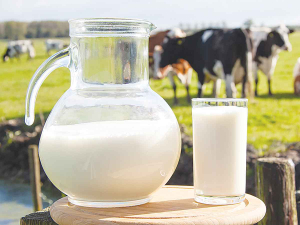
New Zealand dairy farmers are set to be the first in the world to receive access to a new digital physical milk pricing tool that enables them to fix the price for their physical milk.
State farmer Pāmu is opening its farm gates this summer in an effort to give the rural sector the opportunity to see how large-scale, multi-system farming is delivering productivity and profitability across New Zealand.
A five-year study has found that the cost of reducing emissions without technology may be significant and unsustainable for Northland dairy farmers.
DairyNZ says Waikato farmers need certainty on Plan Change 1, but they say that certainty must be matched with practical, workable rules and a clear transition that doesn't get ahead of the new resource management system currently under review.
While the Government has moved quickly to make commercial hauliers' lot easier during the current fuel crisis, they appear to be stuck in the creep box when it comes to the agricultural industry.