
Esther Guy-Meakin Appointed Chief Executive of the NZ Meat Board
Esther Guy-Meakin has been announced as the new chief executive of the New Zealand Meat Board (NZMB).




 increase font size
 Sirma Karapeeva
While things are looking positive for the red meat sector in 2026, volatility in global trade remains a concern, says the Meat Industry Association (MIA).
Chief executive Sirma Karapeeva believes the sector will still face some unpredictability and volatility along the way.
She says Ministry for Primary Industries (MPI) outlook for the sector which shows that revenue from meat and wool exports to the end of June will be up 7% to $13.2 billion and the fact there will be a further increase in the following year is a positive sign.
Karapeeva says the good returns is helping to off-set lower production caused by a drop in sheep numbers.
"However, I think there are several challenges in the trade space that are coming our ways. We still have limited clarity on what the US Supreme Court will [decide] around President Trump's tariffs and whether those were legitimate or not - and what they might mean going forward," she says.
Karapeeva says this is concerning, as is the impact that China's import restrictions might have. She says they still don't have clarity on this.
What is becoming apparent is the importance of Free Trade Agreements (FTAs) in a world where rules-based trade is becoming more problematic, she says.
The FTAs guarantee optionality for exporters, help mitigate risk and provide good economic returns for farmers, processors, exporters and the overall NZ economy. She points to the past year when trade agreements were signed for Middle East countries, and the FTA with India which still has to be ratified.
"Once the Indian FTA is ratified, the challenge will be how the industry can take advantage of this opportunity. In my opinion, FTAS are coming into their own because they have very good dispute resolution mechanisms and in the absence of global trade rules from the WTO, the FTAs provide a guard rail for our trade," she says.
Looking back at 2025, Karapeeva describes it as turbulent but positive. She says it was a tough year for members of MIA with a lot of what she calls 'moving pieces'. She says it's a credit to them that they were able to navigate their way through all the challenges and in the end produce an excellent result - lifting revenue from the sector by nearly a billion dollars on the previous year.
Esther Guy-Meakin has been announced as the new chief executive of the New Zealand Meat Board (NZMB).

As expected, the US has launched a safeguard investigation into lamb imports, a move that could impact New Zealand sheepmeat returns.
New Zealand's red meat sector says it welcomes the Government's focus on trade ahead of the general election in November.
New Zealand red meat exports are booming but a pending decision in the White House, Washington D.C., could dent sheepmeat earnings.
Prime Minister Christopher Luxon says the red meat sector is doing an excellent job promoting our pasture-fed system around the globe.



LIC shareholders have elected a new North Island representative to the co-operative's Board, along with five representatives to its Shareholder Reference Group (SRG), following the company's Annual Meeting held in Invercargill.
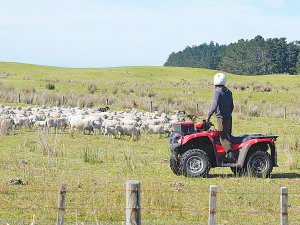
Farmers across parts of Southland and South Otago are continuing to deal with difficult conditions after a prolonged run of wet weather, with pressure building around feed supply, stock management, pasture damage, farm infrastructure and everyday workloads.
Federated Farmers says it welcomes Labour's commitment to reviewing the Sharemilking Agreements Act, calling on other major parties to do the same.
For Canterbury dairy farmers Sian Meijer and Rick Wobben, wearable technology has become one of their most valuable on-farm tools - helping manage 1850 cows across an expansive, high-performing dairy operation while improving efficiency, mating outcomes and day-to-day decision making.
Fonterra has unveiled its annual results for the 2026 financial year, posting $27 billion in revenue and close to $20 billion returned to New Zealand farmer owners and unit holders.
The first major update to the Dairy Cattle Code of Welfare in more than a decade has been released, marking what DairyNZ describes as an important step in ensuring animal welfare standards continue to evolve alongside scientific evidence and on-farm realities.




OPINION: The same mainstream media muppets that brought you Jacindamania in 2017 have been flat out pimping for the Opportunities…
OPINION: Your old mate reckons the atrocious way farmers in the UK are treated by their lords and masters in…




