Record final milk price for Miraka suppliers
Farmers supplying milk to Taupo-based processor Miraka are getting a 2024-25 season base milk price of $10.16/kgMS.
 increase font size
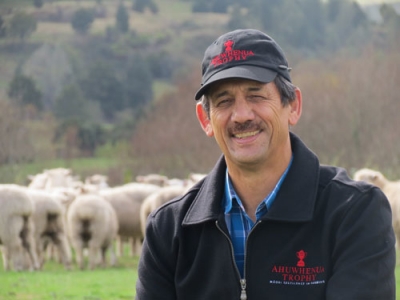 Kingi Smiler.
The chair of the Maori dairy company Miraka, Kingi Smiler, says his company is more resilient in lower payout years than Fonterra.
Smiler has faith in the business model and strategy of Miraka, but wants Fonterra to improve its performance so that his company can pay more to its farmer suppliers. Traditionally Miraka has paid 10c/kgMS more than Fonterra.
Smiler’s comments came at a field day at Wairarapa Moana Incorporation (WMI) which he also chairs. It is a 27% shareholder in Miraka and the dairy company’s biggest single supplier.
WMI is located near Mangakino, central North Island, where it runs 10,000 cows on 12 farms plus three support blocks, producing 4 million kgMS annually.
The field day, run jointly with the Federation of Maori Authorities (FOMA) and DairyNZ, was intended to share WMI’s journey with Maori farmers in particular, and with other farmers.
“Our objective has always been to run a vertically integrated business and Miraka is part of the strategy we created five years ago,” Smiler explains.
“The operation now aims to keep building on that and to make sure we have a resilient business that can manage the volatility in payout and the environment and all those challenges likely to come in future. We still expect to be running a resilient and profitable organisation through all those challenges.”
Despite the incessant rain, the field day attracted at least 100 people who heard from FOMA, DairyNZ, WMI staff and WorkSafe NZ. Knowing the weather was going to be bad, WMI staff placed large hay bales inside the covered yards of the woolshed, and installed lighting and heating, comfortable for the morning presentations. In the afternoon, visitors were bussed to see new dairy sheds and other infrastructure on the 3900ha property. This included the huge pivot irrigators which, surprise surprise, weren’t running.
At least a third of the farm is irrigated. New pasture species such as lucerne have been planted to deal with the dry summers on the porous pumice soils.
“The success of WMI is having a clear strategy, a lot of discipline and the ability at the end of the day to train and retain good staff,” Smiler says.
“That will be the fundamental challenge for us going forward, as it has been in the past. To build a resilient business we have to have the best people who are well-trained and we do a lot of work building that capability and capacity in our staff.”
Field day attendees told Rural News they couldn’t help being impressed by the hard work that had made the farms as good as they are. “The land here wasn’t always like this,” one said.
Farmers supplying milk to Taupo-based processor Miraka are getting a 2024-25 season base milk price of $10.16/kgMS.

Open Country Dairy has finalised a deal to acquire 100% of Miraka.
Milk processors are either matching or beating Fonterra's record $10/kgMS opening forecast milk price as the 2025-26 season gets underway.
Māori-owned milk processor Miraka is looking for a new chief executive following the resignation of Karl Gradon last week.
The chief executive of Taupo-based dairy company, Miraka – Karl Gradon - has stepped down from the role for personal and family reasons.

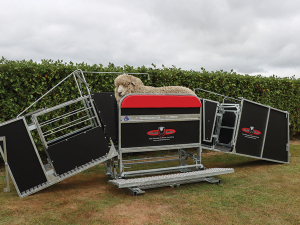
Oamaru-based livestock handling specialist Te Pari has bought Combi Clamp, the New Zealand manufacturer of Combi Clamp manual sheep handlers.
Agriculture Minister Todd McClay has admitted that a scheme bringing workers from Pacific nations to work on orchards has become too hard to navigate but says changes are coming.
A new app designed in New Zealand aims to help sheep, beef and deer farmers capture, analyse and use body condition score data more effectively.
Canterbury farmer Andy Macfarlane has been appointed to the board of AgriZeroNZ, the public-private partnership designed to accelerate the development and deployment of emissions reduction tools for New Zealand farmers.
For over 50 years Mel Ewers has been supporting the apple sector navigate through compliance and quality assurance issues.
The apple sector is enjoying a bumper harvest season.