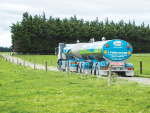
Fonterra FY26 Results: $9.69 Milk Price, $3.4bn Profit
Fonterra has unveiled its annual results for the 2026 financial year, posting $27 billion in revenue and close to $20 billion returned to New Zealand farmer owners and unit holders.
 increase font size
 Oritain's CEO Grant Cochrane.
Food fraud is estimated to cost the global food industry $US49 billion a year, with New Zealand companies bearing their share of the brunt.
In 2008, Fonterra alone lost $140 million as a result of the melamine poisoning scandal in China through its 43%-owned Sanlu brand. In 2013, it caused an international scare when milk-products, incorrectly thought to be contaminated with Botulism, were pulled off shelves.
The reputational damage – both to Fonterra and to New Zealand - is unquantifiable and China continues to focus on heightened food security in its own supply chain, and in products imported from all over the world, including New Zealand.
Dunedin-based Oritain's CEO Grant Cochrane says that an unsecured supply chain is high-risk. "We've had issues with deliberate tampering in this country and it's the kind of nefarious act that threatens the entire industry, as well as New Zealand's reputation overseas.
"Last year, food fraud affected an estimated 10% of global food supply and cost New Zealand companies millions. We're talking about the deliberate and intentional substitution, addition, or tampering of food or ingredients, counterfeiting of food packaging or false claims about a product for economic gain."
Cochrane says that not all food fraud poses a public health risk, but every incident does impact New Zealand's standing as a 'clean green' and trustworthy export partner.
PwC's Sally Bernstein (Boston) says that food fraud is more damaging to a company's brand and revenues than unsafe food.
"While the latter is close to a worst-case scenario for any business in the food industry, the cause can usually be pinpointed, and addressed ... the organisation's reputation can be salvaged.
"Food fraud, however, means that someone somewhere is motivated to adulterate or counterfeit the food for financial gain. It suggests greed for easy money at the expense ... of the consumer.
Bernstein goes on to say that well-known international food fraud incidents, such as horsemeat being passed off as minced beef and melamine being added to dairy products, have motivated the food industry to take a hard look at their vulnerabilities to food fraud, and do something about it.
Grant Cochrane says that Oritain was established with that in mind. "We exist to prove food origin and protect company reputation," he says.
Verification of origin
"One of our clients, Lewis Road Creamery, became a household name almost overnight. The demand for their chocolate milk quickly grew beyond their capacity to supply, leaving an opportunity for fraudsters to pass off second-rate (fake) 'Lewis Road Creamery' products.
"Lewis Road Creamery came to us to help ensure that the reputation of their brand and the integrity of their products remained rock solid," says Cochrane.
Fonterra has unveiled its annual results for the 2026 financial year, posting $27 billion in revenue and close to $20 billion returned to New Zealand farmer owners and unit holders.
Fonterra Co-operative Group has confirmed the independently assessed candidates standing for election to its board in 2026.
Fonterra has revised its Farmgate Milk Price forecast for the 2026/27 season, lifting the midpoint and narrowing the range on the back of improving global dairy commodity prices.
Outgoing Fonterra Co-operative Council chair John Stevenson says that it has been a privilege to represent the co-op's farmer shareholders.
OPINION: It seems Canterbury processor Synlait is still in the doldrums.


Federated Farmers says it welcomes Labour's commitment to reviewing the Sharemilking Agreements Act, calling on other major parties to do the same.
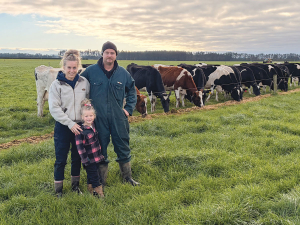
For Canterbury dairy farmers Sian Meijer and Rick Wobben, wearable technology has become one of their most valuable on-farm tools - helping manage 1850 cows across an expansive, high-performing dairy operation while improving efficiency, mating outcomes and day-to-day decision making.
Fonterra has unveiled its annual results for the 2026 financial year, posting $27 billion in revenue and close to $20 billion returned to New Zealand farmer owners and unit holders.
The first major update to the Dairy Cattle Code of Welfare in more than a decade has been released, marking what DairyNZ describes as an important step in ensuring animal welfare standards continue to evolve alongside scientific evidence and on-farm realities.
Ravensdown shareholders have elected Jane Montgomery and Kate Acland to the Ravensdown Board for three-year terms, following a closely contested director election.
Federated Farmers says new legislation replacing the Resource Management Act will cut red tape, unlock investment and help grow New Zealand's export-led economy, after the Planning Bill and Natural Environment Bill passed their third reading in Parliament yesterday.




