Beef + Lamb New Zealand Awards 2026 Winners Announced in Christchurch
Last night saw the winners of the 2026 Beef + Lamb New Zealand (B+LNZ) Awards named at a gala dinner at Te Pae Christchurch Convention Centre.
 increase font size
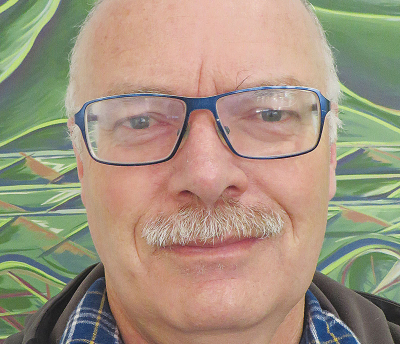 AgResearch principal scientist Dr Graeme Attwood. Photo: SUPPLIED
International research led by New Zealand scientists has led to an important discovery in the quest to lower global agricultural methane emissions.
Methane from animals such as cattle, sheep and deer comes from the rumen in a process involving two groups of microbes. One group makes hydrogen during digestion, then a second group makes methanogens, which take up the hydrogen and make the methane.
The research, recently published in International Society for Microbial Ecology Journal, has for the first time identified the main rumen microbes, enzymes and metabolic pathways.
The research leader, AgResearch principal scientist Dr Graeme Attwood, says the research opens a new approach to reducing livestock methane emissions.
“This is vital for NZ to meets its greenhouse gas emission targets under the Paris Agreement and to ensure the farming of ruminants is sustainable into the future.”
The researchers work at AgResearch and the universities of Otago, Monash (Australia), Illinois (US) and Hokkaido (Japan).
The work is now turning to screening specific compounds that can reduce the supply of hydrogen to the methane producers without harming animal performance. Research will also seek ways to divert hydrogen away from methanogens towards other rumen microbes that do not make methane.
Attwood calls methanogens the “trash collectors” of the rumen because a build-up of hydrogen will have negative effects.
“They’re sitting there taking the end products of the other organisms’ metabolism and getting rid of it, but they just happen to make methane which is a strong greenhouse gas,” he told Rural News.
“I’ve also described them as tax collectors because there’s a price to pay for them disposing of that hydrogen – you lose the energy value of the hydrogen.”
Attwood says researchers are now screening the hydrogen producing organisms against a library of inhibitor chemicals to see which work best.
And they will use them as antigens in vaccines to try to get the animal to make antibodies which control the hydrogen production.
Alternative strategy to methanogens
University of Otago microbiologist Professor Greg Cook says the discovery is important because methane from animals are about a third of NZ’s emissions.
“Much of our work to date has focused on the development of small molecule inhibitors and vaccines to specifically target the production of methane by methanogens,” he says.
 “This new work provides an alternative strategy where we can now begin to target the supply of hydrogen to methanogens as a new way of reducing animal methane emissions.”
Cook and team member Dr Sergio Morales have been working since 2012 with the Ministry for Primary Industries in support of the Global Research Alliance to control greenhouse gas emissions.
Morales says previous research has showed microbes are vital in controlling methane levels and the researchers now understand why.
Studies of two types of sheep – higher and lower methane emitters – found differences in their respective microbes. Bacteria which consumed hydrogen but did not make methane dominated in the low-emitting animals.
Morales said the findings will underpin strategies to reduce methane emissions by controlling hydrogen supply. One strategy may be to feed supplements that encourage non-methane producers to outcompete methanogens.
“Controlling the supply of hydrogen to the methanogens will lead to reduced methane emissions and allow us to divert the hydrogen towards other microbes that we know do not make methane,” he said.
Last night saw the winners of the 2026 Beef + Lamb New Zealand (B+LNZ) Awards named at a gala dinner at Te Pae Christchurch Convention Centre.

OPINION: Among the many satisfying jobs on the farm is shifting our Angus heifers onto fresh pasture. They love it. Tails up, they gallop around for a minute, then it’s heads down — those long, raspy tongues pulling in mouthfuls of lush green feed.
The Government's revised 2050 biogenic methane target range of 14-24% by 2050 is being welcomed by dairy farmers.
Opening a new $3 million methane research barn in Waikato this month, Agriculture Minister Todd McClay called on the dairy sector to “go as fast as you can and prove the concepts”.
OPINION: We are endlessly told that livestock are responsible for half of New Zealand's total emissions.



Testing confirms H5 bird flu in a single northern giant petrel, found dead on a remote Cape Palliser beach in the Wairarapa, says Dr Mary van Andel, the Ministry for Primary Industries' (MPI) Chief Veterinary Officer.

"What's for dinner?" may sound like a simple question, but for many Kiwi parents, answering it has become a job in itself.
Fifty Eight years ago, on the 16th of August 1968, August Claas, the founder of the harvesting company and father of Helmut Claas, personally presented a Claas Senator combine harvester to Scottish farmer John Steven.
New Zealand consumers are paying more for beef mince than ever before, with the average retail price now sitting above $24 per kilogram, according to Rabobank.
State farmer Pamu has delivered its strongest operating result on record.
Four years since it was first detected in New Zealand, researchers and growers now know much more about management of maize pest fall armyworm (FAW).