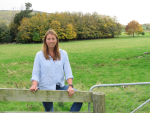
Beef + Lamb New Zealand Awards 2026 Winners Announced in Christchurch
Last night saw the winners of the 2026 Beef + Lamb New Zealand (B+LNZ) Awards named at a gala dinner at Te Pae Christchurch Convention Centre.
 increase font size
 Education Minister Chris Hipkins rejected the proposed joint facility project late last year.
Lincoln University and AgResearch will consider separate building options as an alternative to a much-anticipated joint facility building that never got beyond a fenced site.
However, both say collaboration on the Lincoln campus remains a priority.
The $206 million project is dead-in-the-water following Education Minister Chris Hipkins’ rejection of another revised business case seeking Government funding.
The building as currently designed cannot be built without a Crown contribution, Lincoln’s acting vice-chancellor Bruce McKenzie said in a statement.
Hipkins said in December 2018 that while he remained supportive of the joint facility project he would not endorse the business case in its current form.
“In the view of the minister, the implementation business case did not meet Treasury guidelines.”
McKenzie says AgResearch is progressing a feasibility study for a separate building. But both parties are discussing how to work together to realise the benefits of a joint facility.
“In due course the Lincoln University council will receive a series of options to consider, including options to progress a separate build project.
“As has always been a priority, Lincoln University will continue to look at ways to collaborate with partners including AgResearch to achieve the benefits of the Lincoln precinct.”
McKenzie says Lincoln has the capacity to progress its own capital works projects.
“Planning for campus wide capital projects, undertaken in 2018, continues and will be considered by the council at the appropriate time.”
An AgResearch spokesperson told Rural News the parties are working together on new plans to construct a Lincoln education, research and innovation precinct for AgResearch staff after deciding a joint facility would not be built.
“We will continue to talk to interested stakeholders about their future involvement and our strategic plans and staff relocation intentions remain unchanged.”
The 27,000sq.m building was supposed to embody the Lincoln Hub concept to foster collaboration in R&D in farming. It would have housed 700 agricultural science staff from Lincoln University, AgResearch and DairyNZ, and more tenants in future.
But the building site has largely remained fenced off, overgrown and idle since a VIP ground-breaking ceremony in August 2017.
Last night saw the winners of the 2026 Beef + Lamb New Zealand (B+LNZ) Awards named at a gala dinner at Te Pae Christchurch Convention Centre.
A significant breakthrough in understanding facial eczema (FE) in livestock brings New Zealand closer to reducing the disease’s devastating impact on farmers, animals, and rural communities.
A breakthrough in the understanding of Facial Eczema (FE) in livestock could bring New Zealand closer to reducing the disease’s impact.
An innovative idea for transforming mechanically deboned meat (MDM) into a meat flake for seasoning has taken top honours in the Meat Industry Association’s (MIA) first-ever Dragon’s Den competition.
The Government's plan to merge the seven crown institutes presents exciting possibilities for plant technology company Grasslanz Technology, says chief executive Megan Skiffington.



Ravensdown shareholders have elected Jane Montgomery and Kate Acland to the Ravensdown Board for three-year terms, following a closely contested director election.
Federated Farmers says new legislation replacing the Resource Management Act will cut red tape, unlock investment and help grow New Zealand's export-led economy, after the Planning Bill and Natural Environment Bill passed their third reading in Parliament yesterday.
Leading figures from the major political parties will be questioned on their primary sector policies at the Rural Issues Debate at Mystery Creek Events Centre, Hamilton, on 30 September.
OPINION: Have a plan in place now!
Beef + Lamb New Zealand (B+LNZ) says it welcomes the passage of the Natural Environment Bill and Planning Bill, calling the bills a positive step for sheep and beef farmers.
A spate of southerly winds bringing cold temperatures has presented challenges for Taranaki dairy farmers.