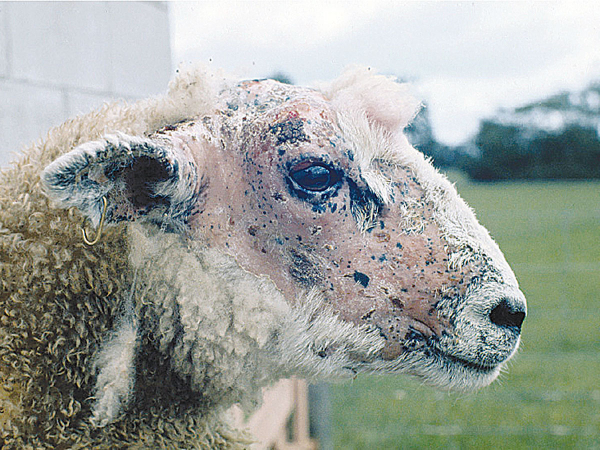
A breakthrough in the understanding of Facial Eczema (FE) in livestock could bring New Zealand closer to reducing the disease’s impact.
Until recently, Sporidesmin, the toxin responsible for FE, was thought to be made by the fungus Pseudopithomyces chartarum.
However, researchers from AgResearch, Manaaki Whenua, Beef + Lamb New Zealand (B+LNZ) and Livestock Improvement Corporation (LIC) have shown that few Pseudopithomyces chartarum strains appear capable of making sporidesmin, and a new species, Pseudopithomyces toxicarius, is the primary sporidesmin producer, providing a clearer understanding of the disease’s causes, and paving the way for more effective control strategies.
FE has cost the New Zealand economy an estimated $332 million annually.
Dan Brier, B+LNZ’s general manager of farming excellence, says FE has been a long-standing challenge for farmers.
“This research is a vital step toward understanding the fungus and ultimately eliminating its impact,” Brier says.
“Identifying the species responsible gives us a clearer foundation for developing more accurate diagnostic tools and effective management practices. This collaboration highlights the importance of working together to solve this issue, and we’re proud to contribute to this breakthrough,” he says.
“Bringing together farmer-led organisations and researchers is key to delivering practical outcomes that truly make a difference on the ground. By combining real-world farming experience with scientific expertise, we ensure that research is not just theoretical but directly applicable to the challenges farmers face every day," adds Brier.
Dr Bevin Weir, senior scientist at Manaaki Whenua says the findings are the result of years of hard work and dedication from research teams and the farming community.
“Identifying Pseudopithomyces toxicarius as the primary cause of Facial Eczema is a critical step forward and a testament to the commitment of everyone involved.”
As B+LNZ’s Eliminating Facial Eczema Impacts (EFEI) programme continues its work, this collaborative research from Beef + Lamb New Zealand, AgResearch, Manaaki Whenua and LIC represents a crucial step in solving the challenges of Facial Eczema.