The Good Carbon Farm has partnered with Tolaga Bay Heritage Charitable Trust to deliver its first project in Tairāwhiti Gisborne.
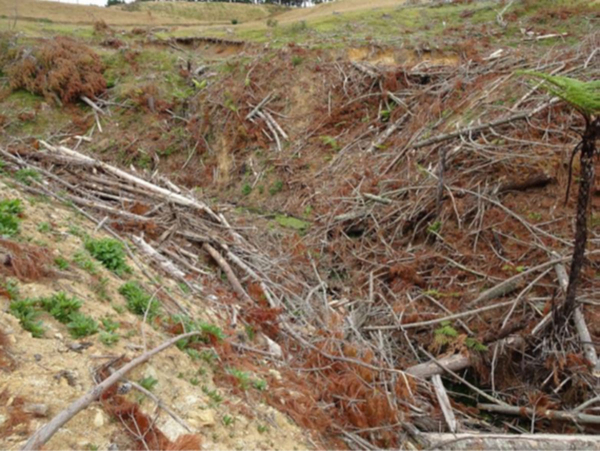
Supported by Air New Zealand’s Every Corner Project, the project will produce and distribute biochar made from farm forestry slash displaced during Cyclone Gabrielle.
Joany Grima, The Good Carbon Farm co-founder, says her organisation is “delighted” to come to Tairāwhiti.
“Our climate action model is simple and circular: taking organic matter that would otherwise go to waste, upcycling it into biochar, and putting it back into the ground, for good, in a school or community garden. The Trust is the perfect partner for this project,” Grima says.
Following Cyclone Gabrielle, the Tolaga Bay Heritage Charitable Trust initiated the Slash for Cash project, repurposing forestry debris into biochar to be used to regenerate productive farmland.
Slash for Cash coordinator, Thabiso Mashaba, says the project will be the first big order for Slash for Cash, allowing the project to start “giving back to the soil”.
“Since establishing Slash for Cash, the team has been specially trained to heal the land, an empowering and mana enhancing process for those involved,” Mashaba says.
Biochar produced by the team in the second half of the year will be shared among Tairāwhiti schools and community groups to dig into their food growing gardens.
Forestry slash is rich in carbon, so when it decomposes, carbon is re-released into the atmosphere as carbon dioxide and methane. Converting slash into biochar is a circular system, capturing up to half the carbon that would otherwise have been emitted, while also creating an organic soil enhancing product.
“We think of what we’re doing as the opposite of mining - returning resources to the earth, rather than extracting them. The addition of biochar to gardens creates a safe, long term carbon sink, and triggers a reaction that makes soil more resilient,” Grima says.
“This project is in line with the Māori community spirit of maara kai (growing food) and tino rangatiratanga (self determination). By repurposing problematic slash on our doorstep into something good, we can help educate our tamariki, and enhance the livelihoods of whanau, too, “ Thabiso says.
Upper Hutt City Council, Simplicity Foundation, Mazda Foundation, and Soilpro are previous financial supporters of The Good Carbon Farm, a New Zealand registered charity.
“We invite other organisations and companies to support our work as part of their sustainability strategy. In time, our carbon sinks will reach every corner of New Zealand,” says Grima.