
India FTA Removes 33% Tariff on NZ Sheepmeat
New Zealand’s red meat sector has welcomed the India-New Zealand Free Trade Agreement taking effect, which removes India’s 33% tariff on New Zealand sheepmeat.
 increase font size
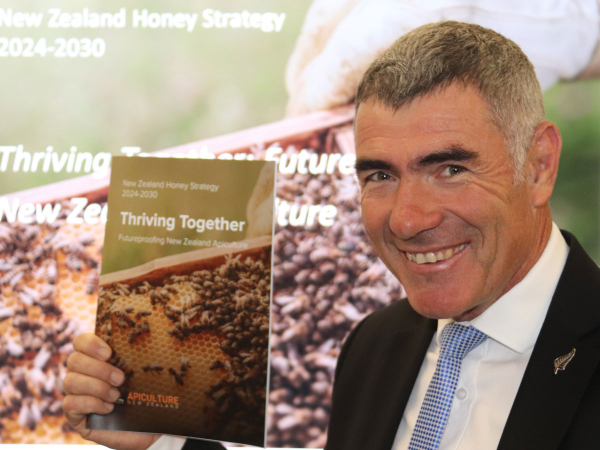 ApiNZ chair Nathan Guy.
A big shakeup in the honey sector is about to take place with the news that the industry good body, ApiNZ, and the export focused Unique Manuka Factor Honey Association are looking to merge to form a new industry body.
The chair of ApiNZ, Nathan Guy told Rural News that his organisation is no longer financially sustainable because its funding model is based on a voluntary membership. He says as honey returns have dropped so has the membership income that’s meant that the board of ApiNZ have made to make some hard decisions.
“These include reducing staff, relinquishing the office in Wellington and sharing desk with other organisation around the city while still maintaining a real focus on its strategy. A key pillar of this is about creating a united industry which is why we believe it is important to merge with UMFHA and create a new organisation,” he says
Guy says the new organisation will still have a voice for beekeepers on such things as bee health and advocacy to government but by joining up with UMFHA will have a strong export focus. He says the merger makes common sense and the leadership in both organisations can see the value in it – especially have a financially viable entity that will be able to deliver on the industry strategy which is to double the value of honey exports by 2030.
The industry has had a rollercoaster ride over many years with fluctuating prices and some honey simply unsold.
Members of both organisations are now being consulted on the proposal and the intention is to have the new entity in place by April 2025. In the meantime a whole range of issues relating to the proposed merger including membership and governance structure.
New Zealand’s red meat sector has welcomed the India-New Zealand Free Trade Agreement taking effect, which removes India’s 33% tariff on New Zealand sheepmeat.

New Zealand's role is not to compete with Indian growers, according to NZ Apples and Pears.
The red meat sector is in great heart.
As expected, the US has launched a safeguard investigation into lamb imports, a move that could impact New Zealand sheepmeat returns.
New Zealand's red meat sector says it welcomes the Government's focus on trade ahead of the general election in November.



Federated Farmers has welcomed new rural policies released by ACT, saying they align closely with its own election priorities.

Rural Contractors NZ says proposed changes to land transport rules for agricultural vehicles are a welcome response by the Government to out of date regulations which have seen members hit with huge fines.
Alliance is calling for final applications for its 2027 Graduate Programme, with applications closing on Sunday 25 October.
Decades piloting planes has ensured vet and farmer David Hayes is focused on safety. So, after a serious accident while welding on farm, he is sharing his experience so others can learn from it.
Canterbury milk processor, Synlait Milk has confirmed Leon Fung as its chief executive officer.
OPINION: Making it easier to collect rainwater and use it to grow crops and livestock is a no brainer.



