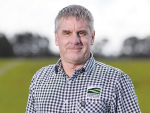
Esther Guy-Meakin Appointed Chief Executive of the NZ Meat Board
Esther Guy-Meakin has been announced as the new chief executive of the New Zealand Meat Board (NZMB).
 increase font size
 Meat Industry Association chief executive Sirma Karapeeva.
Some orchardists in Hawkes Bay are so short of people to pick their fruit that they are resorting to ‘poaching’ workers from the meat companies.
Rural News has been told that meat workers in the region are being offered more money than they getting at processing plants to pick fruit, with reports of high absenteeism at some meat processing plants as a result.
Meat Industry Association chief executive Sirma Karapeeva says a sustained labour shortage has been an ongoing issue for the meat industry for a number of years. However, she says this time round it’s a little bit different because other sectors are also experiencing similar shortages – particularly in the Hawkes Bay.
Karapeeva says her office has been told about the horticultural industry trying to attract workers from the meat sector to pick fruit.
“It’s just another complexity in the whole mix of what Covid is throwing at us,” she told Rural News. “The borders are closed and we can’t find extra workers, despite the idea that there are many New Zealanders who don’t have work due to Covid. We just can’t seem to attract them in the regions and into the industry.”
Karapeeva says while much has been made of the issue in Hawkes Bay, she wouldn’t be surprised if other regions were experiencing similar pressure.
“I know that there are whole bunch of people, who for example, who are trying to find halal workers and are struggling to get them.”
She says another complication is that during the summer break there were a number of university students who took up temporary roles in the processing industry. However, they have now gone back to university and left another gap in the labour force which that has compounded the problem.
Esther Guy-Meakin has been announced as the new chief executive of the New Zealand Meat Board (NZMB).

As expected, the US has launched a safeguard investigation into lamb imports, a move that could impact New Zealand sheepmeat returns.
New Zealand's red meat sector says it welcomes the Government's focus on trade ahead of the general election in November.
New Zealand red meat exports are booming but a pending decision in the White House, Washington D.C., could dent sheepmeat earnings.
Prime Minister Christopher Luxon says the red meat sector is doing an excellent job promoting our pasture-fed system around the globe.


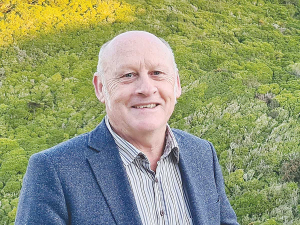
The Royal New Zealand College of General Practitioners (the College) and Hauora Taiwhenua Rural Health Network are calling for investment in a proposed new training pathway for rural GPs, warning that many rural practices are struggling to recruit while a large share of the existing workforce nears retirement.
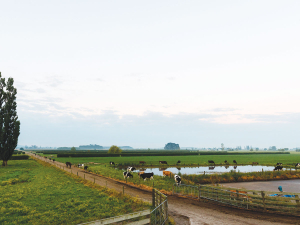
Federated Farmers has called on Central Otago District Council (CODC) to drop or vote down a plan to truck sludge from Alexandra and Cromwell to farmland near Lauder, warning it would compound an "outrageous" situation created by a separate council's decision weeks earlier.
Synlait has swung to second-half profit as operations stabilise, but the dairy processor still posted a $75.4m annual loss.
LIC shareholders have elected a new North Island representative to the co-operative's Board, along with five representatives to its Shareholder Reference Group (SRG), following the company's Annual Meeting held in Invercargill.
Farmers across parts of Southland and South Otago are continuing to deal with difficult conditions after a prolonged run of wet weather, with pressure building around feed supply, stock management, pasture damage, farm infrastructure and everyday workloads.
Federated Farmers says it welcomes Labour's commitment to reviewing the Sharemilking Agreements Act, calling on other major parties to do the same.