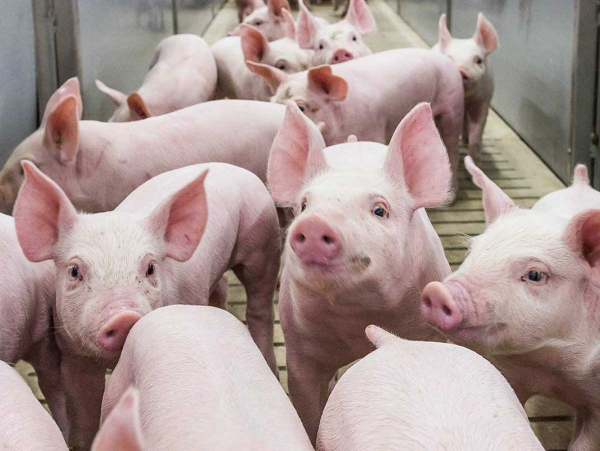
Pig farmers say the idea that not every pork product sold in New Zealand has to be produced to this country’s own welfare standards is unfair.
NZ Pork chief executive Brent Kleiss’s comments come after the release of the “Closing the Welfare Gap” report by Animal Policy International.
The report claims that New Zealand ought to apply its animal welfare standards to imports as well as local agricultural products.
“New Zealand has taken steps to improve the conditions for some farmed animals through prohibitions on practices like battery cages, sow stalls, and the imminent farrowing crate ban, earning a C rating on the 2023 Animal Protection Index,” the report reads.
“However, a substantial portion of animal products sold in New Zealand are imported from countries with lower welfare standards, leaving serious welfare gaps.”
It’s an issue Kleiss says is significant for New Zealand’s pig farmers. He says they are proud of the way they produce quality pork under high standards of animal welfare, environmental management and employment practices.
“But it is a fact that pig farming is more expensive and less efficient when done this way,” Kleiss adds.
“Consumers are watching every dollar they spend and it can be difficult to convince people, especially in the current economic circumstances, to spend more on products that are produced to these high standards when they are lined up on the shelf beside a similar cheaper imported product,” he told Rural News
Approximately two thirds of pork consumed in New Zealand, amounting to over 40,000 metric tonnes (MT), was imported in 2023, coming from 22 countries.
Kleiss says that despite this, there is no requirement for the products to meet New Zealand’s pig welfare standards.
“Although the European Union is currently reviewing animal welfare legislation, most EU members and other countries exporting pork to New Zealand have lower standards of pig care and less rigorous enforcement regimes than we do,” Kleiss adds.
For example, in New Zealand, gestation stalls are banned. Yet in Canada and most European countries, sows can be confined in gestation stalls for the first four weeks of pregnancy. In the United States, sows can be confined for their entire pregnancy.
Kleiss says that New Zealand pig farmers do not castrate piglets, but in Europe, the US and Canada, they are routinely castrated.
He adds that in Spain, Poland and the US, this practice is done without pain relief.
“In New Zealand, sows are only housed in farrowing systems when it is time for them to give birth and care for their piglets – with a maximum of five days pre-farrowing and 28 days after. Most EU countries and the US have no limit on how long a sow can be confined in a farrowing system, either before or after giving birth. Canada allows up to six weeks.”
Kleiss says it all comes down to one thing: a need for a level playing field for New Zealand’s pig farmers.
“The new Government should demonstrate its commitment to animal welfare, the environment and local farmers by subjecting imported pork to the same stringent standards that are applied to Kiwi farmers,” he says.