Federated Farmers Backs Year 11 Agricultural Science
Federated Farmers is backing Feilding High School’s call to keep Agriculture and Horticultural Science as a standalone subject in Year 11.
 increase font size
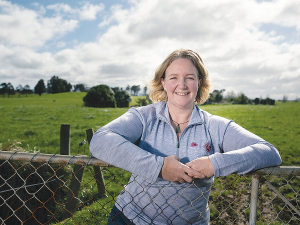
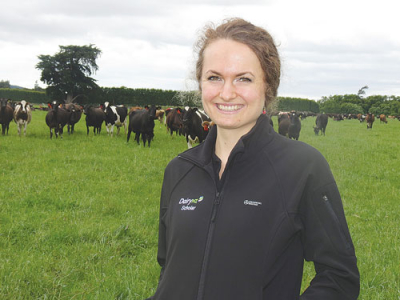 Beth Hampton.
A New Zealand representative at the recent Youth Ag-Summit in Brussels is arguing for agriculture to be properly integrated into the secondary school curriculum.
Beth Hampton says if it was, more young people would likely make a career in the agri sector.
Hampton has a double-major degree in environmental science and agribusiness. She works for the NZ Environmental Protection Authority and has a passion for science, agriculture and the environment. She was a speaker on the recent teachers’ agri experience tour co-sponsored by Rural News Group.
Hampton grew up in Matamata, but not on a farm. Many of her friends did, and that and her passion for science helped her decide to study environmental science. Then a relative who works in the agri sector pointed her towards agri-business, hence her double degree and desire to work in a job that includes both elements.
Hampton says if agriculture was integrated into the core subjects it would save young people having to take agriculture as a separate subject at the expense of some core subjects. This would expose students to what agriculture is all about, she says.
“There’s a challenge at high schools: kids may be interested in agriculture, but if they were like me and wanted to take chemistry, physics, biology, English and maths - that’s all your five subjects,” she told Rural News.
Hampton believes many teachers are willing to see agriculture integrated, but the schools would need help and resources from industry.
Hampton wrote an essay on this, gaining her a place at the Youth Ag Summit. She also wrote about food wastage, a topic also raised at the summit.
Hampton says about 40% of the food produced is ‘wasted’ in not being used for human consumption. The first stage of addressing this would be to create awareness about it and get people to self-regulate their habits, she says. This would include only buying ‘enough’ food, using leftovers and feeling comfortable taking a ‘doggy bag’ out of a restaurant.
“One issue is setting a consistent metric on food waste. At present food is often deemed wasted when not consumed by humans,” she explains. “But if it goes to another productive use it’s not technically wasted, for example, being fed to animals or used to build up organic matter. That is a productive use and this issue needs to be sorted so that proper strategies can be put in place to deal with it.”
Federated Farmers is backing Feilding High School’s call to keep Agriculture and Horticultural Science as a standalone subject in Year 11.

Pāmu has welcomed Taranaki student Paige Burston as its newest First Foundation Scholar, supporting her journey towards a career in agriculture and animal science.
Kaikōura families affected by July's severe storm have found a practical solution to a problem that's kept some children away from regular schooling for weeks: a washed-out section of Inland Kaikōura Road, which has stopped the local school bus from running its usual route.
Special courses for secondary school teachers to help excite kids about agriculture and horticulture are now being run at Massey University.
The Government has announced a new rural scholarship designed to back emerging primary sector leaders.


As part of its Election 2026 coverage, Rural News asked political parties how they would help pull the arable sector out of the doldrums. Here's what they said:
Farmers are being encouraged to rethink how they manage waste on farm with the launch of ruralwastesorted.co.nz, a new website bringing together practical tips, real farmer experiences and resources.
New Zealand Winegrowers (NZW) is celebrating the India-New Zealand Free Trade Agreement (FTA) coming into force today, bringing New Zealand wine improved access to one of the world’s fastest-growing economies.
New Zealand’s red meat sector has welcomed the India-New Zealand Free Trade Agreement taking effect, which removes India’s 33% tariff on New Zealand sheepmeat.
More than 95 per cent of New Zealand’s forestry and wood exports to India can now enter tariff free as the New Zealand-India Free Trade Agreement comes into force today.
Federated Farmers is backing Feilding High School’s call to keep Agriculture and Horticultural Science as a standalone subject in Year 11.