
Federated Farmers Backs Year 11 Agricultural Science
Federated Farmers is backing Feilding High School’s call to keep Agriculture and Horticultural Science as a standalone subject in Year 11.




 increase font size
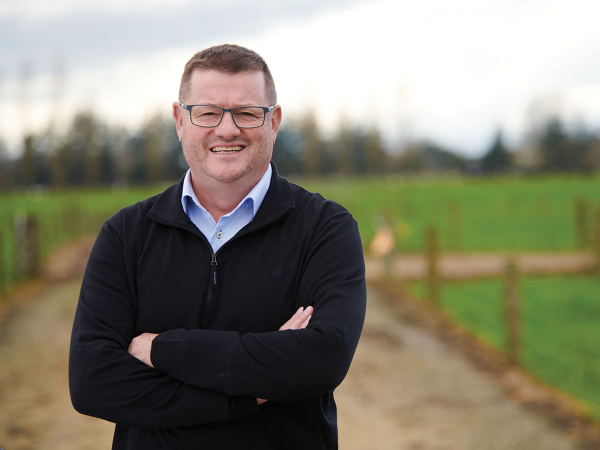 DairyNZ chief executive Campbell Parker says science is pivotal to driving progress and unlocking opportunity and innovation in the ag sector.
Science is pivotal to driving progress and unlocking opportunity and innovation in the ag sector, says DairyNZ chief executive and chair of the Agribusiness in Schools programme, Campbell Parker.
DairyNZ, along with the Ministry of Education (MoE), NZ Qualifications Authority (NZQA) and various primary industry groups have set up an academic programme in 125 secondary schools to teach agriculture, horticulture and agribusiness.
Parker, who has spent more than 30 years in the ag sector, spoke to DairyNZ in the wake of an abortive attempt recently by the MoE to remove agriculture as a standalone academic subject and drop it to a lower ‘vocational’ level. This move drew unprecedented outrage from ag teachers, industry leaders and the Agribusiness in Schools itself.
Following the backlash, Pauline Cleaver MoE’s deputy secretary, curriculum centre, issued a statement stating that agricultural and horticultural science will remain a standalone, Ministry-led subject for Years 12 and 13.
“Agricultural and Horticultural Science plays a key role in preparing students for careers in one of New Zealand’s most significant economic sectors. The food and fibre sector employs around 14% of the national workforce and contributes substantially to the country’s economic performance.
“I’ve also confirmed that agribusiness will remain integrated within Business Studies at Years 12 and 13. The Ministry will work closely with subject associations to ensure agribusiness is clearly visible, explicitly recognised, and valued within the subject.”
He says the fact that decision got overturned in a few days speaks volumes for how strong that voice was and the collective view of what the primary sector needs. Parker says it was pleasing to see how swiftly Education Minister Erica Stanford acted to restore the programme.
Parker believes the MoE misunderstood how important it was to have agricultural subjects taught at an academic level and he says the goal is always to work with the Ministry rather than have a confrontational approach. He says industry has a part to play and making sure that decision makers in Wellington fully understand the value of fostering agri subjects at an academic level.
“We need some of the brightest and best young people who want to go on to careers in the sector to go from secondary school through to university,” he says.
“Science has always played a big part in dairy. If you look back to 1923 when the Dairy Board was formed, farmers have invested a levy into research and science for over 100 years. Some of those early innovations turn up in tools on a cow shed wall today - for example, a spring rotation planner came from science,” he says.
One of the critical aspects of science, says Parker, is that it provides hard evidence on which decisions can be made. He says everyone has opinions, but he says in the end, scientific evidence will win over opinions.
The Crocodile Pit
To foster and spark innovation in schools, what is known as the ‘crocodile pit’ is run annually.
This could loosely be compared to the TV show The Dragons Den, but it is where students are given the opportunity to come up with some unique innovations that could be applied in agriculture and pitch these to a judging panel. Campbell Parker describes it as one of the most inspiring days of the year.
“This is because you get young kids trying to come up with ideas that will help the sector continue to move forward. What I would say is that some of those kids are from urban families and what they get from that programme is that it ignites their passion in the sector and maybe leads them on a career path in agriculture,” he says.
The Agribusiness in Schools programme is about informing young people about the great career options in the primary sector. He says they not only have success in rural schools but also in some cities such as Auckland.
Federated Farmers is backing Feilding High School’s call to keep Agriculture and Horticultural Science as a standalone subject in Year 11.

Pāmu has welcomed Taranaki student Paige Burston as its newest First Foundation Scholar, supporting her journey towards a career in agriculture and animal science.
Kaikōura families affected by July's severe storm have found a practical solution to a problem that's kept some children away from regular schooling for weeks: a washed-out section of Inland Kaikōura Road, which has stopped the local school bus from running its usual route.
Special courses for secondary school teachers to help excite kids about agriculture and horticulture are now being run at Massey University.
OPINION: It's no surprise that "world-class biosecurity" continues to dominate as the top priority for agribusiness leaders, holding the number one spot for the 16th consecutive year in KPMG's latest agribusiness report.


As part of its Election 2026 coverage, Rural News asked political parties how they would help pull the arable sector out of the doldrums. Here's what they said:
Farmers are being encouraged to rethink how they manage waste on farm with the launch of ruralwastesorted.co.nz, a new website bringing together practical tips, real farmer experiences and resources.
New Zealand Winegrowers (NZW) is celebrating the India-New Zealand Free Trade Agreement (FTA) coming into force today, bringing New Zealand wine improved access to one of the world’s fastest-growing economies.
New Zealand’s red meat sector has welcomed the India-New Zealand Free Trade Agreement taking effect, which removes India’s 33% tariff on New Zealand sheepmeat.
More than 95 per cent of New Zealand’s forestry and wood exports to India can now enter tariff free as the New Zealand-India Free Trade Agreement comes into force today.
Federated Farmers is backing Feilding High School’s call to keep Agriculture and Horticultural Science as a standalone subject in Year 11.


OPINION: It seems Canterbury processor Synlait is still in the doldrums.
OPINION: Get offside with New Zealand First leader Winston Peters at your own peril.




