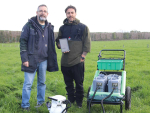
Massey Uses Portable Analyser to Measure Pasture Soil GHGs
Researchers at Massey University are using a special piece of scientific equipment to improve the measurement of greenhouse gas emissions from pasture soils.




 increase font size
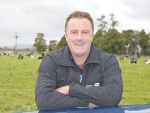
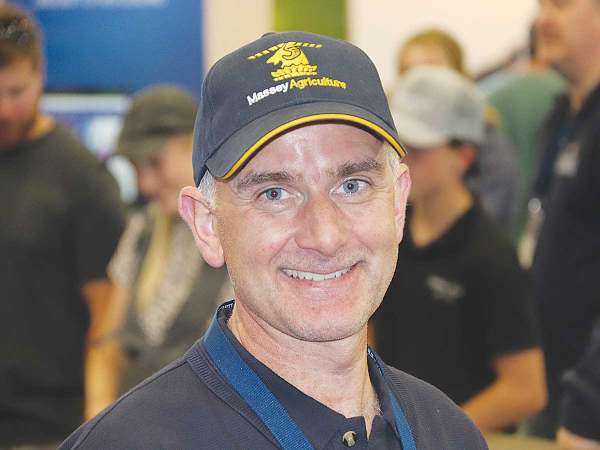 Professor Chris Anderson
Special courses for secondary school teachers to help excite kids about agriculture and horticulture are now being run at Massey University.
Part of the new science curriculum, which comes into effect in 2028, includes a focus on soil, plant and animal science. To that end Massey University, in association with the Horticulture and Agriculture Teachers Association (HATA), have been busy designing courses that will upskill teachers to cope with the new requirements of the curriculum.
Leading the project to design these courses at Massey is Professor Chris Anderson, who says an exciting part of the reforms is that ag and hort will be taught to students in year 11 and this will continue through years 12 and 13.
In recent years there has been increasing demand by students for secondary schools to offer agriculture and horticulture, but one issue has been having teachers with the appropriate knowledge and skills to teach these subjects.
For some time, Massey University and HATA have been developing courses for teachers and some have already been run and the aim, says Anderson, is to have a suite of seven different ones on offer.
"We have already been running the soil science course and now we have two plant science and two hort crop courses, which will be offered for the first time. Then we have two animal science courses that we will have ready for next term, and finally an ag business course that will flesh things out," he says.
Anderson says the courses are introductory and are based on the 100-university level. He says they are targeted for teachers so they can get some robust, fit-for-purpose development to help them provide a better teaching experience. The courses are designed to be engaging and include some short videos but don't contain heavy technical detail.
"It's about providing the appropriate level of information the teachers would need to make them more confident when they get in front of the students, and then they are hopefully going to incentivise and excite the kids.
"In the long term, this is about making kids understand that ag is a cool subject and also increase their capability when they come to the university," he says.
All the individual courses are being delivered online over a ten-week period with participants expected to put in about five hours work per week and fifty hours over the ten weeks.
Researchers at Massey University are using a special piece of scientific equipment to improve the measurement of greenhouse gas emissions from pasture soils.

Kaikōura families affected by July's severe storm have found a practical solution to a problem that's kept some children away from regular schooling for weeks: a washed-out section of Inland Kaikōura Road, which has stopped the local school bus from running its usual route.
Interest in agritech and production animal systems has prompted Massey University's School of Agriculture and the Environment to new majors to its popular animal science degree.
The industry is crying out for graduates with agricultural related degrees.
A four year trial has reaffirmed that mixing plantain into dairy pastures can help reduce nitrogen losses to freshwater while maintaining milk production and profitability, say researchers.


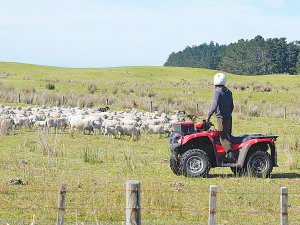
Farmers across parts of Southland and South Otago are continuing to deal with difficult conditions after a prolonged run of wet weather, with pressure building around feed supply, stock management, pasture damage, farm infrastructure and everyday workloads.

Federated Farmers says it welcomes Labour's commitment to reviewing the Sharemilking Agreements Act, calling on other major parties to do the same.
For Canterbury dairy farmers Sian Meijer and Rick Wobben, wearable technology has become one of their most valuable on-farm tools - helping manage 1850 cows across an expansive, high-performing dairy operation while improving efficiency, mating outcomes and day-to-day decision making.
Fonterra has unveiled its annual results for the 2026 financial year, posting $27 billion in revenue and close to $20 billion returned to New Zealand farmer owners and unit holders.
The first major update to the Dairy Cattle Code of Welfare in more than a decade has been released, marking what DairyNZ describes as an important step in ensuring animal welfare standards continue to evolve alongside scientific evidence and on-farm realities.
Ravensdown shareholders have elected Jane Montgomery and Kate Acland to the Ravensdown Board for three-year terms, following a closely contested director election.

OPINION: It seems Canterbury processor Synlait is still in the doldrums.
OPINION: Get offside with New Zealand First leader Winston Peters at your own peril.




