Editorial: Sensible move
OPINION: The Government's decision to rule out changes to Fringe Benefit Tax (FBT) that would cost every farmer thousands of dollars annually, is sensible.
 increase font size
 The farmhouse adjustment will more strictly follow the law so farmers are treated like other businesses.
Inland Revenue is looking to bring tax accounting practice regarding farmhouse expenses into line with the law.
This is all part of a review of out-dated practices and policies.
The practice of full-time farmers deducting 25% of farmhouse expenses without needing to provide evidence of their business use has been accepted by the department since the 1960s.
Farmers have also been able to deduct 100% of rates bills and interest costs on loans.
Inland Revenue group tax counsel Graham Tubb says this has allowed some farmers to claim deductions for private spending.
Under proposals that go out for consultation today, the farmhouse adjustment will more strictly follow the law so farmers are treated like other businesses.
It’s suggested that farms, where the cost of the farmhouse is less than 20% of the total value of the farm, will still be able to claim a 100% deduction on interest costs.
However, deductions on rates related to the house and general farmhouse expenses would be at a new flat rate of 15% unless the taxpayer can provide evidence to substantiate a higher claim.
“It’s going to be generally business as usual for large farms except the automatic deduction will be based on 15% of farmhouse costs rather than the previous 25%.
“We see the proposed rule changes mostly affecting smaller operations or lifestyle blocks.
“These concessions have been able to be applied even in cases where farming isn’t the household’s main source of income and that’s not in keeping with the intent of the rule.
“Other industries have long had to provide evidence of business use when using their house for work purposes so it’s only fair and equitable that farming gets the same treatment.”
Where the cost of the farmhouse is valued at more than 20% of the total farm’s value, then deductions can only be claimed on expenses attributable to actual business use.
The rules would only affect farms being run by sole traders or in partnership. Those in trusts or companies are subject to different regimes.
“Business deductions certainly remain under these proposals but we’re looking to remove the practice of using the farm to claim for private spending.”
“We have already spoken with Federated Farmers and other industry groups in determining our revised position. However, we look forward to receiving submissions from farmers and their accountants affected by the change.”
The changes will apply from the start of the 2017-18 year after submissions have been considered.
The consultation document can be read here: http://www.ird.govt.nz/public-consultation/current and the deadline for submissions is December 22.
OPINION: The Government's decision to rule out changes to Fringe Benefit Tax (FBT) that would cost every farmer thousands of dollars annually, is sensible.

Inland Revenue (IRD) is not one for acknowledging the holiday season.
TAXPAYERS WITH fluctuating income can now avert the risk of incurring hefty IRD late payment penalties and use of money interest (UOMI) in the event they have a better-than-expected financial year, says Tax Management NZ.



Healthy snacking company Rockit has announced Wang Yibo, one of China's most influential celebrities, as its new brand ambassador.
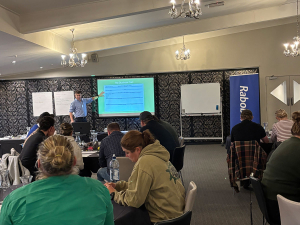
Rabobank has celebrated the tenth anniversary of its AgPathways Programme, with 23 farmers from Otago and Southland gathering for two-and-a-half days to learn new business management and planning skills.
Adopting strategies to reduce worm burden on farm goes hand-in--hand with best practice farm management practices to optimise stock production and performance, veterinarian Andrew Roe says.
Last night saw the winners of the 2026 Beef + Lamb New Zealand (B+LNZ) Awards named at a gala dinner at Te Pae Christchurch Convention Centre.
A 12-month pathway programme has helped kickstart a career in dairy for an 18-year-old student-turned-farmer.
Zespri says its global fruit sales revenue has reached a record NZ$5.9 billion from sales of 248.1 million trays.