
Two new awards open to help young farmers progress to farm ownership
Entries have opened for two awards in the New Zealand Dairy Industry Awards (NZDIA) programme, aimed at helping young farmers progress to farm ownership.
 increase font size
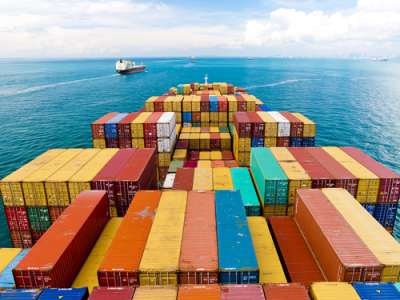
New Zealand’s three major export sectors- beef, lamb and dairy- may pass the $6/kg mark simultaneously at some stage this year, says ASB analyst Nathan Penny.
In his latest commodities report, Penny says that prices in the three sectors look similarly healthy.
“In fact, there is a better than fair chance that all three sectors surpass the $6/kg mark simultaneously at some stage this year, known as the Magical Triple 6.”
Dairy is already there; ASB milk price forecasts are sitting at $6.00/kgMS this season and $6.75/kgMS next season.
Over recent months, lamb and beef have rapidly closed in on the $6/kg price mark as well.
Penny says firstly, beef prices have drifted higher since February (up 7.9% over this period). General tightness in Australian and NZ (including a lower dairy cow cull) supply have contributed to this lift, while more recently the Brazilian beef scandal has given prices a further boost.
Meanwhile, lamb prices have been on a tear over the same period, lifting 13.7%. Indeed, this price surge goes against the grain of the normal seasonal pattern, where prices fall.
He says the main impetus for this lift has been very low local slaughter and thus tight supply this year.
“At this juncture, we expect both meat sectors to at least touch the $6/kg mark over 2017. In particular, recent trends and continued tight supply support this view.”
However can these prices last? Penny is optimistic that both beef and lamb prices can remain high next season, if not above $6/kg mark.
“In particular, we are seeing signs that demand is likely to underpin already tight supply. For example, the announcement this month of Chinese approval for chilled beef and lamb exports should lift average prices into this market.
“Similarly, the earlier lifting of Iranian trade sanctions and eventual re-commencement of lamb exports is likely to give lamb demand and export prices a further boost. Notably, Iran accounted for nearly 60% of NZ’s lamb exports during the 1970s.
“All up, the outlook for all three sectors is positive, and the fact that all three are strong at the same time is a rare occurrence. However, we retain some caution, noting that higher prices will induce a supply response. In particular, we expect lamb supply is likely to rebound in the spring and improved demand may not be able to offset the extra supply; this is likely to see prices moderate.”
Entries have opened for two awards in the New Zealand Dairy Industry Awards (NZDIA) programme, aimed at helping young farmers progress to farm ownership.
According to ASB, Fonterra's plan to sell it's Anchor and Mainlands brands could inject $4.5 billion in additional spending into the economy.
Sheep and beef farmers are cautiously optimistic as farmgate prices continue to firm.
The 2025-26 season is set to start on a high and a $10/kgMS opening forecast milk price isn't being ruled out.
A global trade war beckons, which is bad news for a small open economy like New Zealand, warns Mark Smith ASB senior economist.

OPINION: As the general election approaches, political parties are churning out policies in the hope of attracting more votes.
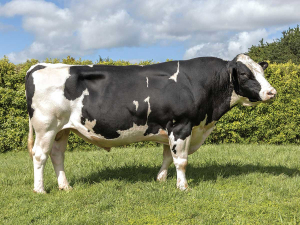
An LIC bull, Tronnoco AR Sadio-ET S3F, bred by Tony and Keri O'Connor of Tronnoco Farming Co Ltd near Timaru, has won the 2026 Mahoe Trophy.
With forecasters advising El Niño conditions will develop through winter and strengthen into spring and summer, Ballance Agri-Nutrients is encouraging farmers and growers to think ahead about nutrient planning and be prepared to work around challenging weather conditions.
In the past, much has been made of the concept of farm to fork, but an Australian expert in food science and marketing with experience in the dairy industry, Dr Angeline Achariya, says the reverse of this slogan is critical to win modern day consumers.
Efficiency is the big one because it tracks back into what is done on farm.
A four year trial has reaffirmed that mixing plantain into dairy pastures can help reduce nitrogen losses to freshwater while maintaining milk production and profitability, say researchers.