Why Glyphosate Resistance Is a Growing Vineyard Risk
Glyphosate resistance threatens to significantly increase operational costs and reduce profitability in New Zealand vineyards, according to a new report.
 increase font size
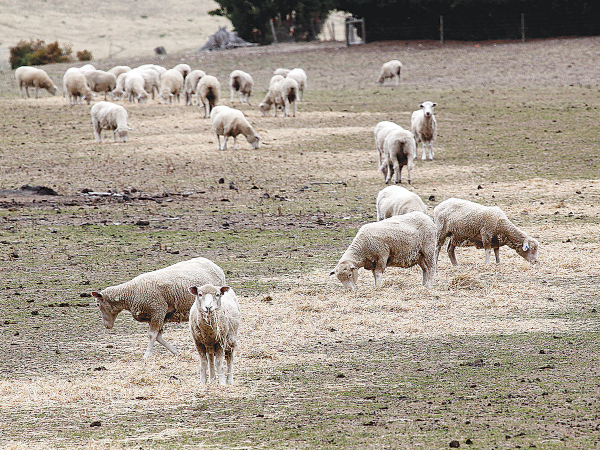 Destocking may seem like the best option for some Marlborough farmers, says farmer Warwick Lissaman.
Seddon farmer and Marlborough drought committee member Warwick Lissaman says total destocking and going fishing may seem like the best option for some of Marlborough’s drought-hit farmers.
“But as an industry, we can’t do that. As a whole community, we can’t do that. We have to fight through,” he told Rural News.
Speaking following a recent well-attended drought meeting at Ward, Lissaman says farmers’ needs varied case by case. For some, it’s about personal support and relationship issues, and for others very much just animal feed and water.
He adds that some have too many animals for the feed they have, and some have feed but no water because stock water dams have had no infill for two years.
Farmers are facing extremely low pasture growth rates – zero to five kg of dry matter per hectare per day – so can’t “just fiddle” with the stock numbers, he says.
“You can’t just come down to 50% and still make it work.”
Lissaman says many farmers were at between 40% to 60% of their expected stock numbers at this time of the year, but will still be short of feed if there’s no rain-fed growth in May and June.
“You can’t de-stock the whole East Coast region by 80% for example and place those animals anywhere, to then bring them back. There just isn’t anywhere for them to go.”
For Marlborough, the worst-hit area is the Flaxbourne River catchment around Ward.
Lissaman says his own farm, near Seddon, is on the cusp of the really dry area. However, he says the drought hit home to him about a week ago when he realised some of his driest slopes had gone a grey colour, meaning the dry grass cover was now so thin that he was seeing the soil underneath.
“I haven’t had to graze those areas and I still haven’t grazed them but they’ve gone grey without me grazing them.”
In a normal summer they would go golden or bleach to white but then go green when the rains came, he says.
Glyphosate resistance threatens to significantly increase operational costs and reduce profitability in New Zealand vineyards, according to a new report.
BRI has launched a new initiative that places growers and viticulturists at the centre of the research process. Grower
Whitehaven Wine Company has become naming rights sponsor of what is now Whitehaven Theatre Marlborough.
Sheep and beef farmers in Hawke's Bay are being urged to keep a close eye on the wells that supply water to their stock.
Fears of a serious early drought in Hawke’s Bay have been allayed – for the moment at least.



LIC shareholders have elected a new North Island representative to the co-operative's Board, along with five representatives to its Shareholder Reference Group (SRG), following the company's Annual Meeting held in Invercargill.
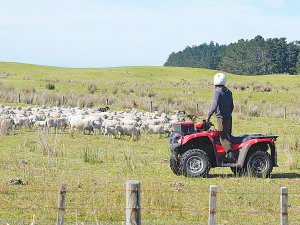
Farmers across parts of Southland and South Otago are continuing to deal with difficult conditions after a prolonged run of wet weather, with pressure building around feed supply, stock management, pasture damage, farm infrastructure and everyday workloads.
Federated Farmers says it welcomes Labour's commitment to reviewing the Sharemilking Agreements Act, calling on other major parties to do the same.
For Canterbury dairy farmers Sian Meijer and Rick Wobben, wearable technology has become one of their most valuable on-farm tools - helping manage 1850 cows across an expansive, high-performing dairy operation while improving efficiency, mating outcomes and day-to-day decision making.
Fonterra has unveiled its annual results for the 2026 financial year, posting $27 billion in revenue and close to $20 billion returned to New Zealand farmer owners and unit holders.
The first major update to the Dairy Cattle Code of Welfare in more than a decade has been released, marking what DairyNZ describes as an important step in ensuring animal welfare standards continue to evolve alongside scientific evidence and on-farm realities.




