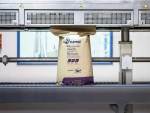
Milk Powder Prices Prop Up Farmgate Milk Price
Milk powder prices are keeping farmgate prices up, helping processors offset the dip in milk fat prices.
 increase font size
 Westpac’s Nathan Penny says the latest GDT result was worse than what futures markets had forecast.
Fears of a global recession and questions over global demand for milk products are pushing dairy prices down.
While a strengthening US dollar and lower milk production normally means higher returns for New Zealand dairy exports, a weaker NZ dollar isn’t all good news for farmers, according to Westpac senior agri economist Nathan Penny.
Penny puts last week’s drop in Global Dairy Trade (GDT) prices to the “rising dairy prices in local currency terms and a degree of cautiousness in dairy markets following the broader financial market nervousness of the last few weeks”.
Dairy prices have essentially given back their gains at the previous auction. Butter prices led the falls, plunging 7%. Whole milk powder and cheddar prices both posted falls around 4%. Penny told Rural News the result was worse than what futures markets had forecast.
“Markets are increasingly concerned that the global economy may slip into recession as global central banks aggressively hike interest rates in their battle against surging inflation,” he says.
One of the key market moves has seen investors buy safe haven assets like the US dollar in favour of currencies perceived to be riskier like the NZ dollar.
This move led the NZD as low as US$0.56 last week.
Penny points out that on the surface a weak NZD/USD boosts farmer incomes, including the milk price.
Focusing only on the currency and using Westpac’s current dairy commodity price forecasts, a one cent move in the NZD/USD would add up to 18c to the milk price estimate, he says.
“However, a weaker NZD/USD can impact dairy markets in other less favourable ways.
“First up, other currencies like the Chinese Yuan have also fallen against the USD.
“As a result, dairy commodity prices have become more expensive for buyers in our largest dairy market. And as we have seen overnight, with dairy auction prices falling, this can lead to lower dairy demand. Secondly, the strong US dollar may also be a symptom of or a signal that the global economy is weakening.”
A weaker global economy can also lead to lower demand for goods, including for dairy products.
Westpac is sticking to its 2022-23 forecast milk price of $9.25/kgMS.
Penny says the risks to its forecast are now more balanced.
“On the upside we have the ongoing weakness to global dairy supply, while on the downside we have the fragile global economy and its potential negative implications for global dairy demand.”
ASB is also sticking to its forecast milk price of a record $10/kgMS.
Nathaniel Keall, ASB economist, says its “bullish” forecast has long been based on the view that global dairy output is likely to remain extremely constrained over the course of the season, keeping prices well supported.
Milk powder prices are keeping farmgate prices up, helping processors offset the dip in milk fat prices.
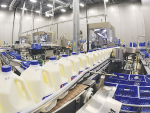
OPINION: With 10,500 dairy farms, New Zealand continues to punch above its weight around the world.
A milk glut around the world shows no sign of easing, putting downward pressure on farmgate milk prices for the next few months.
Fonterra has reduced its forecast 2026/27 Farmgate Milk Price.
New Zealand dairy farmers are set to be the first in the world to receive access to a new digital physical milk pricing tool that enables them to fix the price for their physical milk.


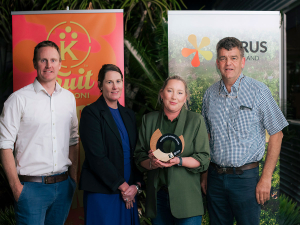
New Zealand's citrus growers were challenged to build their future on the value embedded in their fruit rather than the volume they produce, at Citrus New Zealand's annual gathering in Gisborne on 17 September.
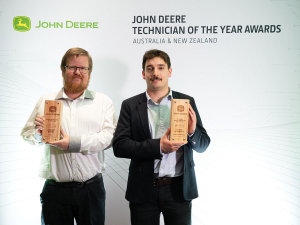
Leading John Deere technicians and apprentices from New Zealand and Australians were recognised at the recent sixth annual JD Technician of the Year Awards, held in Brisbane.
In Dacre, near Invercargill in New Zealand’s South Island, Bruce Dinnington is running a dairy operation unlike any other.
A free online platform aggregating governance vacancies across rural and regional New Zealand has been launched.
Environment Minister Nicola Grigg has announced details of a new rural plastics recycling scheme.
Agricultural drone operators say that a government decision to allow lower-risk drone work without certification won’t lower standards but drive innovation and efficiency.