New Zealand agriculture faces a “moment of truth” in 2017, according to a report by agribusiness banking specialist Rabobank.
In its recently-released New Zealand Agricultural Outlook 2017 report, Rabobank says as an industry traditionally characterised by a liberal operating environment, and a key beneficiary of several decades of global shift to freer trade, agriculture faces a period of heightened regulatory uncertainty and change on both fronts.
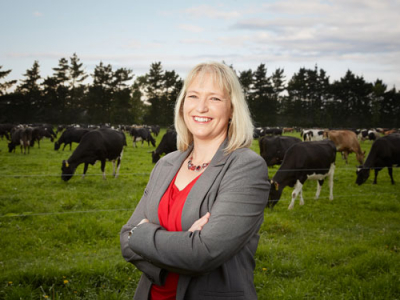
Releasing the report, Rabobank Country Banking general manager Hayley Moynihan said 2017 was ushering in a period of considerable change and uncertainty for New Zealand agriculture with developments throughout the year likely to have a significant impact on the sector’s prospects this year and in the years to come.
“The industry will be keeping a close watch on global trade developments in 2017 following Donald Trump’s election in the US and the resulting breakdown of the Trans Pacific Partnership (TPP) agreement,’ she said.
“The breakdown of this agreement brings with it increased risk of an escalation to rising protectionism already evident through the last few years in many parts of the world, as well as increasing the importance of this year’s trade negotiations with China – on an improved Free Trade Agreement (FTA) – and with the United Kingdom and the European Union on FTAs,” she said.
Moynihan said New Zealand’s tightening environmental regulations and the 2017 general election could also have a major impact on the outlook for the sector.
“Tightening environmental regulations, particularly in the Waikato and in Southland where significant plan changes are taking place, have the potential to increase costs and restrict intensification or change land use in 2017 and beyond,” she says.
“Environmental regulation could also become an election issue, as could other topics relevant to the sector such as greenhouse gas liabilities and rules around foreign investment. Policy relating to these areas may be subject to change, especially if a coalition government including Labour, NZ First and the Green party were to be voted in.”
Moynihan said the agricultural sector has the opportunity to influence in some form each of these factors and industry groups would be lobbying hard to achieve favourable outcomes.
“The importance to the New Zealand agricultural sector of the coming year should not be underestimated. How the industry navigates through this period will fundamentally shape its prospects in the years to come,” she said.
Despite the uncertainty, the report says the outlook in 2017 is still positive for many of New Zealand’s key agricultural sectors.
In the dairy sector, market fundamentals will further support farmgate milk prices in 2017 restoring profit margins and allowing dairy farmers to move on from two very difficult seasons,” Ms Moynihan said.
“We expect to see a slower rate of growth in New Zealand milk production emerge in the 2017-18 season and beyond due to increasing environmental regulation, resource constraints and social pressures. A further factor which will influence production levels is the investment appetite of dairy farmers, and the size of this appetite will become much clearer at the start of next season when dairy farmers make a call on whether to invest profit in further expansion or prioritise debt repayment.”
The report says the outlook for New Zealand’s key horticultural sectors in 2017 is also positive.
“Another strong year of production and export growth is expected for New Zealand’s leading horticulture sectors with bumper crops expected for avocadoes, apples and kiwifruit and demand from Asian markets for these products continuing to rise,” Moynihan said.