MPI Opens $3m Greenhouse Gas Research Funding Round
The Ministry for Primary Industries (MPI) has announced has opened applications for the 2026/27 funding round of the Greenhouse Gas Inventory Research (GHGIR) fund.
 increase font size

Enhancing New Zealand's ability to manage outbreaks of significant animal disease, in particular foot and mouth disease (FMD), is a priority for the Ministry for Primary Industries (MPI).
New Zealand's economic prosperity is highly dependent on our current FMD-free status and our ability to manage an outbreak of FMD, should it ever arrive here.
The focus on preparedness is being strengthened this week with the departure of three of MPI's senior managers to the UK for a week to work on a major disease simulation there.
Deputy director general, compliance and response, Andrew Coleman, director of response, Veronica Herrera and manager of surveillance and incursion investigation, Paul Bingham will attend Exercise Walnut which will simulate a national scale outbreak of swine fever. The exercise will test the UK's existing plans and policies for the control and eradication of a significant exotic notifiable disease.
"A key component of our preparation for a major disease outbreak is researching and exercising possible scenarios, both here in New Zealand and internationally," Coleman says.
"Walnut will give us first-hand experience of how our UK counterparts manage disease outbreaks. While this particular simulation is of an outbreak of swine fever, the principles are the same for any significant animal disease. We are especially interested in the exercise focus on the traceability of animals, management of stock and disposal of carcasses."
The officials will also visit the Pirbright Institute which is a world leading centre of excellence in research and surveillance of virus diseases of farm animals and an integral component of New Zealand's FMD vaccine programme.
Coleman says collaboration with other countries is vital to ensure New Zealand's preparation is in line with international disease control best practice.
"We're also doing this closer to home. The recently announced trans-Tasman action plan between Australia and New Zealand will see defences against the threat of foot and mouth disease (FMD) strengthened in both countries."
Two members of MPI's animal response team are currently in Australia working with officials at the Department of Agriculture, Fisheries and Forestry (DAFF) on the ground work for this plan.
Coleman says over the years, New Zealand's government agriculture and biosecurity agencies (MPI and its predecessors MAF and MAF Biosecurity New Zealand) have invested significant time and resource into preparing for an FMD outbreak.
"MPI already has a well developed level of general response readiness which has been complemented by specific FMD preparedness work.
"We recognise, however, that being ready to respond to significant animal disease outbreaks requires continuous effort and MPI is making timely and significant improvements to the capability that already exists."
The Ministry for Primary Industries (MPI) has announced has opened applications for the 2026/27 funding round of the Greenhouse Gas Inventory Research (GHGIR) fund.

AMINZ and the Ministry for Primary Industries (MPI) have partnered to develop a new Farm Debt Mediation video series aimed at farmers, creditors, and advisors.
Dairy continues to be the mainstay of the country's primary export earnings.
Don’t worry about it but just be aware - that’s the message from Ministry for Primary Industries (MPI) director-general Ray Smith as the H5N1 strain of bird flu is found in Australia.
OPINION: The latest update from the Ministry for Primary Industries (MPI) on the state of NZ's primary sector paints a positive picturee about its performance over the past 12 months.
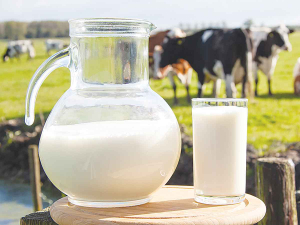
New Zealand dairy farmers are set to be the first in the world to receive access to a new digital physical milk pricing tool that enables them to fix the price for their physical milk.
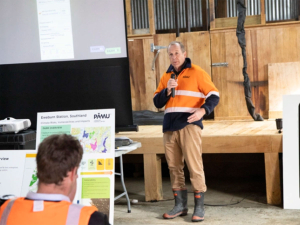
State farmer Pāmu is opening its farm gates this summer in an effort to give the rural sector the opportunity to see how large-scale, multi-system farming is delivering productivity and profitability across New Zealand.
A five-year study has found that the cost of reducing emissions without technology may be significant and unsustainable for Northland dairy farmers.
DairyNZ says Waikato farmers need certainty on Plan Change 1, but they say that certainty must be matched with practical, workable rules and a clear transition that doesn't get ahead of the new resource management system currently under review.
While the Government has moved quickly to make commercial hauliers' lot easier during the current fuel crisis, they appear to be stuck in the creep box when it comes to the agricultural industry.
Waikato farmers have been told that the Government’s new planning system legislation and the region’s Plan Change 1 (PC1) “won’t mesh together very well”.