BVD Control Begins Long Before You See A Problem
Bovine Viral Diarrhoea (BVD) is sometimes viewed as a dairy industry issue, but the reality is that the disease can have serious consequences for beef breeding herds as well.
 increase font size
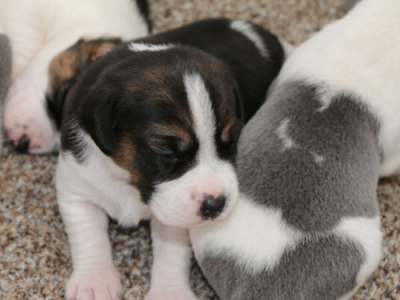 MPI hopes a new breed of detector dog will produce its best biosecurity sniffers ever.
The Ministry for Primary Industries (MPI) hopes a new breed of detector dog will produce its best biosecurity sniffers ever.
MPI detector beagle Clara gave birth to three male and three female puppies on November 24. The sire was Morley, a harrier hound. Both dogs work for MPI at airports and ports to sniff out food and plant materials that pose biosecurity risk to New Zealand.
"It’s the first time anyone in the world has crossed a beagle and a harrier for detection work and we have very high expectations for this super-breed," says MPI Detection Technology Manager Brett Hickman.
"The idea is to combine the height of the harrier with the proven biosecurity qualities of the beagles we have been breeding for nearly 20 years. The result could be the perfect sniffing machine to keep unwanted pests out of New Zealand."
He says the new dogs will be about the size of a labrador.
"Their extra height will make it easier for them to sniff backpacks carried by travellers or airport baggage stacked on trolleys."
MPI started using harriers as detector dogs last year. It has employed beagles in this role since 1996.
Collectively known as H-litter, the new puppies were bred under MPI’s detector dog breeding programme. This programme has bred 36 litters since 1996. Of these, nearly 80% of the puppies have gone on to become successful biosecurity dogs.
Hickman says MPI will team up with Auckland’s Starship Hospital to choose naming options for one of the new puppies.
"The plan is for Starship children to vote on names suggested by the public through our facebook page."
Bovine Viral Diarrhoea (BVD) is sometimes viewed as a dairy industry issue, but the reality is that the disease can have serious consequences for beef breeding herds as well.

Election years are always a concerning time for farmers, according to DairyNZ chair Tracy Brown.
Testing confirms H5 bird flu in a single northern giant petrel, found dead on a remote Cape Palliser beach in the Wairarapa, says Dr Mary van Andel, the Ministry for Primary Industries' (MPI) Chief Veterinary Officer.
Bovine Viral Diarrhoea (BVD) is sometimes viewed as a dairy industry issue, but the reality is that the disease can have serious consequences for beef breeding herds as well.
Four years since it was first detected in New Zealand, researchers and growers now know much more about management of maize pest fall armyworm (FAW).



Federated Farmers has welcomed new rural policies released by ACT, saying they align closely with its own election priorities.

Rural Contractors NZ says proposed changes to land transport rules for agricultural vehicles are a welcome response by the Government to out of date regulations which have seen members hit with huge fines.
Alliance is calling for final applications for its 2027 Graduate Programme, with applications closing on Sunday 25 October.
Decades piloting planes has ensured vet and farmer David Hayes is focused on safety. So, after a serious accident while welding on farm, he is sharing his experience so others can learn from it.
Canterbury milk processor, Synlait Milk has confirmed Leon Fung as its chief executive officer.
OPINION: Making it easier to collect rainwater and use it to grow crops and livestock is a no brainer.