Labour Supports NZ/India FTA
National's decision to ‘dribble’ information about the NZ/India to Labour contributed to the delay in it deciding to supported the FTA.
 increase font size
 Damien O’Connor.
Despite the fledgling Primary Sector Council being the brainchild of Minister of Agriculture Damien O’Connor, he has no idea about how much the council will cost taxpayers or even how often it will meet.
Responding to a Rural News Official Information Act request – put to O’Connor – about the costs and workings of the Primary Sector Council, the minister’s office says it is unable provide any answers as it is “an operational matter”.
“This information is not held by the Office of the Minister of Agriculture, Minister for Biosecurity Food Safety and Rural Communities, and Minister for Trade and Export Growth; it is better responded to directly by the Ministry for Primary Industries (MPI),” was O’Connor office’s reply. “I am therefore transferring your request to MPI for response.”
O’Connor’s office has now passed on Rural News’ OIA request to MPI to answer; so far it has made no response.
Ironically, when O’Connor announced on April 26 who would sit on the Primary Sector Council, he admitted he “did not have all the answers”. However, this was in relation to issues confronting the primary industry sector and not the actual workings and costings of the council itself.
However, it appears that O’Connor’s lack of knowledge turns out to be the case regarding his understanding of the Primary Sector Council’s annual cost to taxpayers, how much its chair and members are being paid, or even how often it will meet.
The 15-member council is chaired by former Zespri chief executive Lain Jager and it has been criticised for having a lack of real farmer membership. It also drew concern from the scientific community, with Jill Stanley, the president of NZ Institute of Agricultural and Horticultural Science, calling the lack of scientists on the council “surprising and disappointing”.
O’Connor’s and his office’s obfuscation and lack of transparency over legitimate questions about the Primary Sector Council will not gain it the respect and buy-in of the primary sector it is supposed to represent.
The lack of answers about the Primary Sector Council are even more surprising considering O’Connor had flagged its formation in Labour’s election manifesto back in July 2017. The manifesto said a Labour government would, “appoint a primary industry council and a chief agricultural adviser to provide a unified industry voice to government and the wider population and advise ministers and government on all areas of primary production”.
However, it now appears that the policy was never properly costed and has been hurriedly put together. Rural News will publish the responses to the questions it has posed about the Primary Sector Council when – and if – MPI responds to its OIA.
* MPI has now responded to Rural News' OIA request- but this was received after the July 3 issue was printed. Rural News will publish MPI's responses to the questions it has posed about the Primary Sector Council in our July 17 issue.
National's decision to ‘dribble’ information about the NZ/India to Labour contributed to the delay in it deciding to supported the FTA.
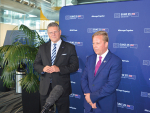
When it comes to international trade, politicians from all sides of the aisle are united, says Labour's trade spokesman Damien O'Connor.
Federated Farmers have reiterated their support for the coalition Government to abolish the present ban on the live export of animals.
As the coalition Government mulls new regulations to reinstate the export of live animals, debate is heating up between supporters and opponents.
OPINION: Your canine crusader was truly impressed by the almost unanimous support given by politicians of all stripes in Parliament to the recent passing of legislation for the NZ/EU free trade deal.


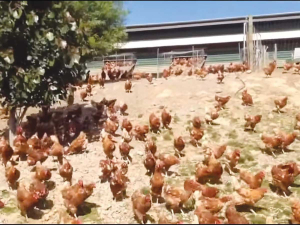
Mainland Poultry has confirmed new ownership of its vertically integrated agribusiness with Pacific Equity Partners Gateway (PEP Gateway) now joining current shareholders Navis.

The recently published State of the Industry -Tractors and Machinery 2025 from the Australian Tractor and Machinery Association (TMA), the equivalent of New Zealand’s TAMA, gives an interesting perspective of the industry.
Strong competition and tightening supply have seen wool reach its highest prices paid at auction since 2011.
The Government is funding a feasibility study to investigate what would be required for a successful farmer-led purchase of the McCain Foods' vegetable processing site in Hastings.
A young man just five years out of his Lincoln University degree already has his foot in the door of farm ownership, as equity manager of a large new dairy conversion now taking shape in Mid- Canterbury.
Visitors to the LIC stand at this year’s Fieldays can expect practical farm conversations, specialist drop-in sessions and exclusive shareholder events.